
Information MIPTP Courses

MIPTP Courses and Program Graduation Requirements

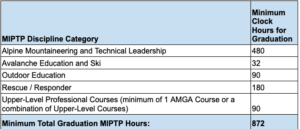
A student is considered a graduate of the Mountaineering Instructor Professional Training Program (MIPTP) when they have completed a minimum of 872 clock hours. There are five disciplines included in the MIPTP program and students must meet the minimum clock hours for each discipline to graduate from the program.

MIPTP Graduation Requirements

There are three types of courses within the MIPTP curriculum:

  • Core Curriculum = A core program required for graduation of the MIPTP
  • Additional Course = Programs that are part of one of the Core Curriculum courses. These may be taken in combination with each other to achieve the requirements for completion of a Core Curriculum course. 
  • Elective Course = Programs that are not required for graduation of the MIPTP, but may be taken to supplement a student’s resume for desired employment.  See Catalog for more details.

The following is a breakdown of the programs in the Mountaineering Instructor Professional Training Program, their length, and an overview of the subject matter:

Alpine Mountaineering and Technical Leadership Discipline:

Core Curriculum:

Additional Courses:

Elective Courses:

Avalanche Education and Ski Mountaineering Discipline:

Core Curriculum:

Additional Courses:

Elective Courses:

Outdoor Education Discipline:

Core Curriculum:

Additional Courses:

Rescue / Responder Discipline:

Core Curriculum:

Additional Courses:

Upper-Level Professional Course Discipline:

Core Curriculum (only 1 “Guide Course” is Required for Graduation):

Additional Courses:

Elective Courses:

*NOTE: If taken in combination, the AMGA Alpine Rock Module and AMGA Alpine Snow and Glacier Module together qualify as a “Guide Course” under the AMGA Alpine Guide Curriculum.

Information Prerequisites

Prerequisites for the Mountaineering Instructor Professional Training Program

Those who enroll in the MIPTP should have the following:

  • Experience backpacking with overnight camping.
  • Good physical fitness
  • Some of the elective programming includes skiing. If you intend to take ski electives, you must be able to ski black diamond runs in-bounds. Those who do not take ski programs will not have to have this prerequisite.

​If you do not have these pre-requisite skills or experience, we have the following remedial courses designed to provide students with this introductory experience.  You can also supplement with these courses if you have some experience to join an upper-level course, but not all of the prerequisites.

Please refer to the MIPTP Course Catalog for details on specific prerequisites for each course.

Note: Remedial courses are not approved for VA Education Benefits and tuition must be paid out of pocket.


Information AMGA

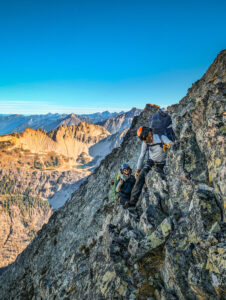
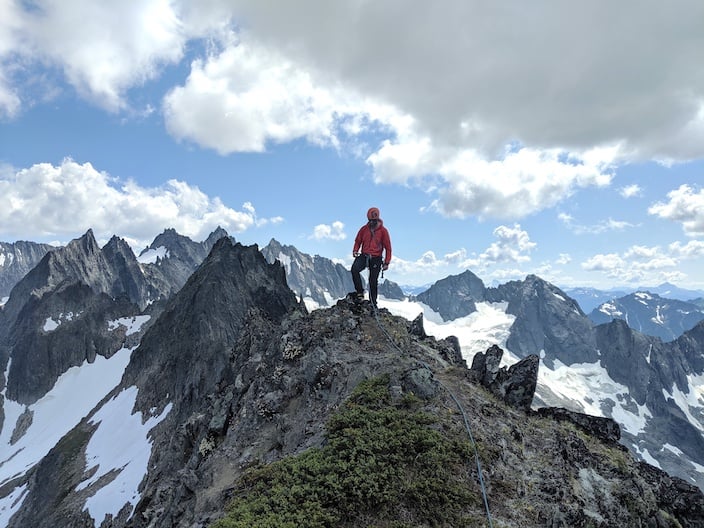
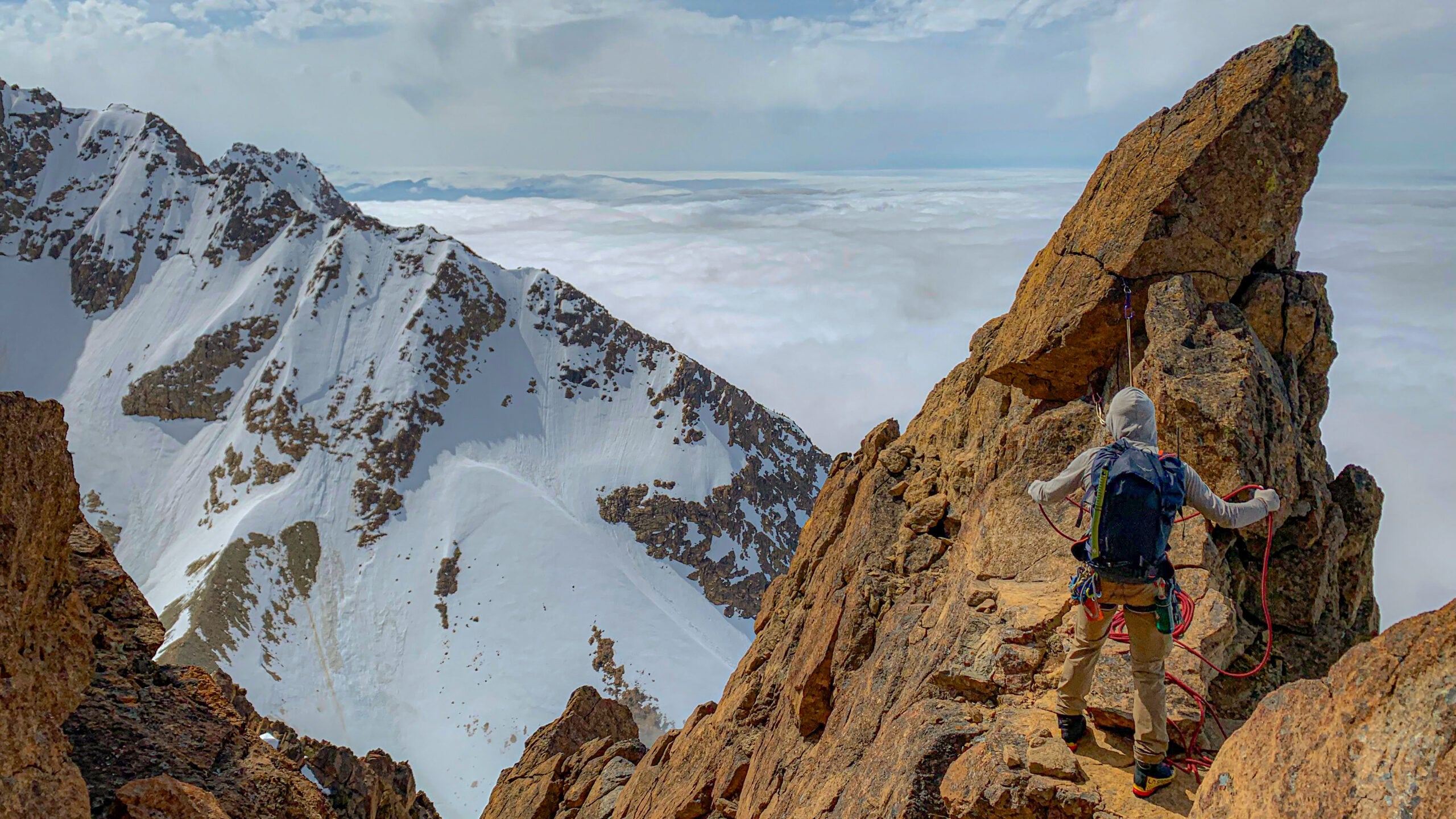
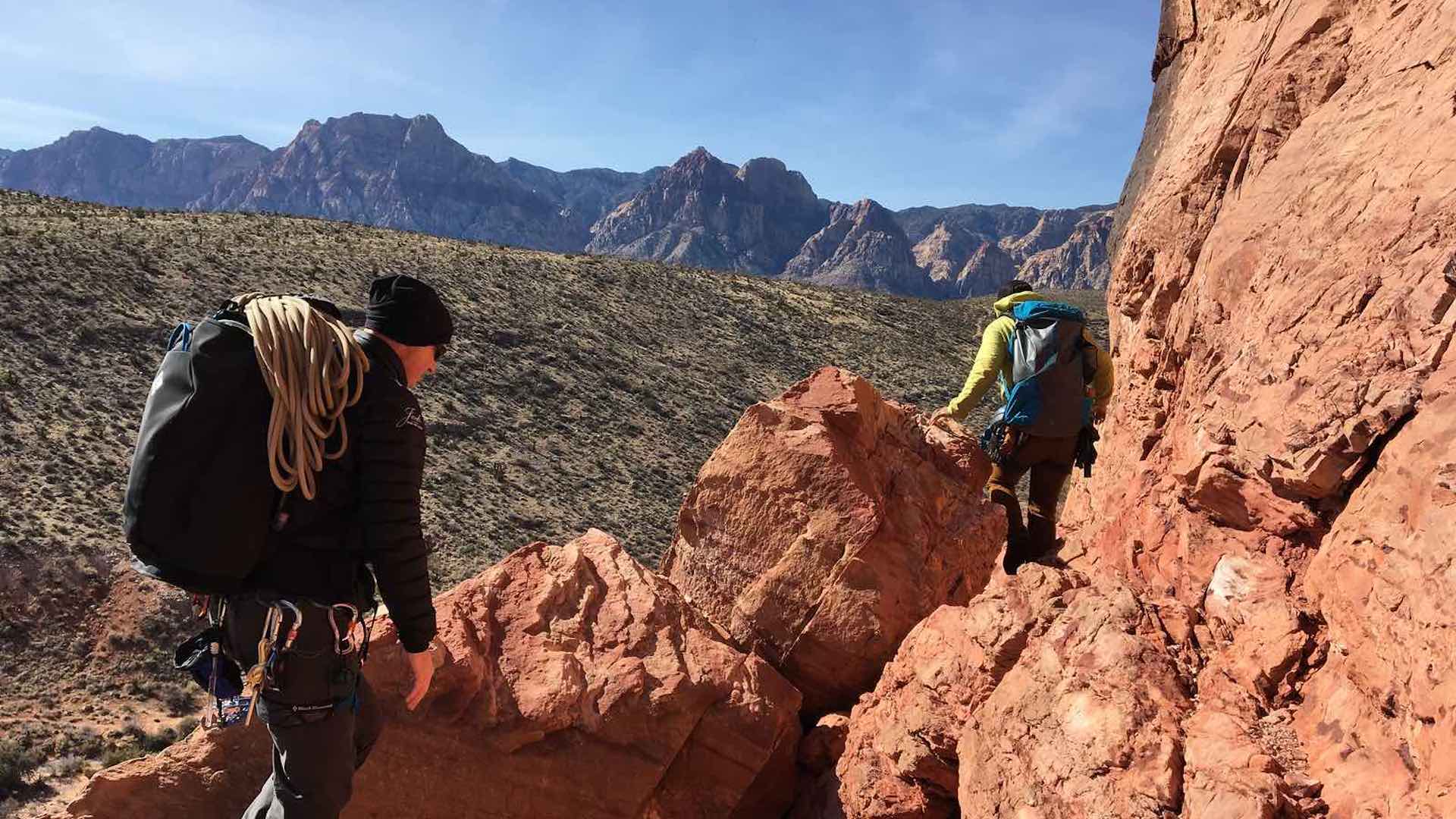
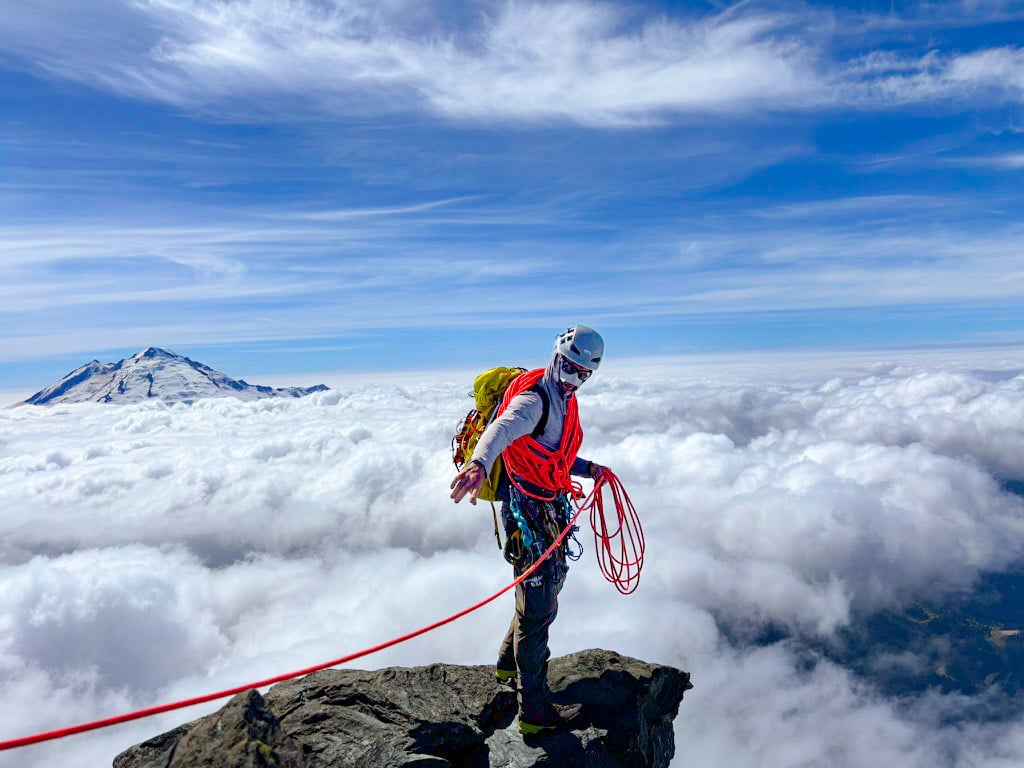
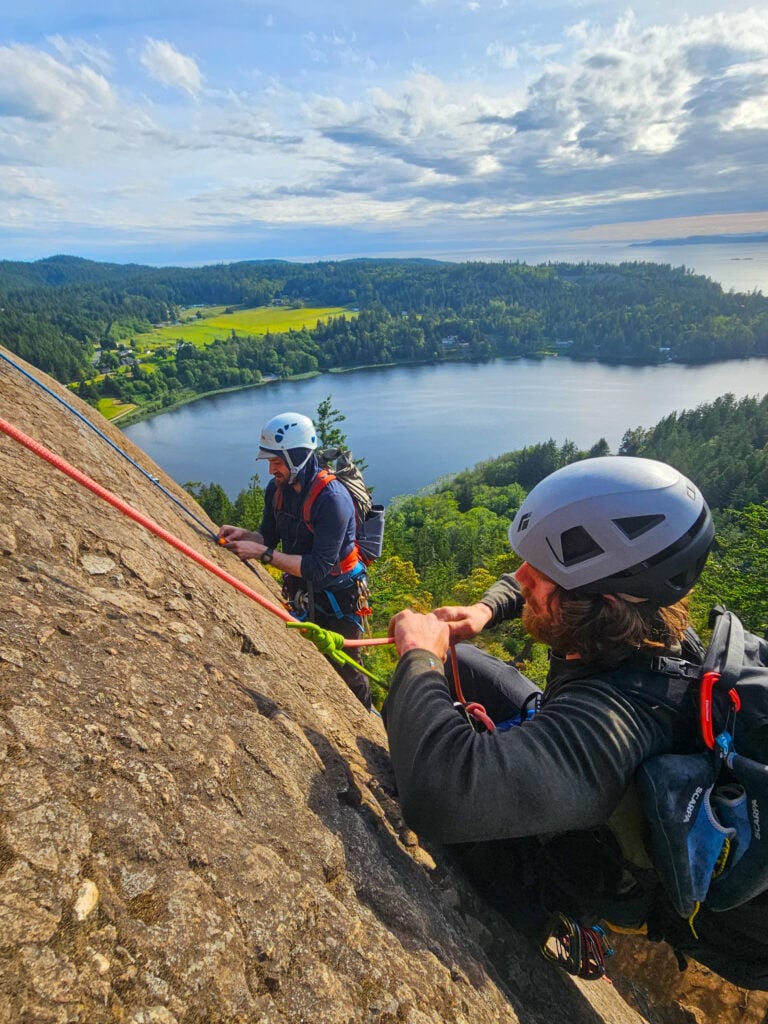
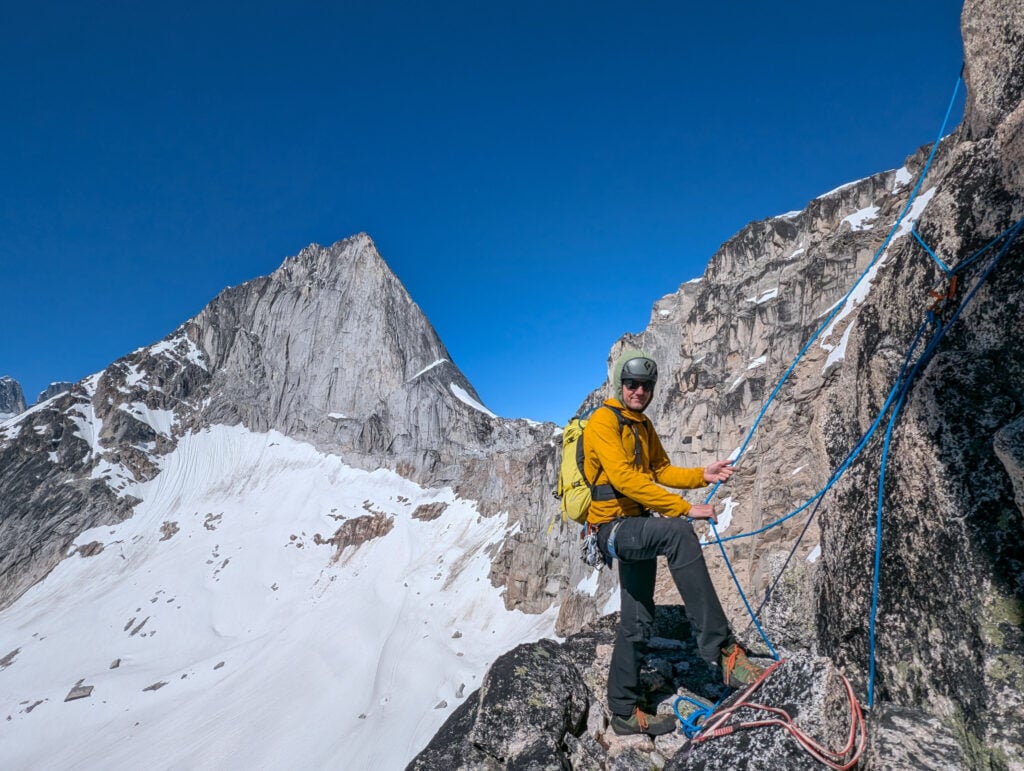
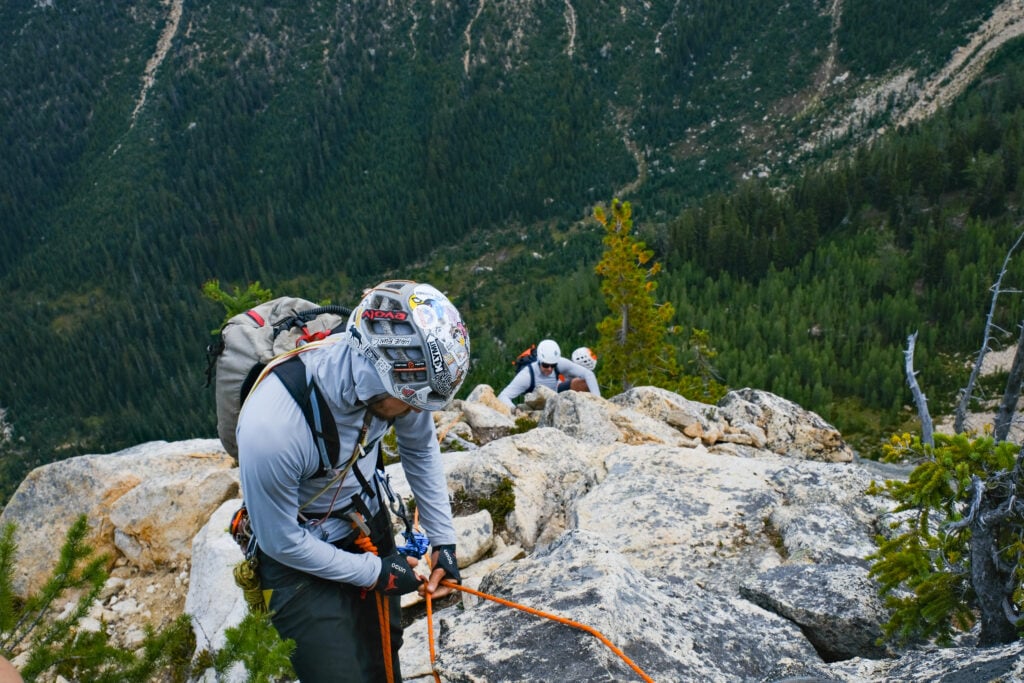
Climbers navigate a section of rock in the remote alpine wilderness of the North Cascades during American Alpine Institute Alpine Mountaineering and Technical Leadership Part 4 (AMTL4)

The American Mountain Guides Association (AMGA) has been dedicated to supporting the guiding community since 1979. The organization has done this through excellence in education, standards and certification to enhance the quality of services provided to the public, while serving as a resource for accessing and protecting the natural environment. As a group the AMGA presents a strong, unified voice for high standards of the professionalism of guiding and climbing instruction in the United States. The AMGA is an organization grounded in powerful tradition that continues to evolve with the ever changing arena of mountain guiding and climbing instruction. The AMGA offers a series of training courses and exams designed to certify guides and climbing instructors to the highly respected, internationally recognized, standards of the organization.

The AMGA is the United States sole representative to the 25-member International Federation of Mountain Guides Associations (IFMGA), the international governing body responsible for guiding standards and education around the world.

The heart of the American Mountain Guides Association (AMGA) is its membership. Spread across the country, AMGA members represent an incredible variety of educators, outdoor enthusiasts, and environmental stewards. Just about every aspect of mountain guiding and instruction is represented through the AMGA’s vast member base: from the glaciated high-altitude peaks of the Alaska Range to the big walls of Yosemite, from the diverse climbing areas in the Rockies to the world class ice and rock climbing of the East Coast, you will most likely find AMGA trained and certified guides or climbing instructors. These professionals could work in any part of the industry from instructors who teach on climbing walls and single pitch cliffs to guides guiding long rock routes, alpine climbs, and ski mountaineering trips. As a collective group, the AMGA is closely connected to almost every issue that faces the industry and our treasured crags, peaks, powder covered slopes, and frozen waterfalls.

Guiding in the mountains has been a profession in the U.S. that spans back to the start of the nation. Only in 1979 did a group of 12 guides decide that it was time to formalize an organization to represent the greater guiding community. As a result, the American Professional Mountain Guides Association was born. Over the next few years the “P” was dropped and the AMGA developed and grew throughout the United States.

The organization sharpened its focus of supporting the guiding profession by providing representation for land use access, education, training, and examination based on international standards for guiding. In 1997, the AMGA achieved one of its most notable accomplishments with acceptance into the International Federation of Mountain Guides Associations, IFMGA/UIAGM.  As a member of the IFMGA, the organization’s educational and certification programs meet the international standards recognized by more than 20 nations worldwide.

Today the AMGA continues to develop its programs to meet changing standards and support the growing community of guides and climbing instructors in the United States. In addition, the organization has become a resource for land managers and outdoor industry leaders by promoting land stewardship, world-class training, and sustainable practices to protect our natural resources.

The AMGA is the post-graduate school of guiding and it is where professional climbing guides go to develop their skills in order to attain the highest level of certification.

There are three disciplines of certification in the AMGA:

  • Rock Guide
  • Alpine Guide
  • Ski Guide

Some of the disciplines have multiple levels of certification. For example, in the rock discipline one can be certified at the Single Pitch Instructor level, the Rock Instructor level or the Guide level. In each of the disciplines, the guide level is the highest level of certification. If an individual obtains AMGA certification at the guide level in Rock, Alpine and Ski, that person will be granted the International Federation of Mountain Guides Associations (IFMGA) certification, which is the highest level of certification available for a guide.

If you meet the prerequisites for the first upper division courses, the AMGA Rock Guide course or the AMGA Alpine Skills Course, it is recommended that you proceed directly to one of those courses and skip the MIPTP. ​

Following are the courses that one must take in order to achieve IFMGA status:

Rock Guide

  1. Single Pitch Instructor Course
  2. Single Pitch Instructor Exam
  3. Rock Instructor Course
  4. Advanced Rock Guides Course and Aspirant Exam
  5. Rock Guide Exam

Alpine Guide

  1. Rock Guide Course or Alpine Skills Course
  2. Alpine Guides Course
  3. Ice Instructor Course
  4. Advanced Alpine Guides Course and Aspirant Exam
  5. AIARE Avalanche Level III
  6. Alpine Guide Exam

Ski Mountaineering Guide

  1. Rock Guide Course or Alpine Skills Course
  2. Ski Guides Course
  3. Ski Mountaineering Guides Course and Aspirant Exam
  4. AIARE Avalanche Level III
  5. Ski Mountaineering Guides Exam

After you reach the guide level in each of the disciplines you will be deemed an IFMGA Certified Mountain Guide.

​NOTE: The American Alpine Institute does not teach these upper division courses.  As an AMGA contractor AAI can only provide the Single Pitch Instructor Course and Exam.  This first course and exam are the first steps into the AMGA environment and provide an excellent window into the organization.  If you have the prerequisites for the Rock Guide Course, it is possible to skip the SPI course and exam.​