Information Details

Max Ratio – 3:1 climber to guide

Capacity – 9 climbers

Duration – 21 days

Tuition Discounts:

  • Purchase a Denali program before September 1st and hold the current Denali tuition rate. Denali tuition rates go up every year.
  • If you choose to take a Denali Prep program the same calendar year as a Denali program, you may take advantage of a $500 discount on the Denali Prep.

*Note that you must arrive in Anchorage on Day 0 of your expedition and attend mandatory meeting at 10am.

*Please inquire about the waitlist for expeditions that are full at 1-360-671-1505 or at info@alpineinstitute.com.

Inclusions:

  • Professional AAI Mountain Guides’ leadership, services, and instruction
  • NPS Entrance and User Fee
  • Group transportation to and from Talkeetna
  • Ski plane flights on and off the Kahiltna Glacier
  • Breakfast and dinner while in the mountains (lunch and snacks not included)
  • Tents and group cooking equipment
  • Group climbing equipment
  • Mechanical ascenders for fixed lines
  • Custom expedition sleds

Exclusions:

  • Lunch and snack food items, Food and lodging in town
  • Rescue and evacuation costs
  • Personal airfare
  • Baggage, accident, rescue, and trip cancellation insurances
  • Guide gratuities
  • Personal equipment
  • English language interpreter (Discuss with program coordinator, if needed.)

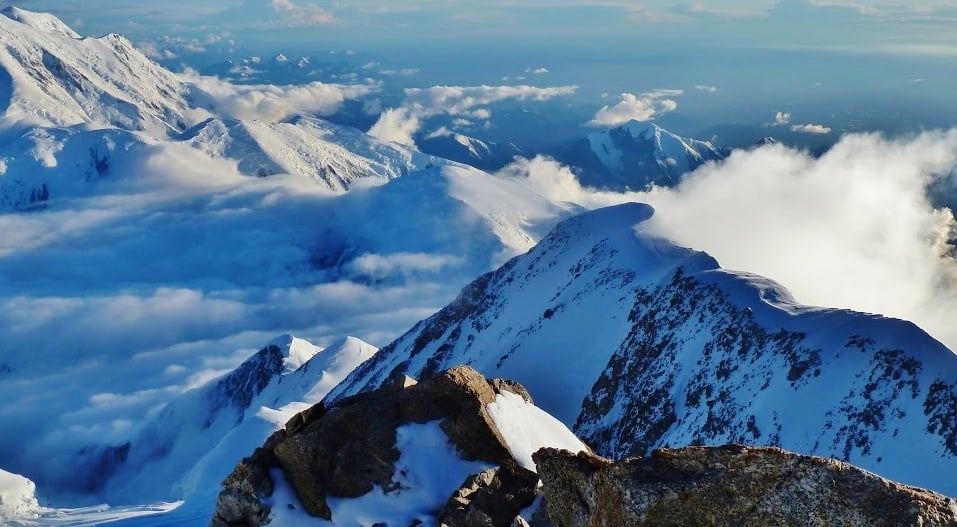
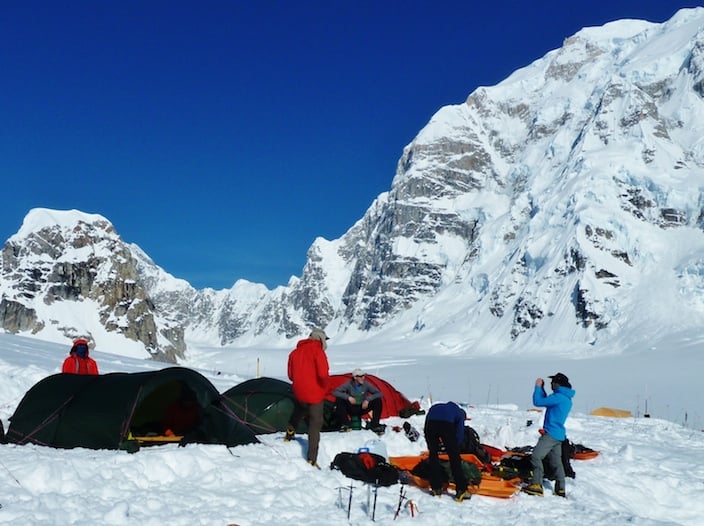
Camp 2 on Denali with views of the Direct West Buttress. Dylan Cembalski

Camp 2 on Denali with views of the Direct West Buttress.

Climbing Denali is a large investment of time and resources. Unforeseen injuries, illness and scheduling conflicts can prevent you from joining an expedition at any time. We strongly suggest climbers purchase trip insurance to cover their investment. Please visit the AAI Travel Services page for more information


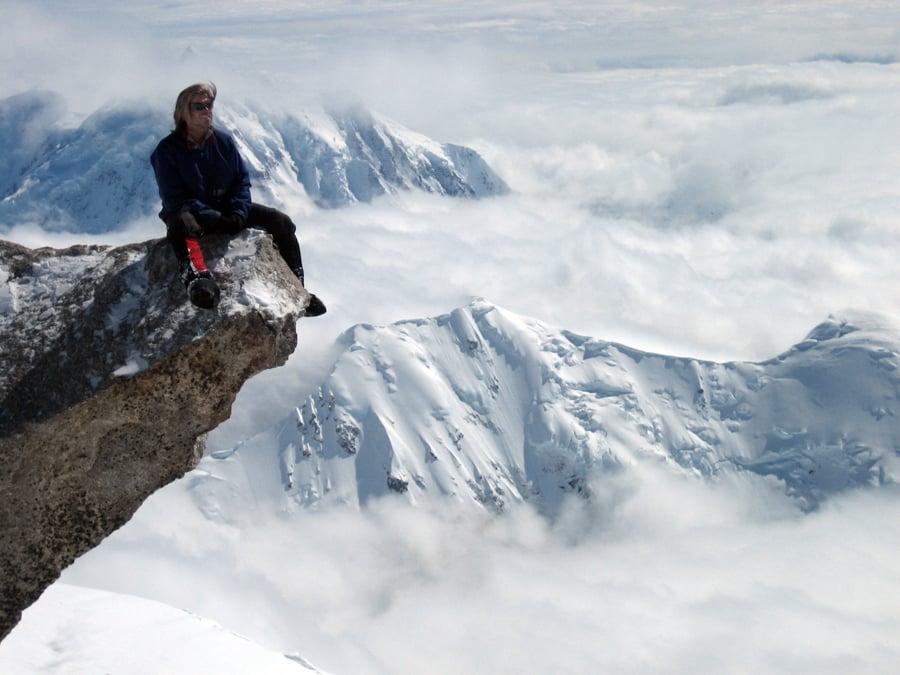
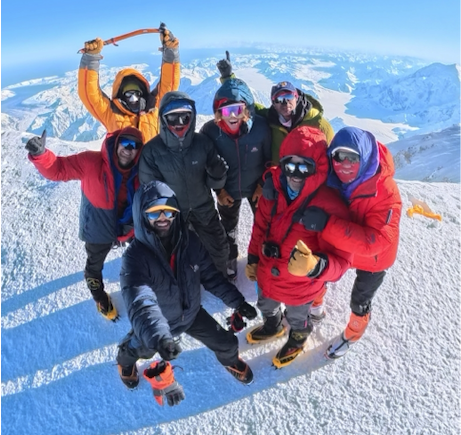
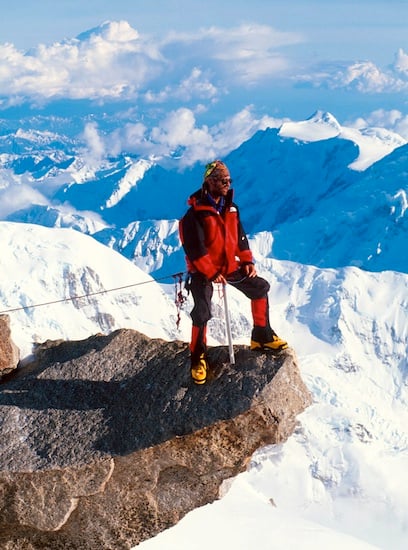
Successful summit on Denali

Climbers celebrate on the summit of Denali. Kevin Cannon.

Some individuals and groups prefer private program options. Dates for all programs are dictated by the AAI concession contract with the National Park Service and private program options may be limited accordingly. Please contact the AAI office for more information.

Note: Public expeditions are run in English. If you are not able to communicate in conversational English, please contact your program coordinator to discuss options.

Information Equipment

A climb of Denali by any route requires specialized equipment unlike that required on mountains of comparable altitude in the temperate zones. Even experienced climbers may need to make significant equipment purchases unless they have climbed previously in the subarctic, antarctic, or Himalaya. Special-purpose items like insulated overboots and cold-weather sleeping bags can add a lot to the price tag of a Denali trip; and the staff of major retailers often do not have sufficient expertise to provide good advice to climbers.

The mission of AAI’s Equipment Shop is to outfit our climbers with the best and most appropriate gear for our climbs and expeditions. The Equipment Shop offers:

Our gear selection is informed by constant feedback from our guiding staff. Every piece of gear we sell or rent has been tested and used by our guides and Alaskan climbers.

All our Denali climbers receive a free, in-depth video equipment consultation with a goal to ensure that our climbers arrive in Anchorage fully equipped for success on the mountain.

Information Route

Virtual Expedition

Denali West Buttress Route

Photos and Route Information

We make four camps as we climb alpine style, moving all camps higher as we go and leaving none established above or below. It is not uncommon for temperatures high on the mountain to fall as low as -30F, but at lower elevations daytime temperatures on the glacier can reach as high as 70F, so there we sometimes sleep in the day and ferry loads at night when temperatures are between 0F and 15F. The night’s cold improves conditions under-foot, and we still have adequate light because of the extreme northern latitude. Double carries are done during the first part of the expedition to ease the work and to help with acclimatization.

Denali K2 Plane Ride V2

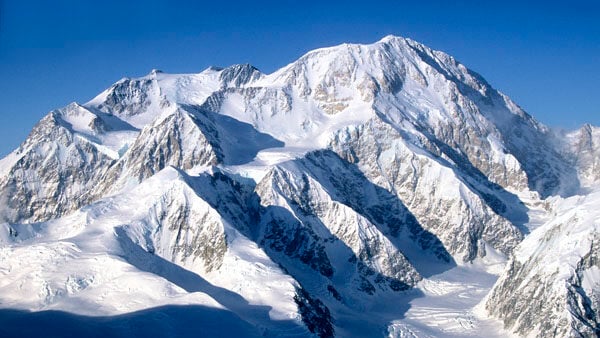
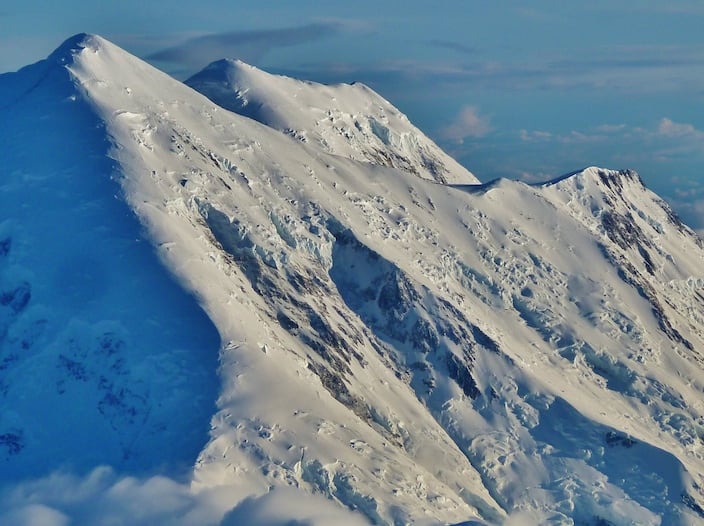
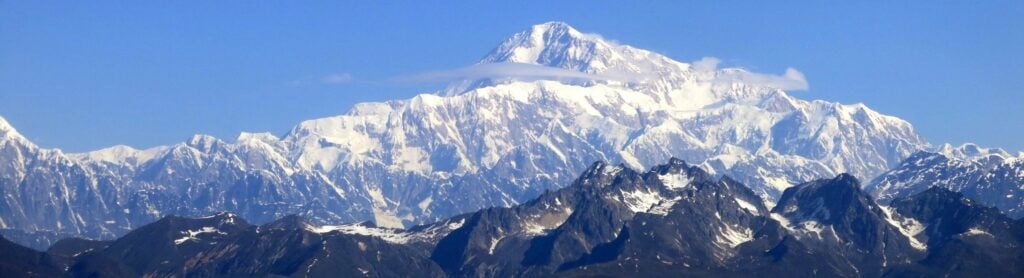
View of Denali from the South. Wyatt Evenson.

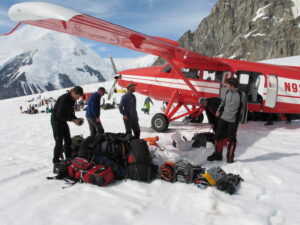
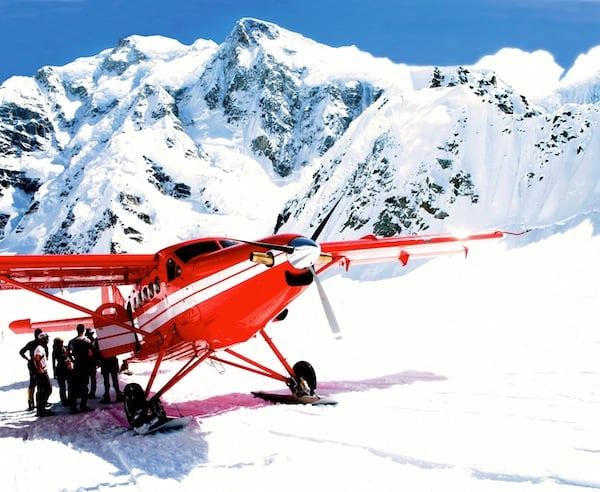
All expeditions begin with a meeting and orientation in Anchorage. We spend one night there, then travel by van the next morning to the small town of Talkeetna. There we repack our equipment, meet our ski plane pilots, and as soon as possible, make the beautiful flight to Denali Base Camp on the Kahiltna Glacier at 7300 feet.

Soon after our arrival at Base Camp, having done a review of glacier travel procedures, divided the gear up, and packed our sleds, we begin moving to our first camp.

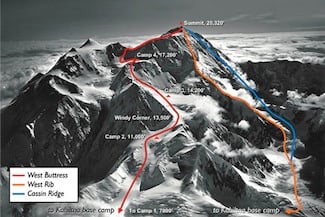
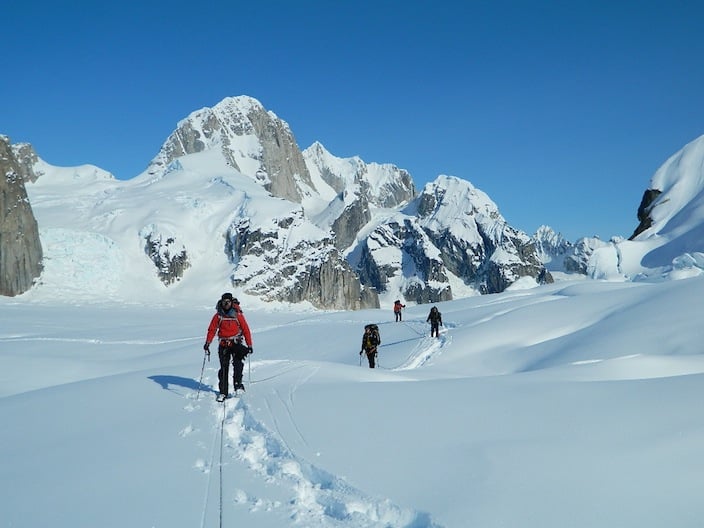
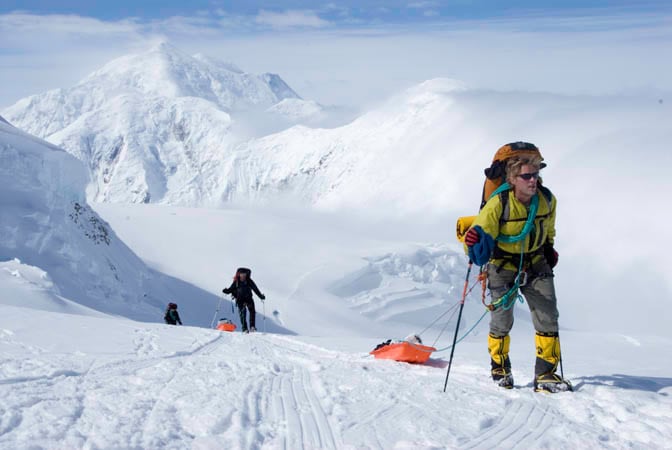
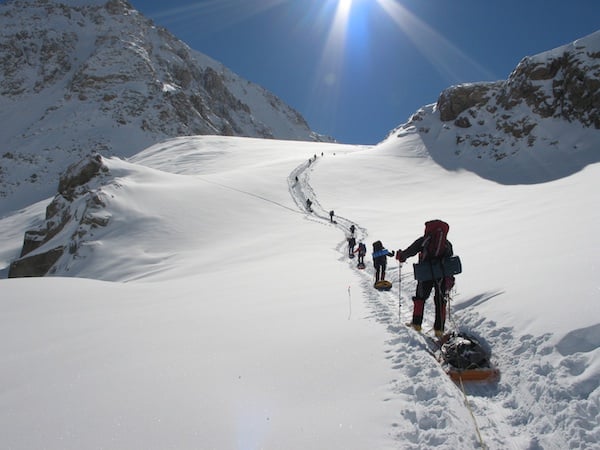
We establish our Camp 1 at 7800 feet at the confluence of the main Kahiltna Glacier and its rugged Northeast Fork (the normal approach for West Rib and Cassin Ridge Expeditions). Enjoying spectacular views the whole way, we continue on to Cache 1 at 9800 feet and Camp 2 at 11,200 feet while snowshoeing up moderate terrain. As we do throughout the climb, we travel in rope teams because of the ever-present crevasse hazard. To ease the burden of moving our expedition supplies, we use specially designed sleds that we tether to our packs and pull along the gentle sections of the lower mountain.

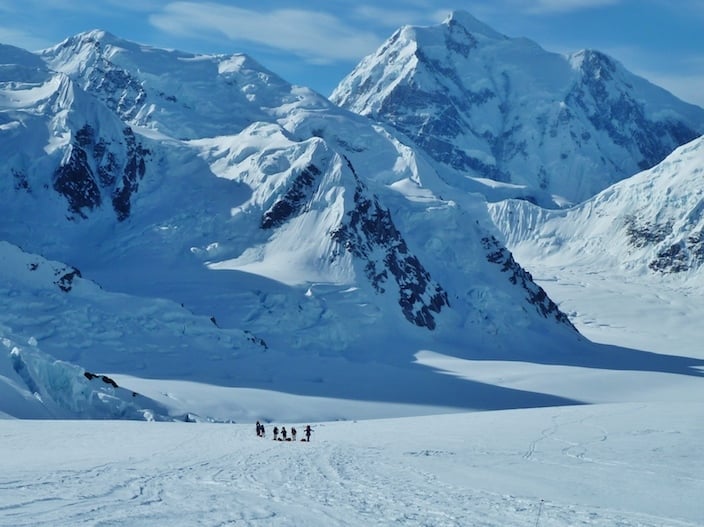
Advancing camp on Denali with full sleds.

Advancing camp on Denali with full sleds. Kevin Cannon

Above Camp 2, the climbing steepens as our route takes us past the terminal walls of the West Buttress. We usually cache our snowshoes at 11,200 feet and continue our climb with crampons because of the gradient of the route and the hardening snowpack. We climb out of a basin to reach Windy Corner at 13,100 feet, then make an ascending traverse through seracs and heavily crevassed terrain as we approach the head of the Kahiltna Glacier at 14,200 feet. We enjoy spectacular views as we look down to the lower Kahiltna and out to 17,004-foot Mt. Foraker. In the other direction the impressive summit bulk of Denali rises above us, and we can easily see the details of the upper West Rib and Messner Couloir, as well as the steep headwall of the West Buttress that we will soon climb.

At Camp 3 (14,200 feet), we take a well-deserved rest day and make final preparations for our summit bid, reorganizing our gear for the carry to the highest camps. For most expeditions, Fourteen Camp becomes almost homey; a relatively sheltered alcove in the mountain, it is the logical place to wait for a window of good weather in which to make a multi-day bid for the summit.

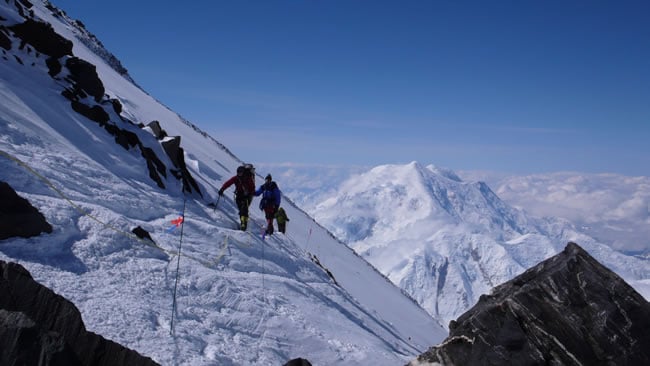
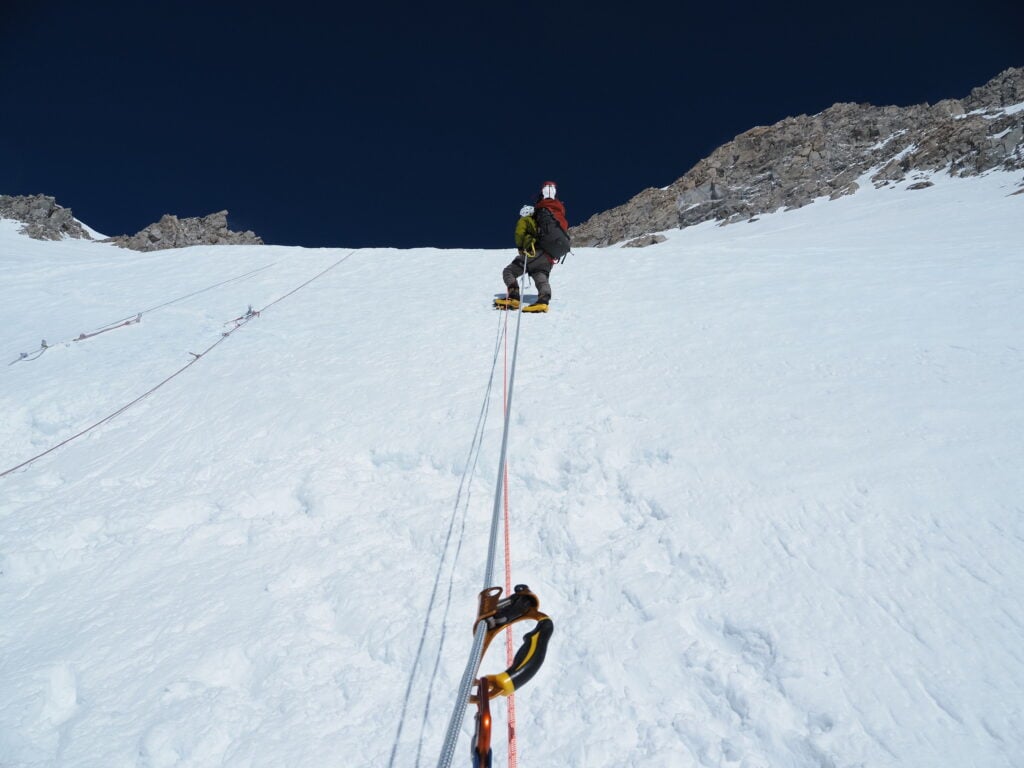
At this point we move into the most demanding part of the expedition: higher elevations combined with steeper ground. From Camp 3, we ascend 1100 feet up a gentle snow slope to the bergschrund at the base of the West Buttress. The bergschrund is at times quite steep but it is short and, with steps established in the ice, not difficult to surmount. We then begin our ascent along fixed lines to the crest of the West Buttress on the 900-foot headwall of 45 and 50-degree slopes. Typically the pitches are of hard ice with some snow overlaid, and we protect them by using self-belays with jumars on a fixed rope. Because of the steepness of the route and the amount of elevation gained, we may make a double carry to establish Cache 3 at over 16,000 feet.

An AAI team climbing the fixed lines on the 50-degree headwall above Camp 3.

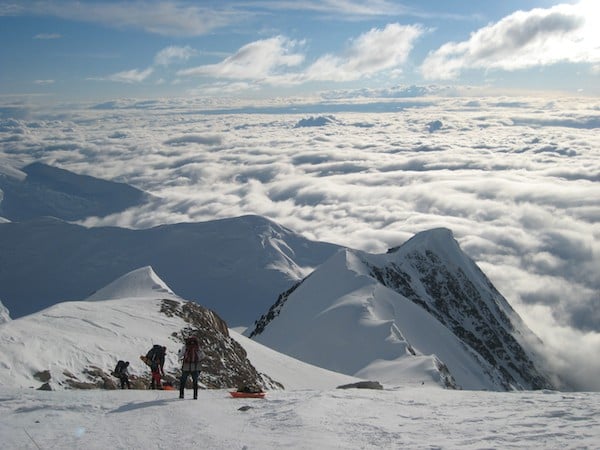
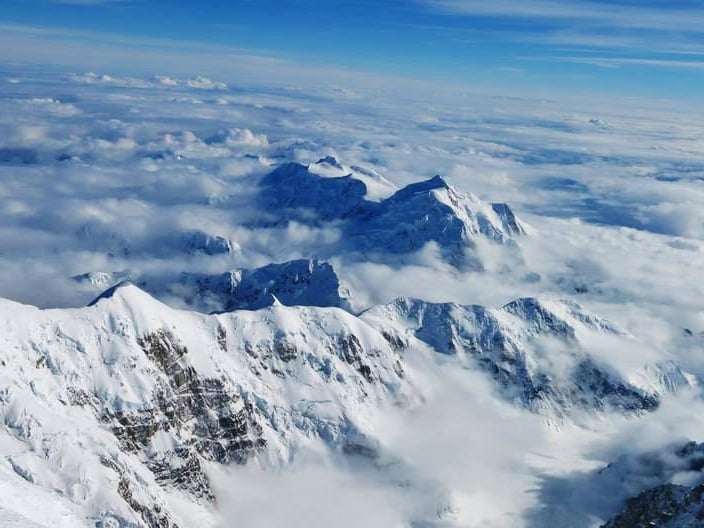
Emerging from the headwall onto the top of the Buttress, the atmosphere of the climb changes dramatically. While the earlier parts of the climb have all been on large glaciers and open slopes dominated by immense mountain masses towering above, we now move on an open ridge and enjoy that unmistakable feeling of climbing above most of the surrounding world. As we begin to move along the crest of the Buttress, we gain views across the Peters Glacier to the Alaskan tundra stretching out far beyond, and to the south we can look over the top of Mt. Hunter to the scores of other peaks in the Alaska Range. Initially the ridge is fairly broad, but as we reach the 16,400-foot level it narrows with steep drop-offs to both the north and south.

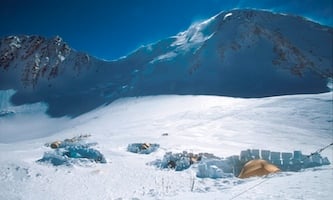
A fortified high camp at the 17,000 foot level on Denali.

A fortified high camp at the 17,000 foot level on Denali. AAI Collection

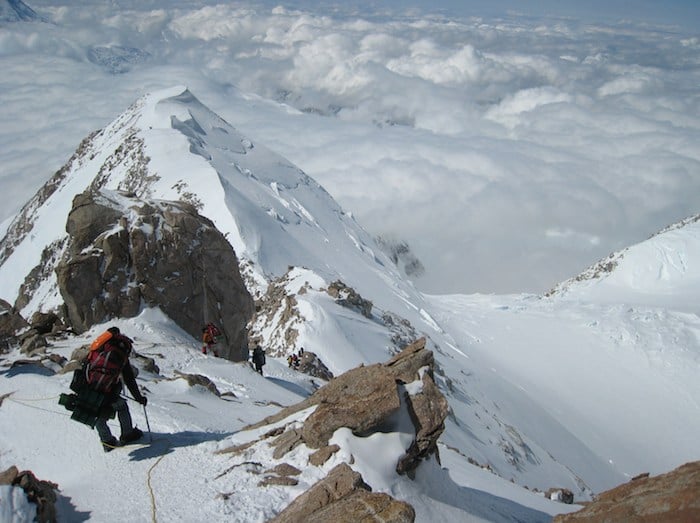
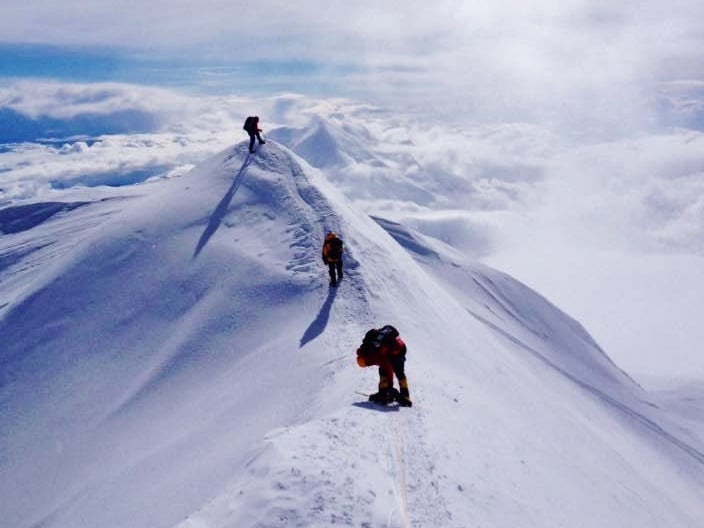
The climb up the ridge to our final camp, Camp 4 (High Camp) at 17,200 feet, is for many people the aesthetic high point of the expedition. We follow a steadily narrowing crest and at times move between and around a series of magnificent, pointed granite gendarmes up to fifty feet high. The climbing is never steeper than 35 degrees, but the exposure is very significant and requires caution as we move up a route that in some sections is reduced to ledges six feet wide. Further east the ridge finally begins to merge with the main part of the Denali massif, and there we establish camp in a basin just below Denali Pass, the low point between Denali’s higher south summit and lower, 19,470-foot north peak. From this point we will climb to the summit in a single day.


AAI Denali Team #2 reaching the summit. Denali is the highest mountain in North America and one of the Seven Summits. Video footage by Kevin Harker.

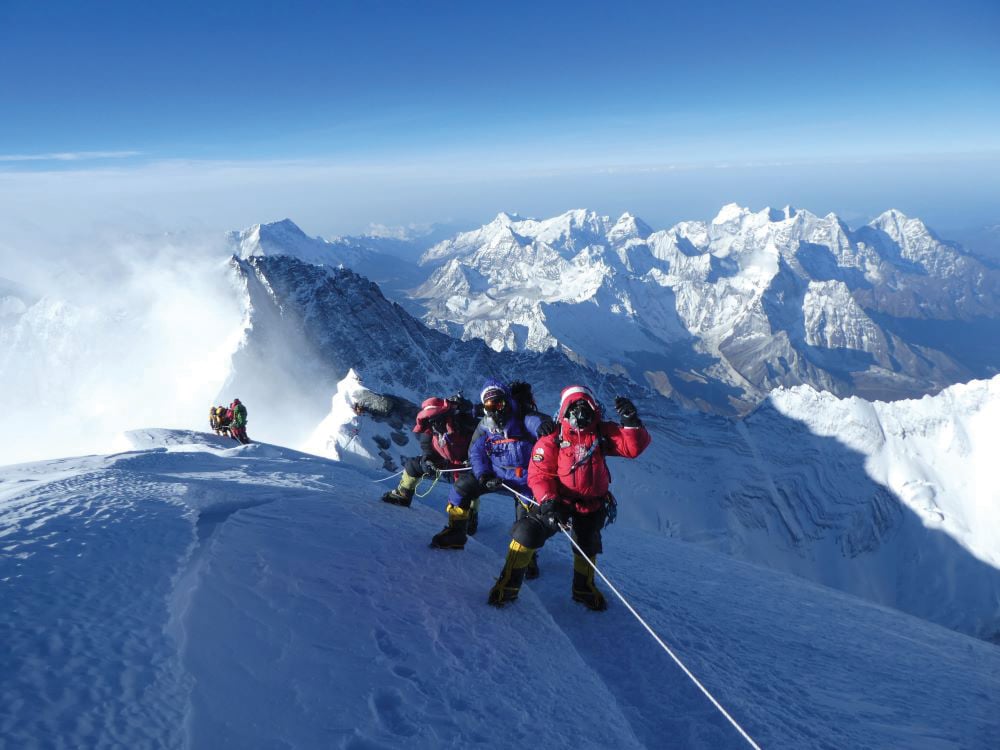
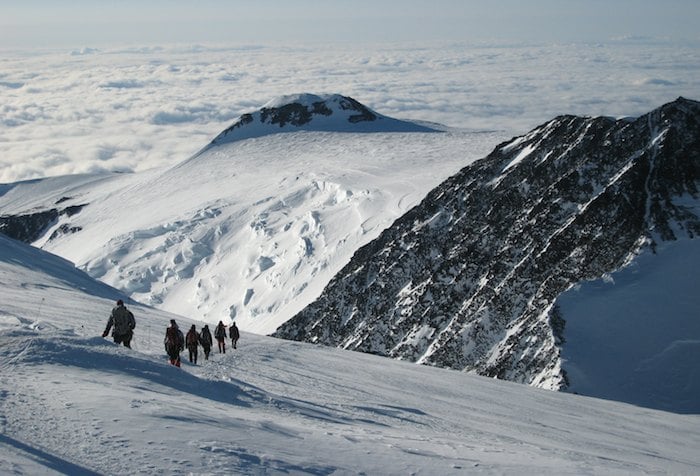
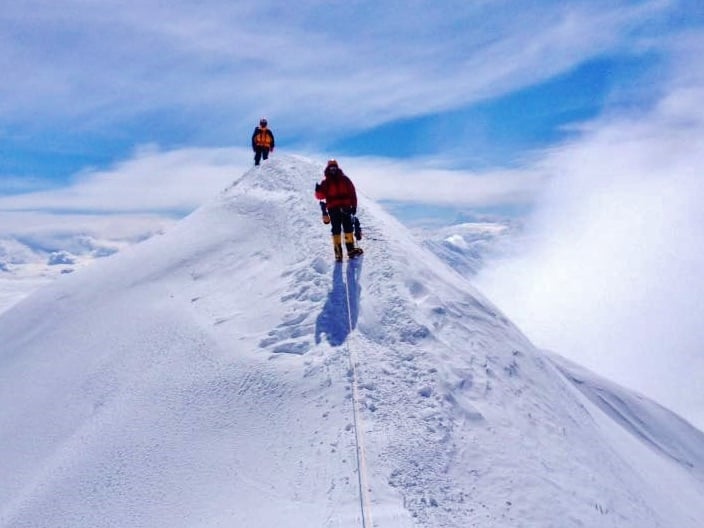
On Denali summit day we make an ascending traverse to Denali Pass, crossing above some very large crevasses and traversing a fairly steep section between 17,600 and 18,000 feet. From there we climb gentle slopes to a plateau at 19,400 feet, from which we get impressive views down onto the Harper and Muldrow Glaciers and across to Denali’s North Peak. Our final approach to the summit takes us up moderately steep slopes to the crest of the ridge between Kahiltna Horn (20,120′) and the main summit. At the crest we peer down the 8000-foot drop of the precipitous South Face, looking between the Cassin Ridge to our right and the South Buttress to our left. We ascend the summit ridge on its exposed south side for two rope lengths, then cross to the north side for the final pitches that bring us to the 20,310-foot summit of North America. With steady drops on three sides and the abrupt face to the south, the final steps to the clearly defined summit point are a very exciting finish to a beautiful route.

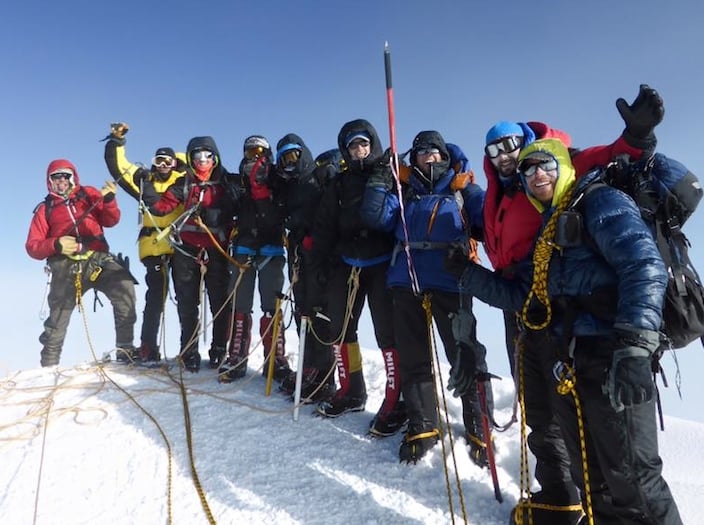
Climbers approaching the summit of Denali.

Climbers approaching the summit of Denali. AAI Collection

Information Safety & Success

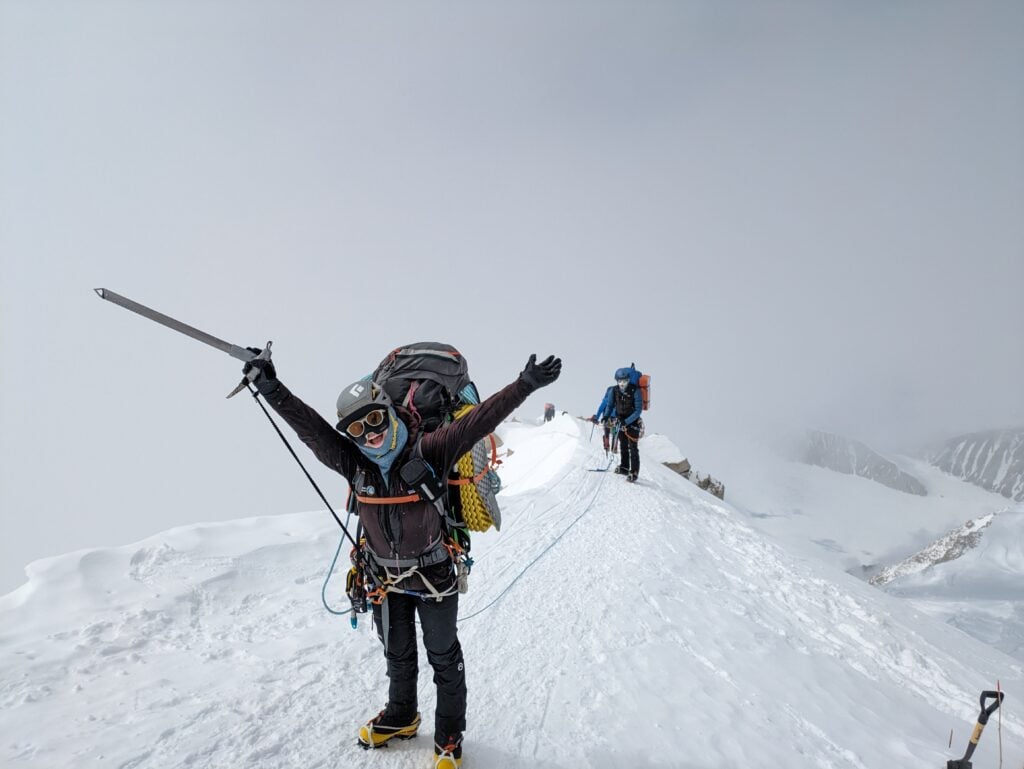
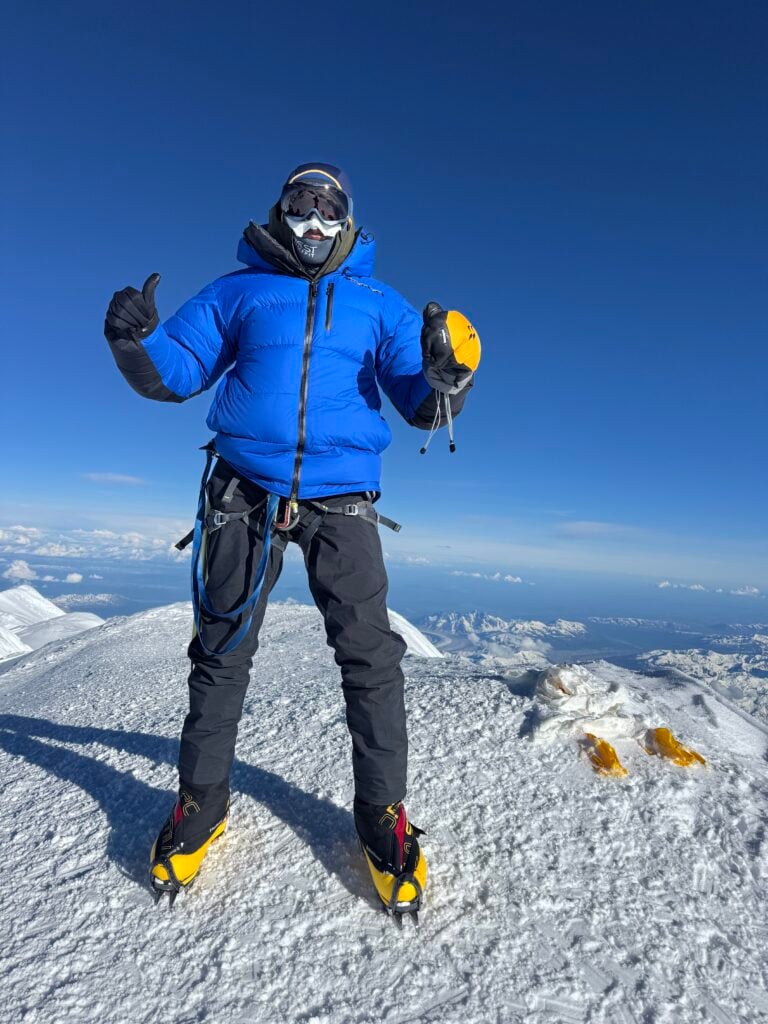
An ecstatic climber at the summit of Denali.

An ecstatic climber at the summit of Denali. Kevin Cannon

AAI expeditions enjoy a rate of safety and success rarely matched by other teams. With well-prepared climbers, we do not have to rely on perfect conditions in order to move. Able to remain poised high on the mountain in poor conditions, our teams often make successful summit bids in small windows of good weather when other teams are out of position. AAI doesn’t pretend to guarantee good health, good weather, or success on these expeditions, but we are committed to building strong teams and creating high potential for safe and successful climbs.

The overall summit success rate on Denali varies dramatically from year to year.  While the average individual success rate on Denali is about 54% overall and 59% in guided groups other than AAI, in some years variations in the subarctic weather patterns cause success rates to decline. For example, the overall success rate in 2014 (as reported by Denali National Park) was a mere 35%.

The Institute’s success rate for individuals for the last ten years is 77%; for expeditions, it is 85%.

AAI has the highest level of commitment to environmental protection and restoration, and on all expeditions and instructional programs we teach and follow Leave No Trace ethics and practices for travel, camping, and climbing. The Institute has been a leader in the conscientious use of wilderness environments, including both remote and popular areas of Denali and the Alaska Range.

The National Park Service presents its Denali Pro awards yearly to people who have made major contributions to protecting the mountain. Over twenty AAI guides and climbers have had the honor of receiving this highest Denali National Park award since its inception in 1998.


Climbers For The Climate

This expedition has a zero carbon footprint. Through AAI’s Climate Initiative, the Institute pays to offset all carbon emissions incurred by the guides and clients on each trip, including emissions from flight, local transportation, electricity in hotels, and fuel burned to cook in the mountains. To learn more about how this works and AAI’s dedication to environmental protection, click here.

​Join an expedition prep program to gain experience in cold weather climbing and camping and improve your proficiency with techniques like self-arrest, crevasse rescue, and sled-hauling.

Plane 10

Climbers unloading gear on the Kahiltna glacier. AAI Collection.