







Curriculum

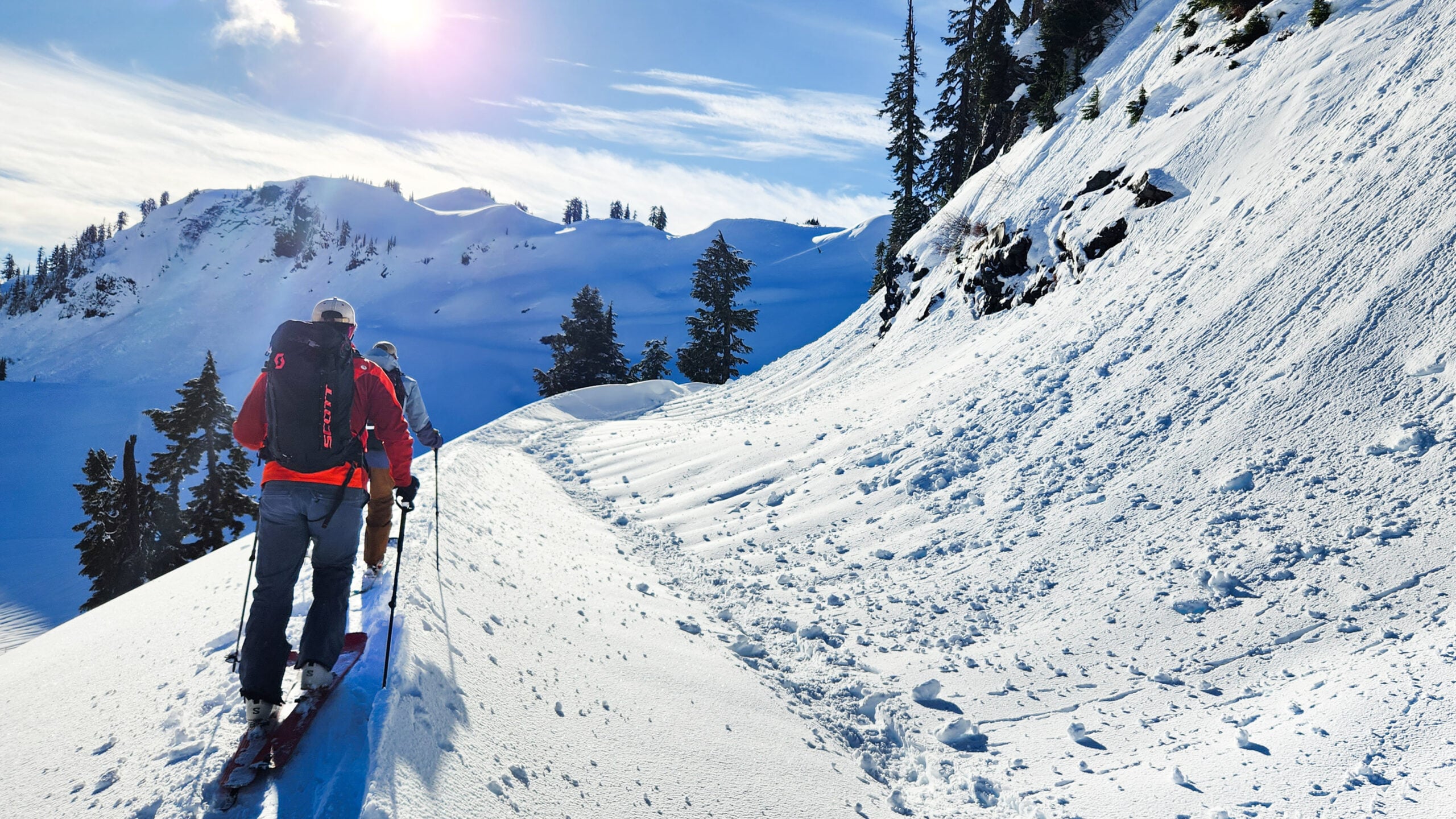
Students will demonstrate proficiency in both self and team-rescue in a glaciated mountain environment.

Students Will Learn:

  • Team Rescue Hauling Systems – 2:1, 3:1, 6:1 and 9:1
  • Self-Rescue Hauling Systems on Rock and on Snow and Ice – 2:1, 3:1. 5:1, 6:1
  • Pulley Systems – simple, compound and complex
  • Lowering Systems – with a scarab, munter-hitch, super-munter, tube-style device, and autoblocking device
  • Anchor Systems – for snow and ice
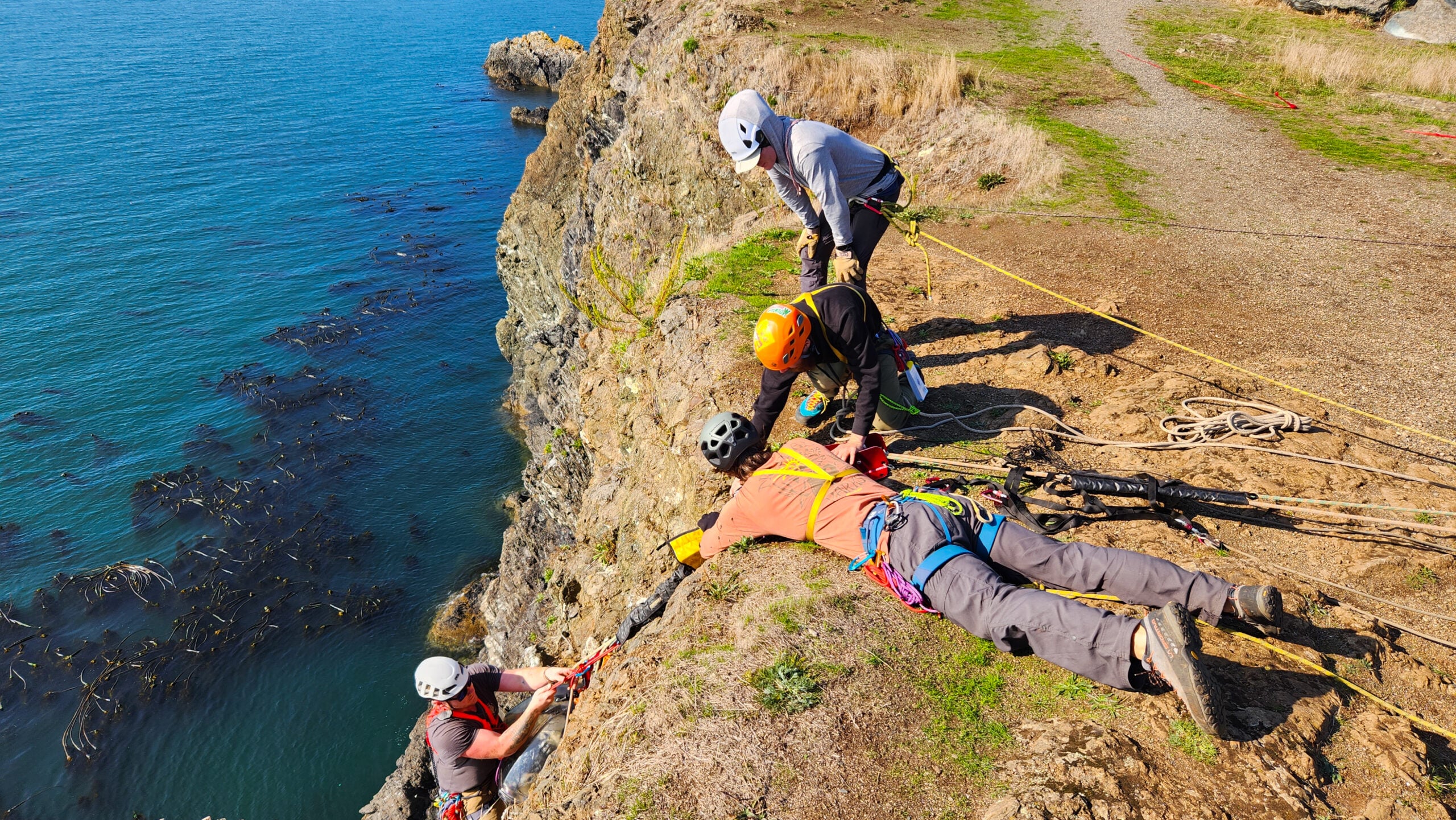
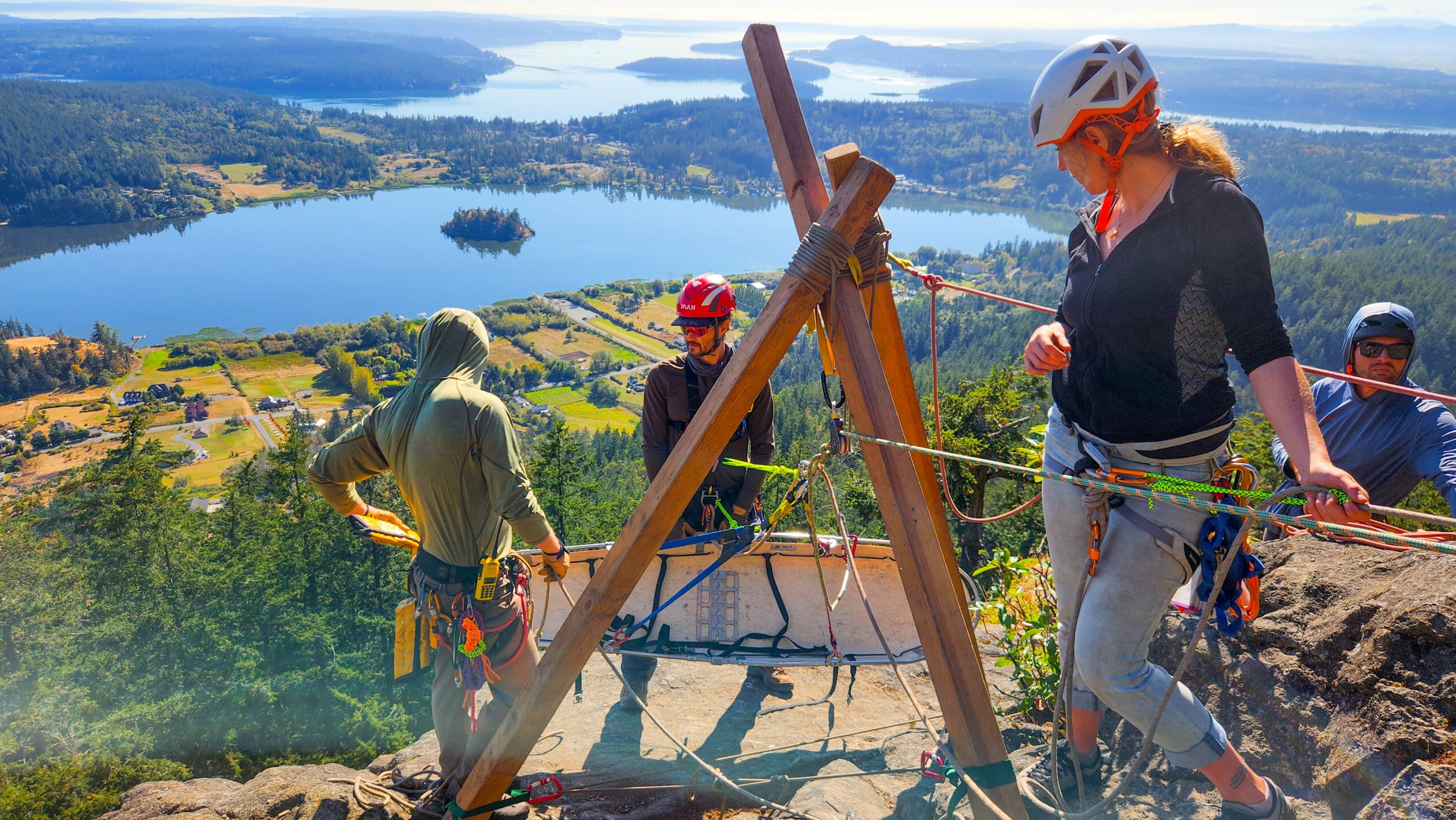
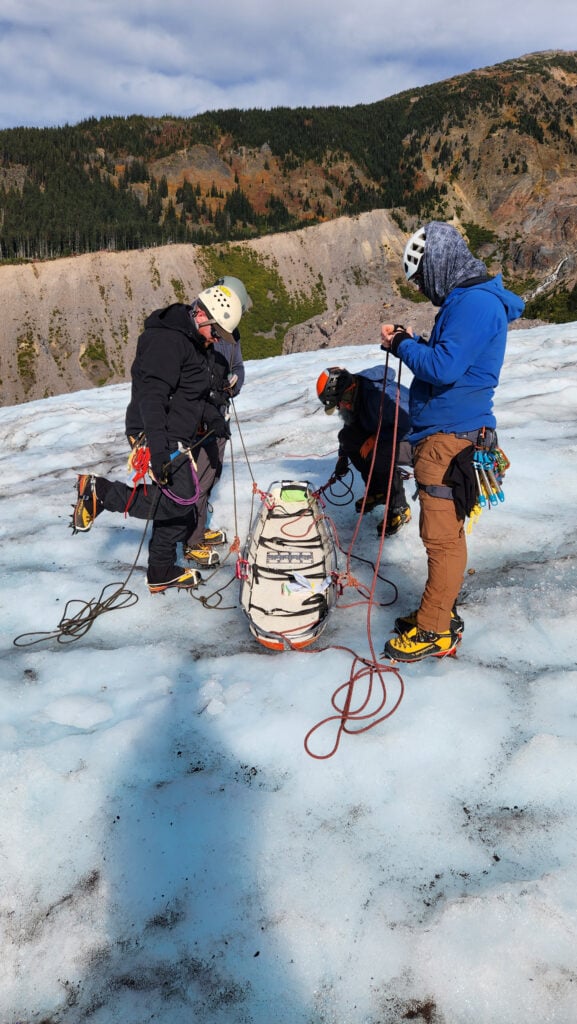
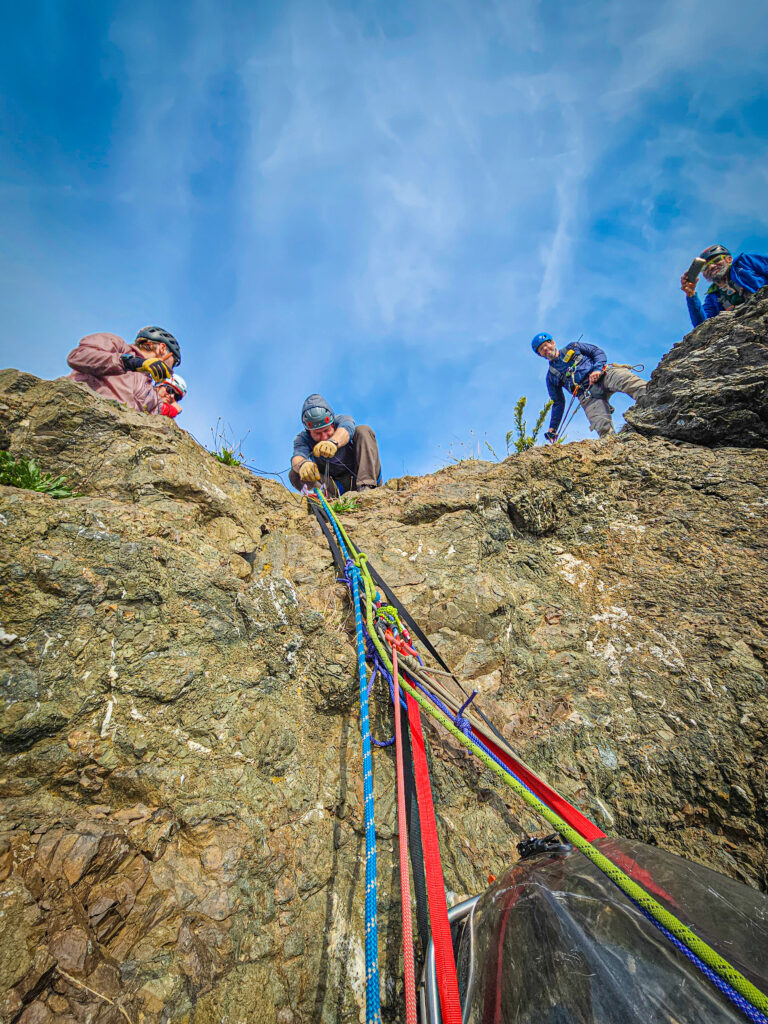
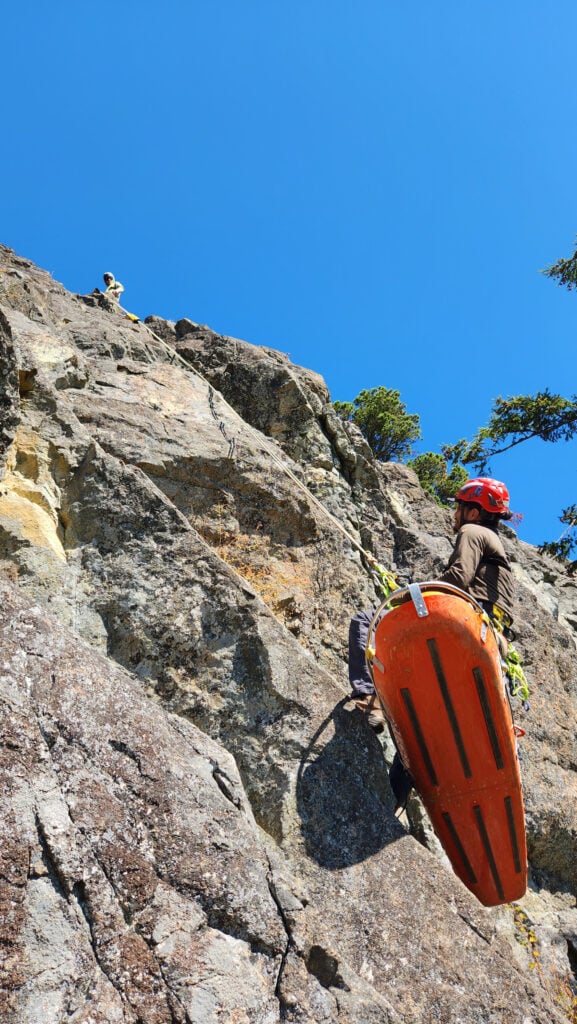
  • Lowering Systems with a Litter
  • Use of a Guiding Line
  • Patient Packaging – in a winter or cold weather environment
  • Specialized Rescue Equipment – continued use of a litter
  • Rope Climbing Techniques – with a friction-hitch system
  • Belay Escapes – escaping a loaded crevasse rescue fall
  • Belays – tandem prusik belays, and body belays
  • Special Considerations for Mountain Rescue
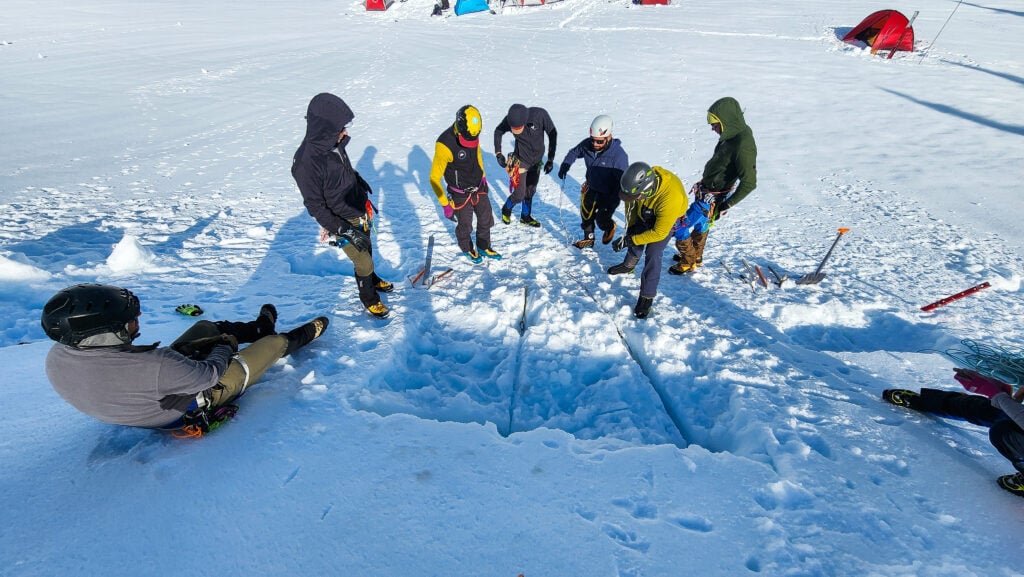
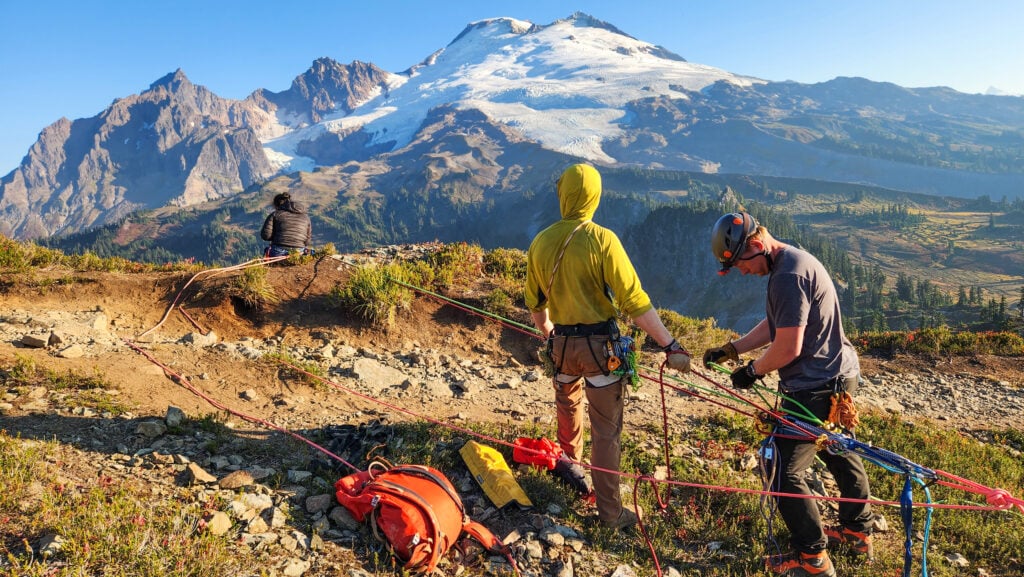
  • Crevasse Rescue – critical procedures for team and self-rescue
  • Helicopter Operations – continued discussion of the specialized issues that surround helicopter operations in the mountains.
  • Physics of Rescue Systems on Anchors and on Equipment
  • Rappelling – continuing discussions of rappelling in a highly volatile environment
  • Knots – figure-eight family, overhand, double-overhand-on-a-bite, bowline, double bowline, long-tail bowline, butterfly, high tension tie-off
  • Bends – double-fisherman’s, overhand flat bend, and water bend,
  • Hitches – prusik, kliemheist, autoblock, clove, munter, and garda
  • Load Releasable Hitches – munter-mule and radium-release
  • Bolts and Bolting Technique

Texbook: Technical Rescue Riggers Guide by Rick Lipke

This text may be purchased at the American Alpine Institute Shop or online.

Details

Prerequisites

  • Completion of a Rope Rescue Technician course
  • Completion of a Self-Rescue/Rock Rescue course
  • Previous mountaineering experience
  • Knowledge of crevasse rescue systems

Inclusions and Exclusions

Included with the tuition are instructors, group equipment (both rescue and climbing), permit fees, and transportation to and from field program locations.  A live Zoom gear consult is also included.

Excluded are front-country lodging, personal climbing equipment, transportation to AAI, food, trip insurance, camping equipment, and guide gratuities.

Credentials

Mountain Rescue Association (MRA)

MRA

The MRA oversees a patchwork of volunteer and professional rescue teams in the United States and Canada. They develop standards and accredit local mountain rescue units in three disciplines: high-angle rescue, search, and snow.

Mountain Rescue Association Accreditation Requirements:  The Technical Rope Rescue Comprehensive will provide students with the baseline skills required by the Mountain Rescue Association for accreditation in both low and high-angle evacuation on rock, in snow, and on ice. The MRA has three components for individuals: Search, Technical Rock Rescue, and Snow and Ice Rescue. The Rescue Comprehensive does not include instruction in missing person searches or avalanche rescue, but does cover all other elements of the accreditation.


National Fire Protection Association (NFPA)

NFPAThe NFPA is an organization devoted to “eliminating death, injury, property and economic loss due to fire, electrical and related hazards.” To do this, the organization develops codes and standards for individuals operating within the fire service. These standards include operating practices for technical rescue teams.
National Fire Protection Association: The Technical Rope Rescue Comprehensive provides skills compliant with NFPA Technician Level training. The course meets the standards identified by NFPA 1670, while also addressing the standards set forth in NFPA 1006 and 1983.


American Mountain Guides Association (AMGA)

AMGA Accredited Company

The AMGA oversees technical mountain guides in the United States. The organization credentials instructors and guides, while also accrediting guide services. The AMGA recognizes three disciplines with several levels of certification. The disciplines are Rock, Alpine and Ski. Each discipline has rescue components on which instructors and guides are tested.

American Mountain Guides Association Rock Rescue Skills: The Technical Rope Rescue Comprehensive addresses the self-rescue and rock-rescue skills required by the AMGA for Instructor and Guide Certification. Those who take this course will have a strong understanding of the high-angle rescue scenarios evaluated by the AMGA and will be able to use their knowledge from the Comprehensive to train for Instructor and Guide Level AMGA Exams.

American Mountain Guides Association Crevasse Rescue Skills:  The Technical Rope Rescue Comprehensive course will provide students with time to practice the specific crevasse rescue skills required by the AMGA for the Advanced Alpine Guides Course and the Alpine Guides Exam. Students will leave the course with a strong understanding of what the guide organization tests for and will have developed the skills to train for the exam.


International Technical Rescue Association (ITRA)

ITRA

The ITRA is an organization that provides global recognition of technical rescue practitioners and instructors, across a wide range of rescue disciplines, including swiftwater, rope, boat, confined space and animal rescue.

International Technical Rescue Association: Three levels of practitioners are recognized by the ITRA. They are Level I Responder, Level II Technician, and Level III Advanced. Those who complete this program will have been instructed in Level III skills. To become certified at Level III, students will have to complete a separate skills assessment.


Options

The Technical Rope Rescue program is structured as four distinct courses, allowing climbers and mountaineers to tailor their training to their experience and goals.

  • Technical Rope Rescue 1 -Operations introduces the fundamentals of high-angle rescue, including anchor systems, belays, and simple patient movement.
  • Technical Rope Rescue 2 – Technician builds on that foundation with more complex scenarios, multi-pitch evacuations, and team-based rope operations.
  • Self-Rescue for Climbers focuses on independent problem-solving in the backcountry, teaching climbers how to handle emergencies when help is not immediately available.
  • Advanced Mountain Rescue integrates all previous skills in realistic, high-stakes simulations, emphasizing dynamic decision-making and full-scale rescue operations.

Participants can enroll in any single course or progress through multiple programs for comprehensive training, making it easy to match your learning path to your experience, schedule, and professional or personal objectives.

For those who need the full spectrum of skills or are meeting agency requirements, the Technical Rope Rescue Comprehensive offers the most value, providing the complete curriculum and maximum preparedness in one investment.

Private Options

For those seeking a more personalized experience, our private rope rescue programs offer tailored instruction for both individuals and organizations. Whether you want focused one-on-one training, a small group session, or a custom program for your team, private options allow instructors to adapt scenarios, pacing, and curriculum to your specific goals and experience level. These sessions are ideal for climbers, guides, or agencies looking to reinforce skills, address unique challenges, or prepare for high-stakes environments. With private instruction, you gain direct access to expert guidance, hands-on problem solving, and flexible scheduling, ensuring that every participant walks away with practical, applicable rope rescue expertise.  Please inquire for details.