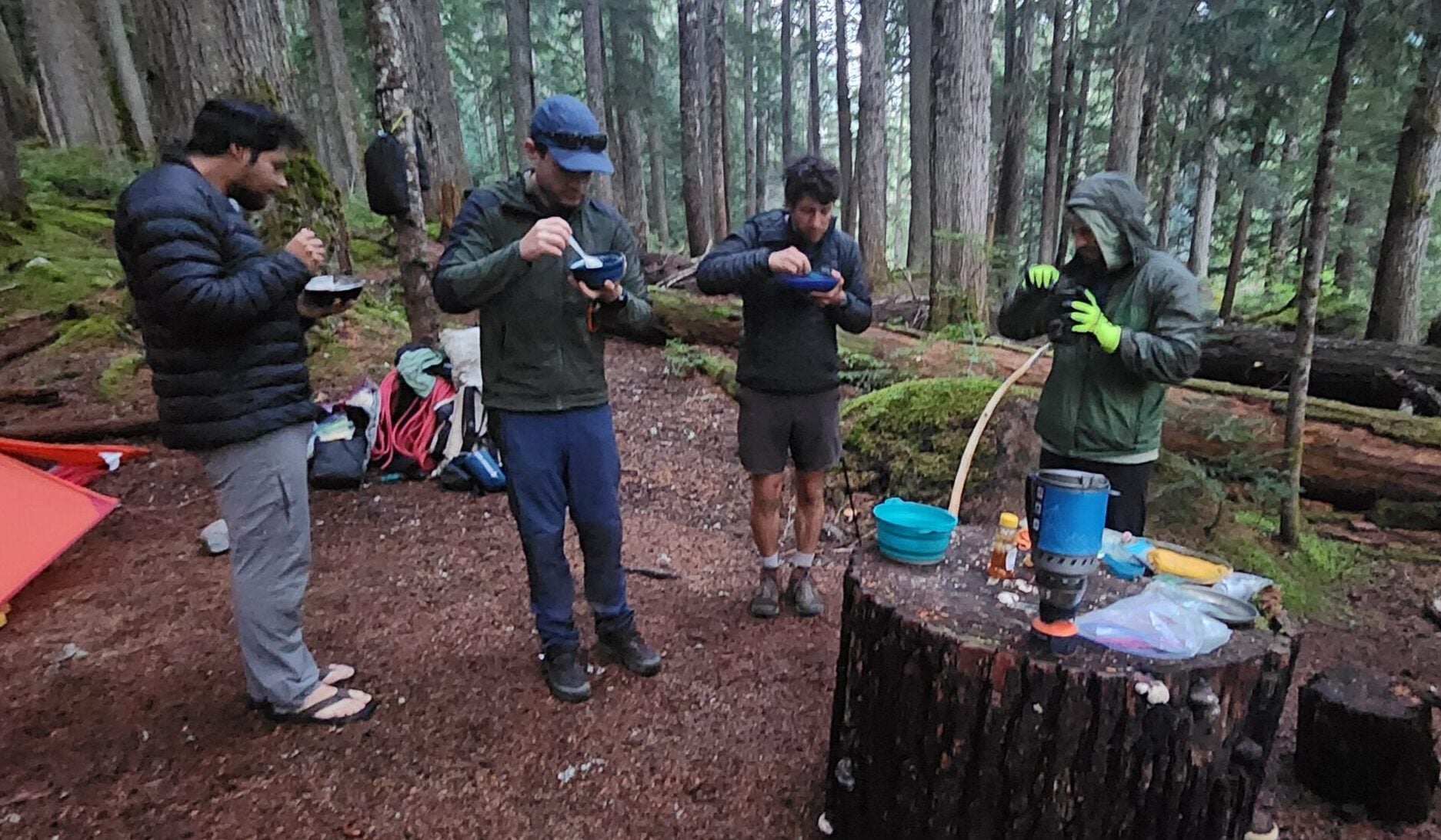













Lightweight, calorie-dense, and practical strategies for fueling in the mountains
Mountaineering demands a lot from your body. Cold, altitude, heavy packs, and long days all increase calorie needs, and running low on fuel quickly impacts pace, decision-making, and morale. Good meal planning keeps weight reasonable while delivering enough energy to perform.
1. Start With Calorie needs
The biggest mistake people make is packing food randomly rather than planning their energy needs.
General Guidelines
- 2,500 to 5,000 calories per day is typical, depending on effort, altitude, and temperature.
- Long summit days, cold weather, and high exertion push needs higher.
- Many backpackers burn roughly 350–700 calories per hour of movement with a pack.
- Most climbers carry about 1.5 to 2.5 pounds of food per person per day.
For alpine climbing or summit pushes, daily intake often trends toward the higher end of these ranges.
2. Think in Terms of Calorie Density
The goal is simple: more calories per ounce. This will provide more energy for less weight.
- A good target is roughly 4.5 calories per gram or higher.
- Fat is key because it contains 9 calories per gram, more than carbs or protein.
High Calorie-Density Foods
- Nuts and nut butters
- Cheeses and salami
- Oils (Coconut, Olive, Sunflower)
- Chocolate
- Whole milk powder
- Protein Powders
Foods that Tend to be Inefficient
- Foods with high water content
- Lean meats
- Bulky, low-fat snacks
3. Balance Nutrition
While calories are the priority, balanced nutrition improves sustained energy and recovery.
Aim to Include:
- Carbohydrates for quick energy
- Fats for long-lasting fuel
- Protein for recovery and muscle repair
Meals that combine these tend to keep energy levels more stable throughout the day.
4. Plan Meals by the Day
A simple structure helps ensure steady fueling:
- Breakfast
- Snacks during movement
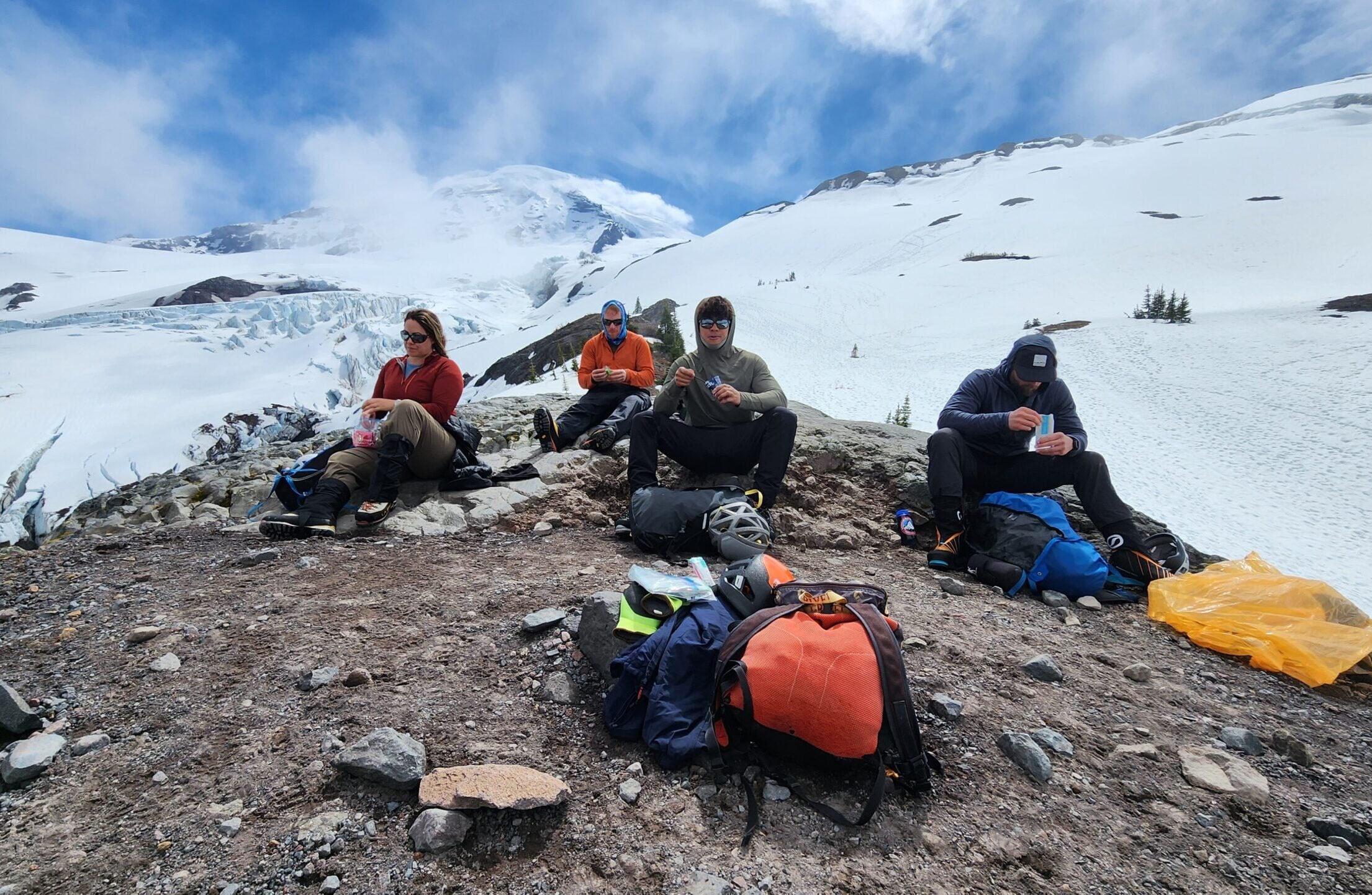
- Lunch or continuous snacking (as lunch is often on-the-go)
- Dinner
- Emergency or summit snacks
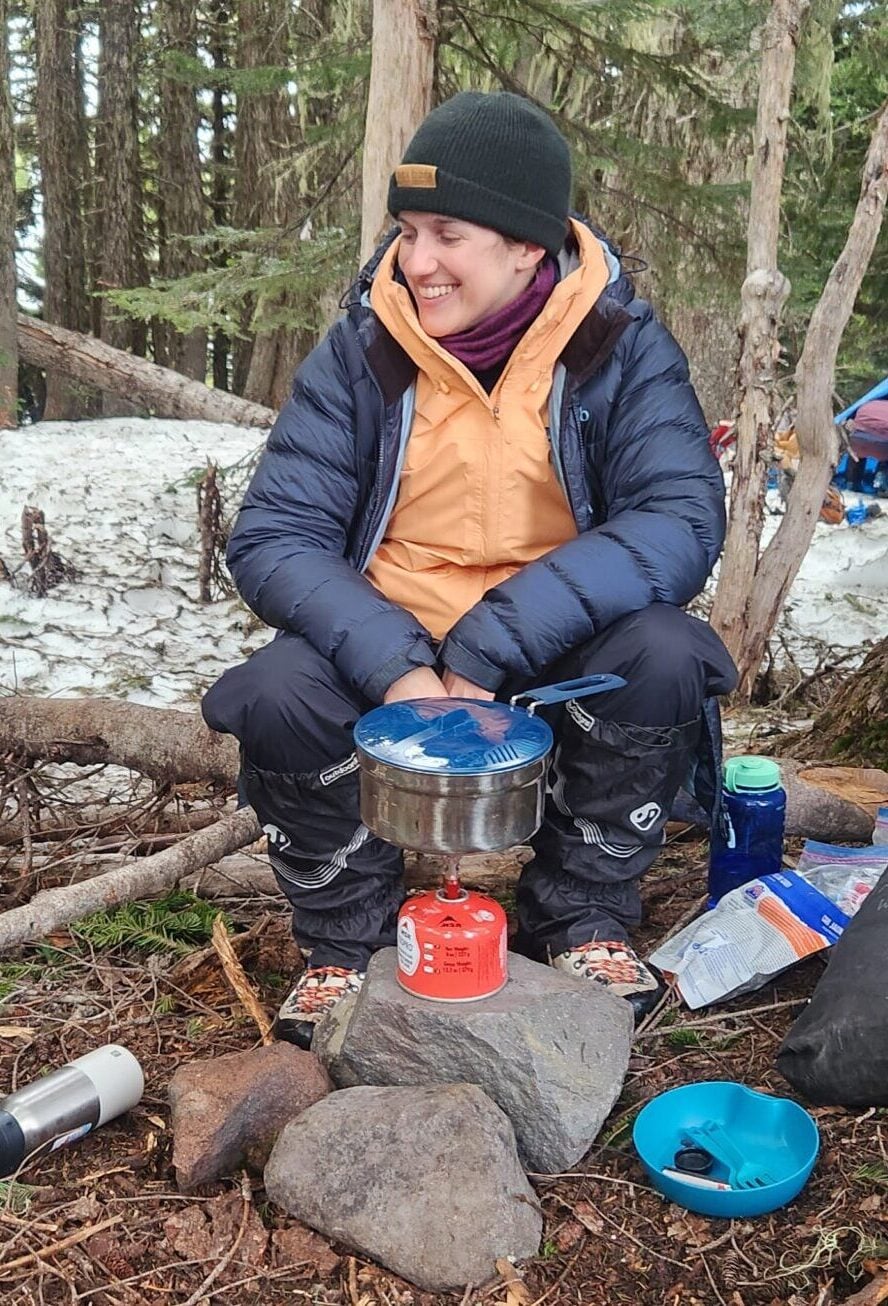
Planning this in advance helps prevent both overpacking and underfueling.
5. Sneaking Calories into Meals
One of the easiest ways to improve a mountain diet is to increase calories in foods you are already eating. Small additions can significantly increase energy intake without adding much weight or preparation time.
Easy Calorie Boosters to Pack
- Maple syrup packets
- Honey packets
- Coconut oil packets
- Coconut flakes
- Olive oil packets
- Powdered whole milk
- Nut butter packets
- Chocolate chips
- Protein powder
- Instant breakfast mixes
These pack well, tolerate temperature swings, and mix easily into meals.
How to Boost Common Meals
Oatmeal
A strong breakfast base that accepts many additions:
- Powdered milk or protein powder
- Coconut flakes
- Nuts or nut butter
- Maple syrup or brown sugar
- Chocolate chips
- Dried fruit
A simple oatmeal breakfast can nearly double in calories with these additions.
Freeze-Dried or Dehydrated Dinners
Easy ways to increase energy:
- Stir in olive oil or coconut oil
- Add dehydrated cheese or butter powder
- Mix in instant rice or couscous
- Add shelf-stable sausage or TVP (textured vegetable protein)
A small amount of oil dramatically increases calories with minimal weight.
Drinks
Liquid calories are often easier to consume when appetite drops:
- Powdered milk in coffee or tea
- Hot chocolate with added whole milk powder
- Carbohydrate drink mixes
Lunches and Snacks
Simple upgrades:
- Tortillas with peanut butter and honey
- Trail mix with extra chocolate or coconut
- Bars paired with nut butter
6. High-Calorie Snacks Climbers Actually Eat
The best snacks are easy to chew, appealing in cold weather, and quick to access.
Sweet and Salty Combos
- Trail mix heavy on nuts and chocolate
- Peanut butter pretzels
- Chocolate-covered almonds
These are easier to keep eating than purely sweet snacks.
Soft, East to Chew Foods
Cold temperatures make many bars hard and unappealing.
Good choices:
- Soft energy bars
- Fig bars
- Peanut butter tortillas
- Cheese
- Salami
Quick Energy for Summit Pushes
When moving hard or at altitude:
- Energy gels or chews
- Honey or maple syrup packets
- Gummy candies
These are useful when appetite is low, but energy demand is high. It also gives you a quick burst of energy and are easy to digest.
High-Fat Snacks for Sustained Energy
- Nut butter packets
- Mixed nuts
- Chocolate
- Cheese and salami
- Coconut clusters
Fat provides steady fuel and works especially well in cold environments.
Morale Foods
A small treat can make a big difference:
- Favorite candy
- Chips
- Specialty chocolate
Psychological energy matters as much as physical energy on long days.
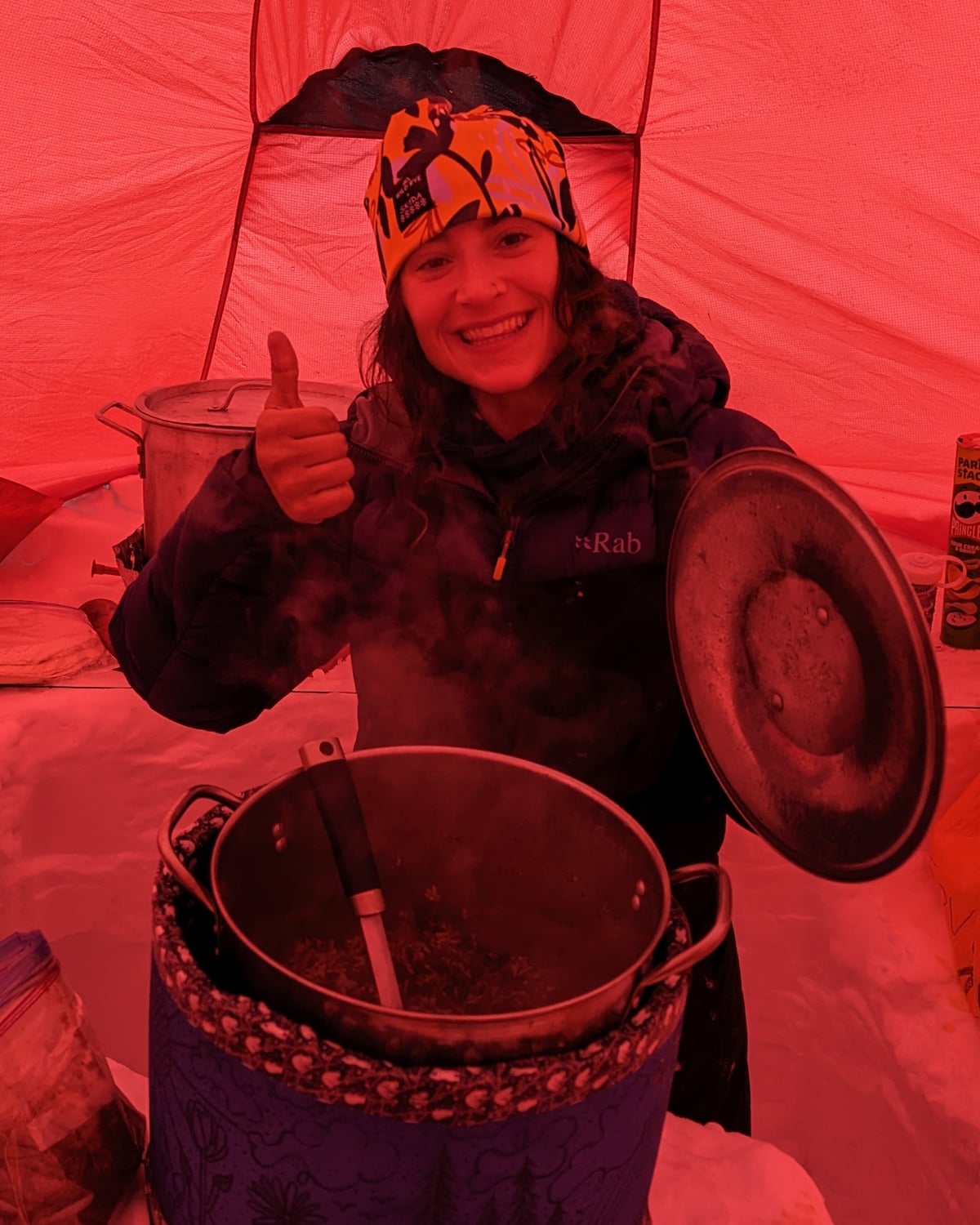
7. Eat Frequently
Many climbers perform best by eating small amounts consistently rather than relying on large meals.
Good Habits:
- Eat every 60 to 90 minutes while moving
- Keep snacks in pockets where they are easy to reach
- Eat before you feel hungry
Waiting too long often makes it difficult to catch up.
8. Pack for the environment
Adjust food plans based on:
- Temperature
- Trip length
- Altitude
- Technical difficulty
- Group pace
Cold weather and high exertion significantly increase calorie demand. In cold environments, it helps to eat a snack before sleeping. A small calorie intake, especially from fats or carbohydrates, gives your body fuel to generate heat through the night. This simple habit can noticeably improve warmth and recovery.
9. Bring Food You Actually LIke
If you don’t enjoy eating something at home, you probably won’t eat it on the mountain.
Variety helps:
- Mix sweet and savory
- Change textures
- Include something you look forward to
- Don’t just rely on prepackaged dehydrated meals. They become unappetizing fast!
- Shop for your meals and snacks when you are hungry!
Food is fuel, but it is also morale.
10. refine After Every Trip
After returning:
- Note what you ate
- Note what came home
- Adjust portions and choices
Strong meal planning systems are built over time through small adjustments.
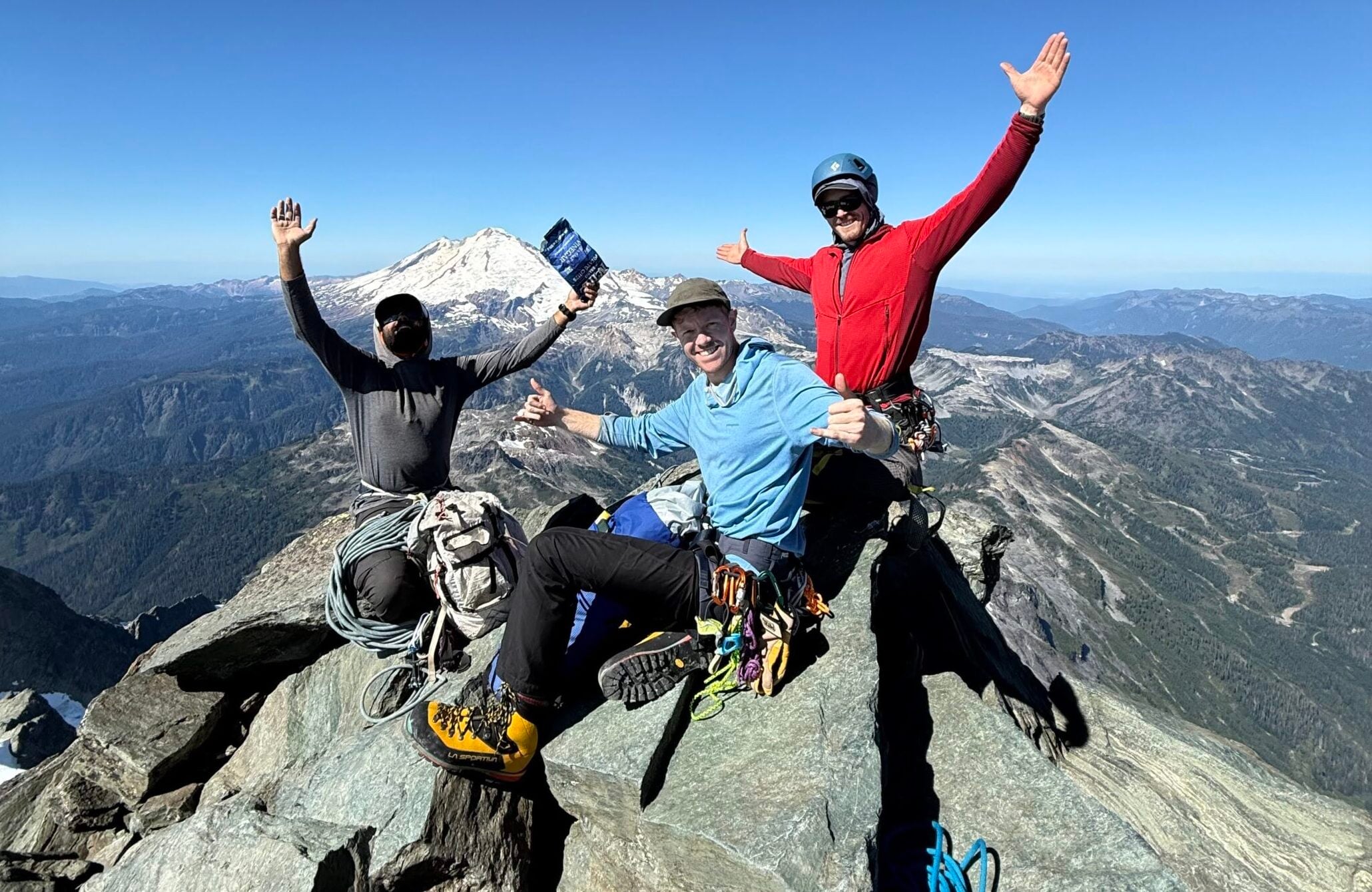
Sample 3-Day Mountaineering Menu
Example menu for a moderate alpine climb or glacier route
Approx. 3,500 to 4,500 calories per day depending on portion size and additions.
This example reflects a common pattern used on climbs: simple breakfasts, continuous snacking during movement, and calorie-dense dinners.
Day 1
Breakfast
- Instant oatmeal with powdered milk, nuts, and maple syrup
- Coffee or tea with powdered milk
Snacks During Movement and Lunch
- Trail mix heavy on nuts and chocolate
- Energy bar
- Peanut butter packet
- Gummy candy or chews
- Tortilla with salami and cheese
- Handful of chips or crackers
Dinner
- Freeze dried meal
- Olive oil added after cooking
- Hot chocolate with powdered milk
Before Bed Snack
- Chocolate or trail mix
Day 2
Breakfast
- Granola with powdered milk
- Instant breakfast drink or coffee
Snacks During Movement and Lunch
- Soft energy bars
- Chocolate covered almonds
- Honey or maple packet
- Jerky
- Bagel with reconstituted cream cheese powder
Dinner
- Instant rice with dehydrated vegetables, TVP, and a sauce packet of choice
- Olive oil or coconut oil mixed in
- Tea or recovery drink
Day 3 (Summit Day Example)
Early Breakfast
- Breakfast bar with nut butter
- Coffee or tea with collagen or protein powder
Summit Snacks (Eat Frequently)
- Energy gels or chews
- Chocolate
- Dried Fruit
- Soft candy bars
- Honey or maple syrup packets
Lunch (often delayed until back at camp)
- Mac and Cheese
- Candy or quick sugary snacks
Dinner (Back at Camp or Trailhead)
- Freeze dried meal or larger meal
- Extra oil or cheese added
- Hot drink
A Final thought
Most climbers don’t struggle because they packed the wrong foods. They struggle because they didn’t eat enough, often enough. A simple plan, frequent snacks, and calorie-dense meals make a noticeable difference in energy, pace, and recovery.
- Pre-portion each day’s food into a separate bag so it is easy to track intake.
- Pack the next day’s snacks where they are easy to reach.
- Keep summit snacks in jacket pockets to prevent freezing.
- Carry one extra meal in case of delays or weather.
- Eat perishable foods within the first few days