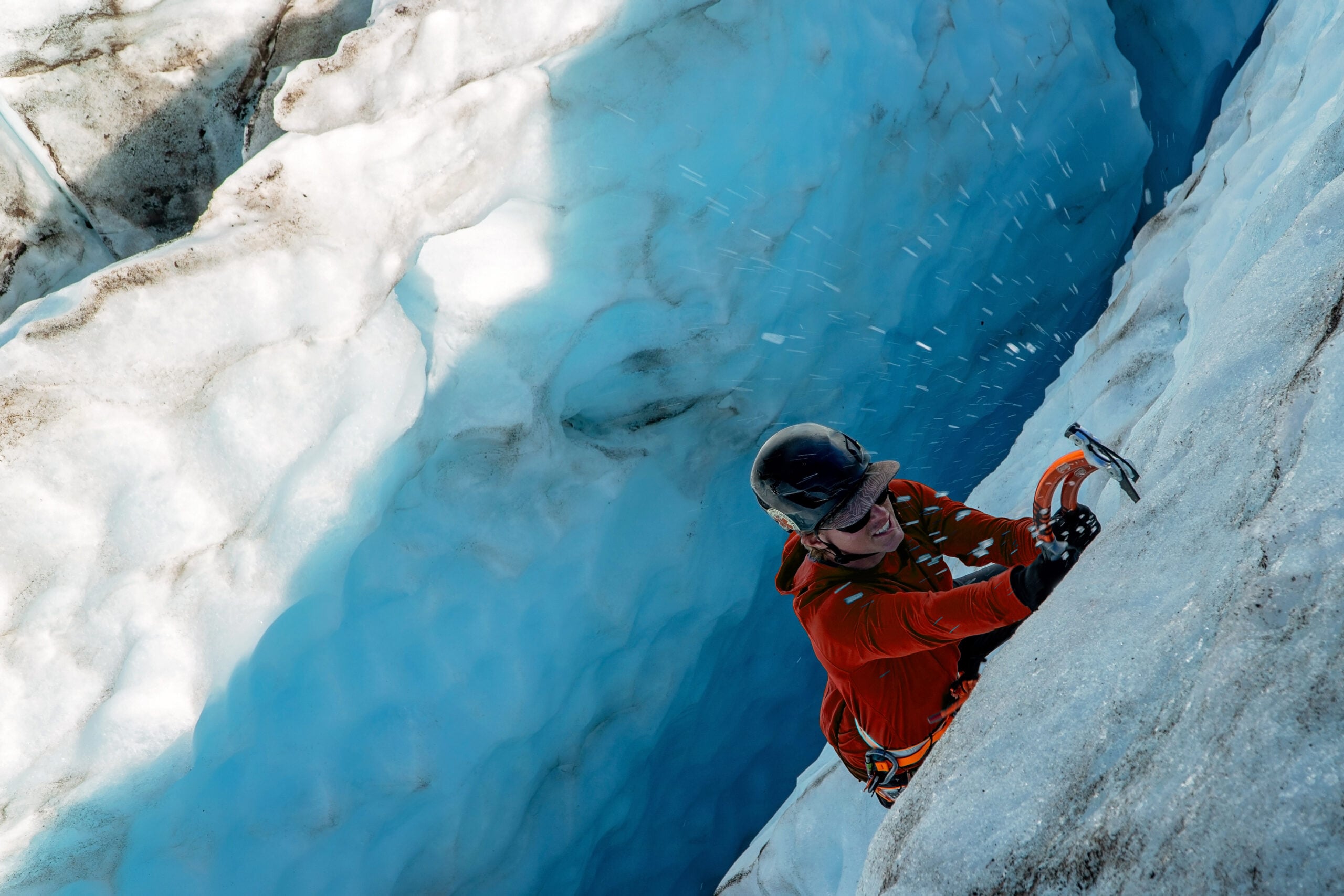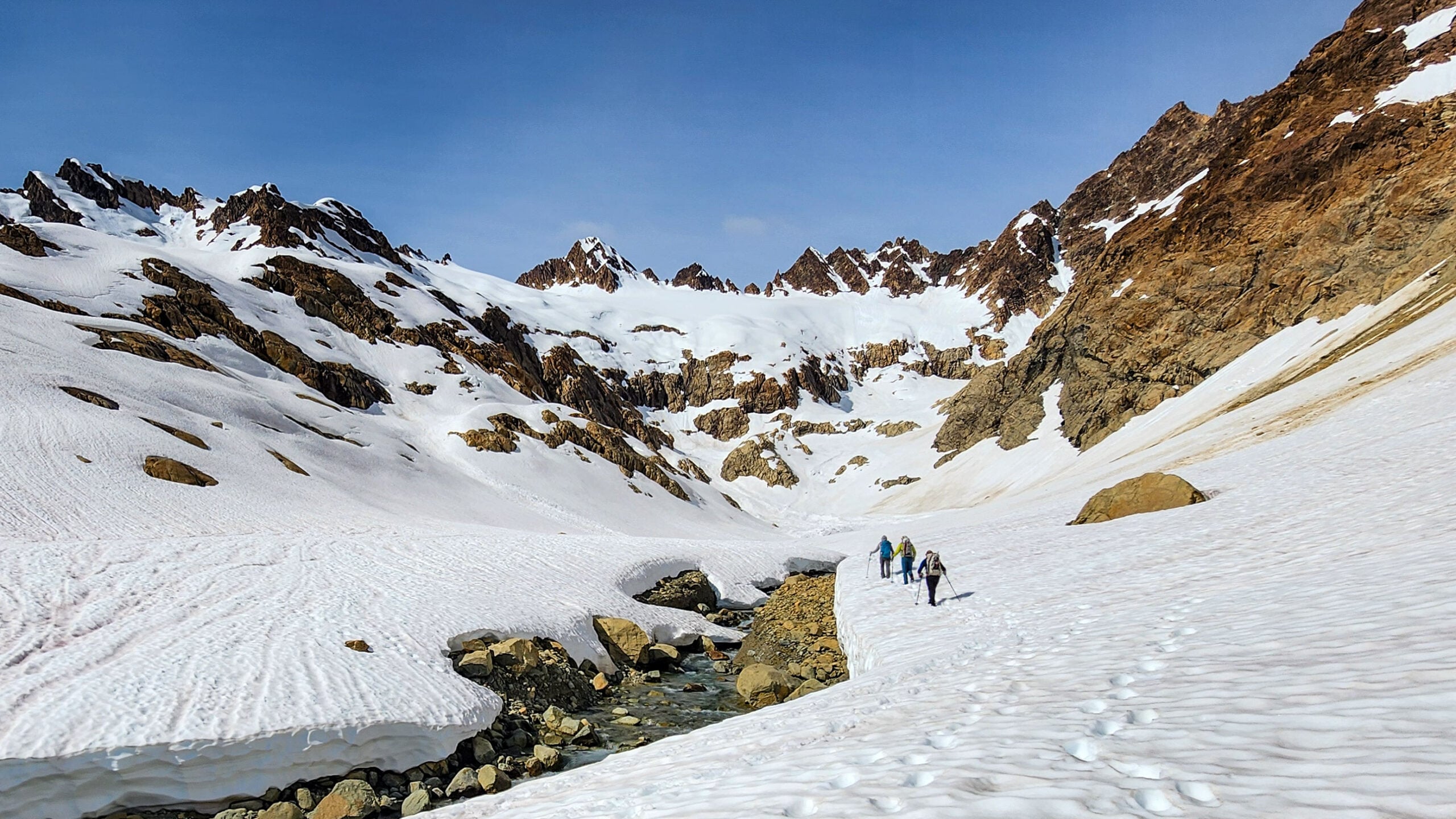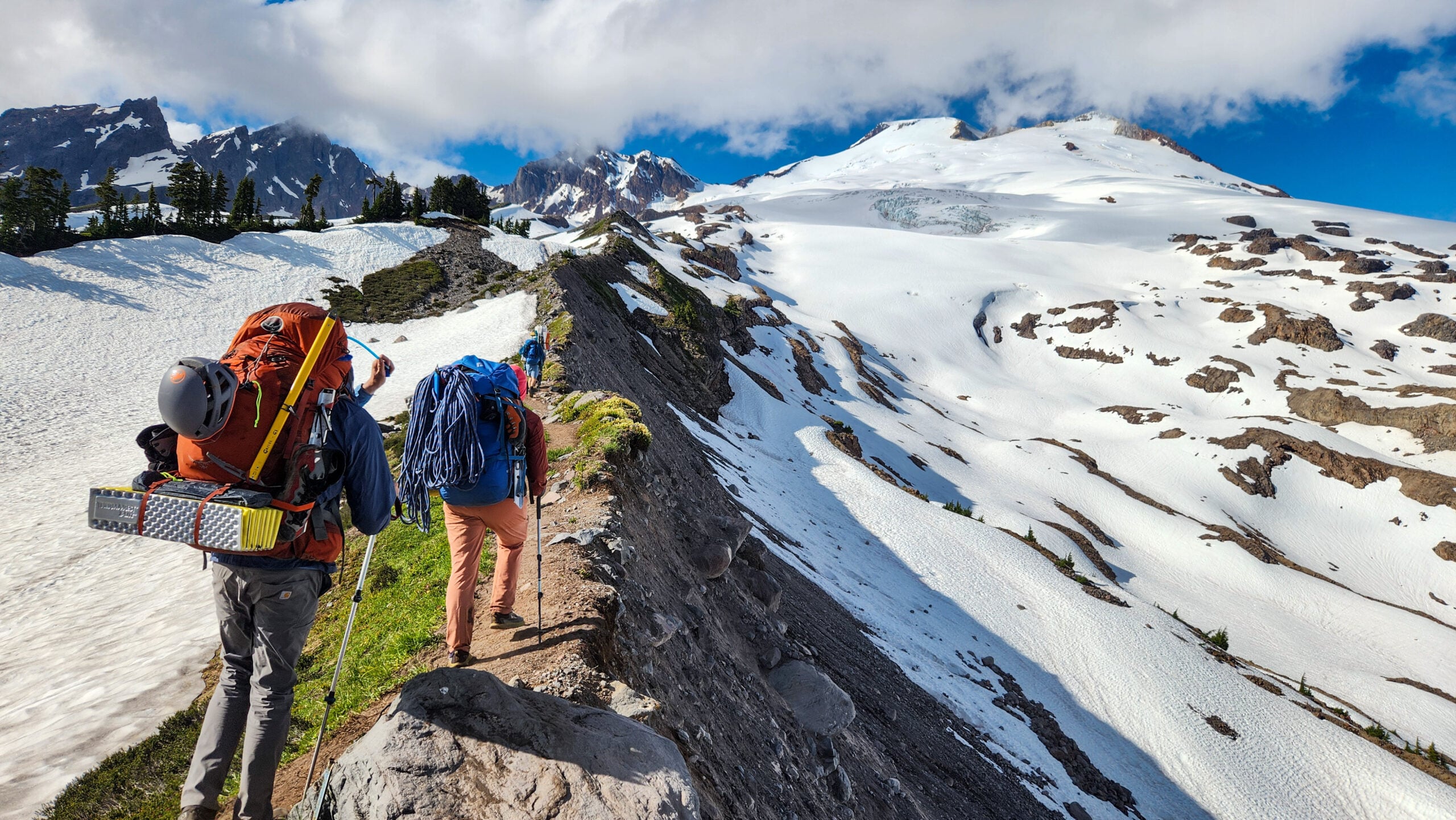






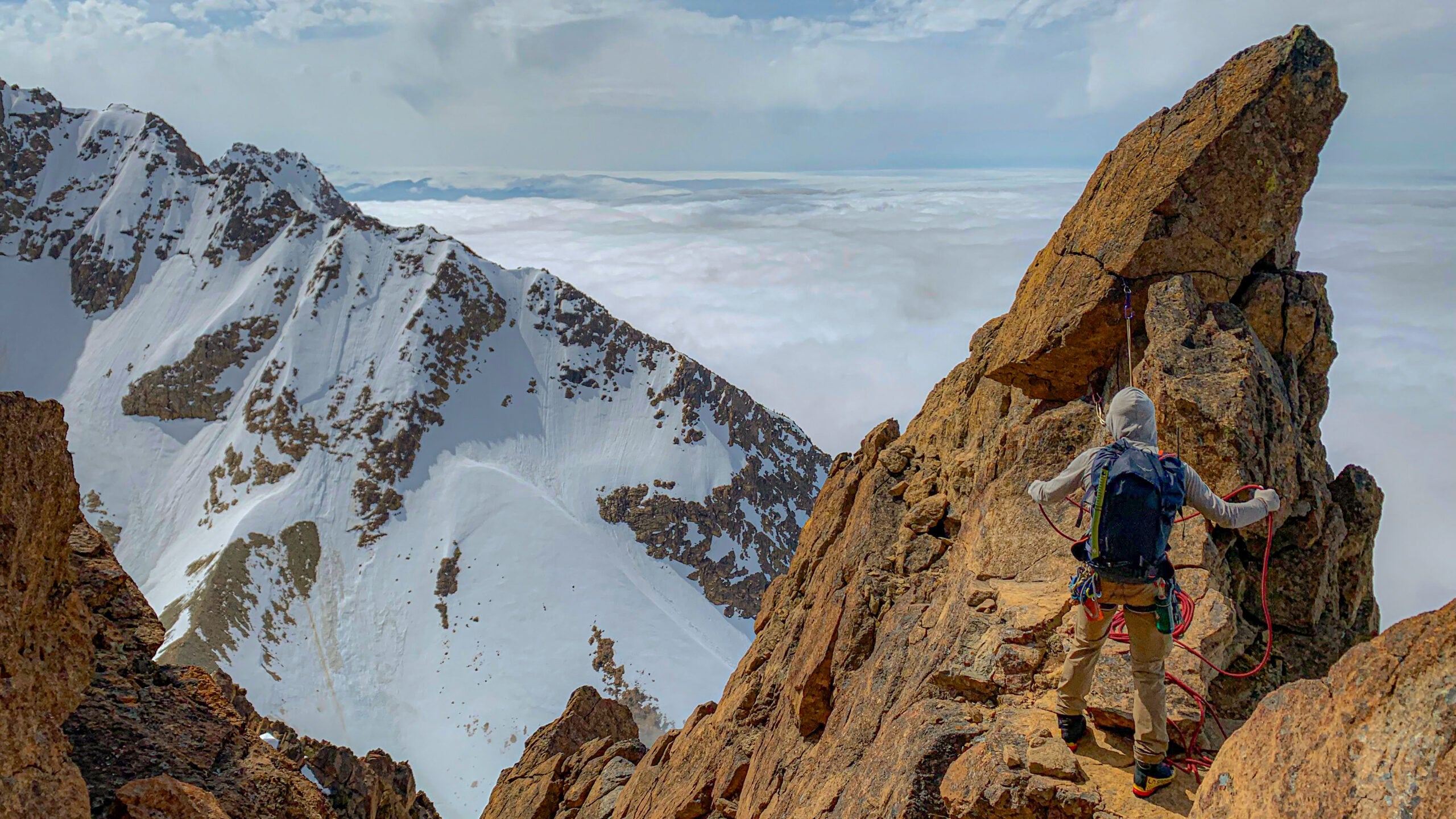




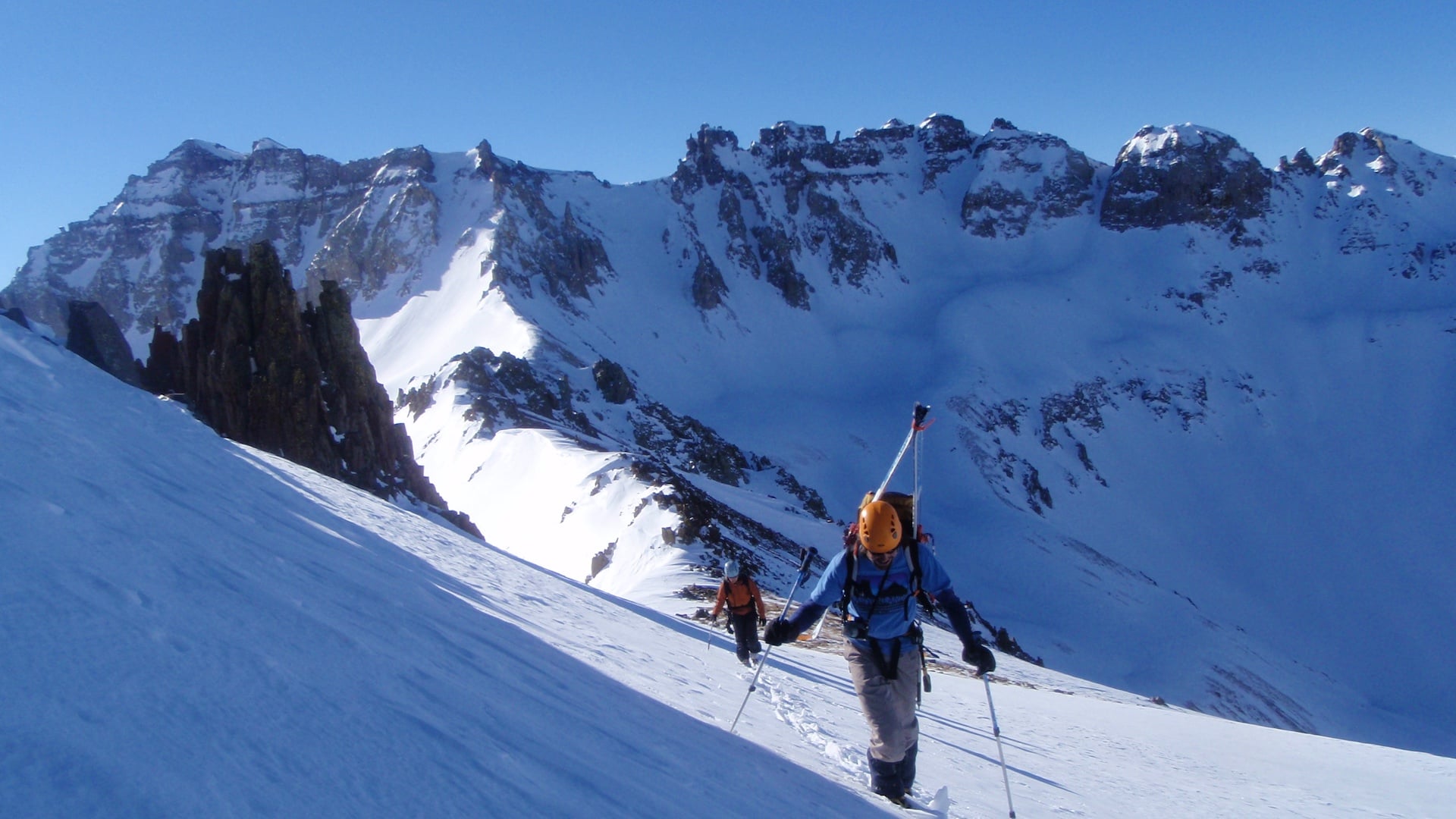





Alpine ice climbing is the art of moving over steep, frozen terrain high in the mountains. Unlike waterfall ice, which forms seasonally on cliffs, alpine ice develops from old, compacted snow that has transformed over time. Think of it as glacier-born blue ice or firm névé plastered onto slopes, couloirs, and ridge-lines. And sometimes, alpine ice is a mix of snow and ice, sometimes referred to as “snice.”
Following is a breakdown of several ice axe techniques that may be used to move effectively in a snow and alpine ice environment. Here we have included not just the North American terminology, but also the French terminology, as many of these techniques were originally developed in the French Alps.
Dagger Positions
On steep snow and ice, most commonly on terrain between 45° and 70°, one or more of the dagger positions may be useful. The climber holds the ice axe at the top of the shaft or on the head while seating the pick of the axe in the snow. Dagger positions work well in hard snow or on névé, but are less effective on hard ice, where the only way to create an effective pick placement is to swing the axe.
Low Dagger (Piolet Panne)
The first of these three techniques is the low dagger position, or piolet panne. In this position, place the palm of your hand on the top of the adze as you press the pick into the slope at waist level. This is a quick technique that doesn’t require any changes to the way you hold your ice axe, assuming you started out in the cane position, but it doesn’t feel as secure as some other techniques because the pick is so low. It will be most useful for downclimbing.
Middle Dagger (Piolet Appui)
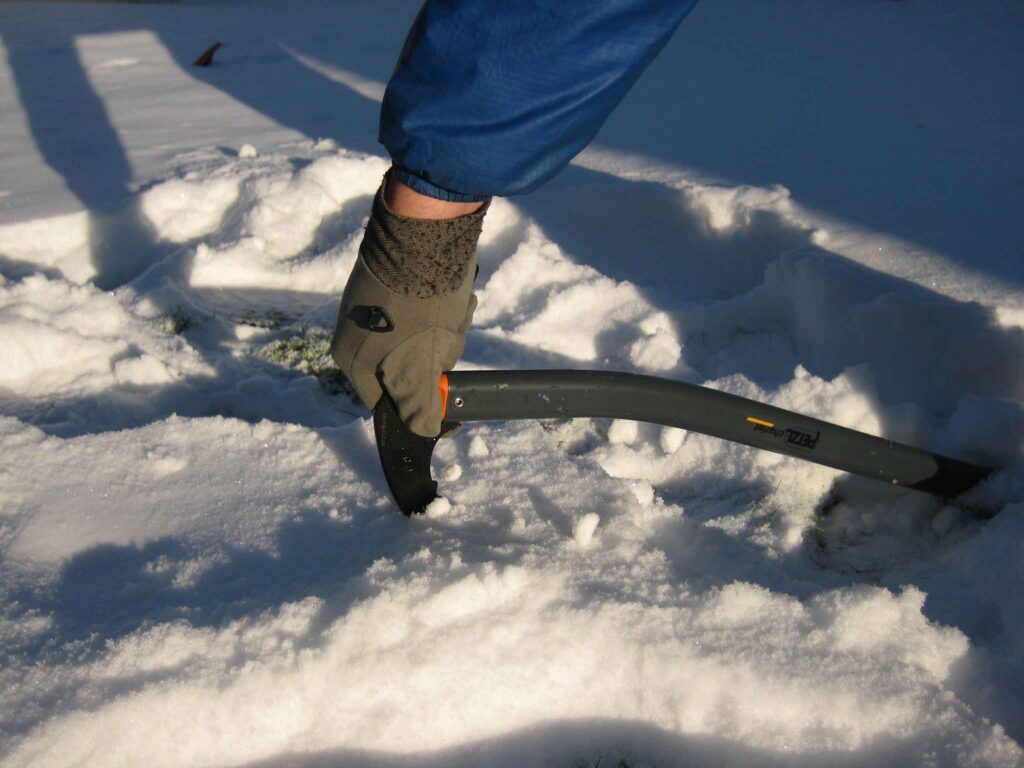
In the middle dagger position (piolet appui), place your hand on the shaft of the axe right below the head. This position allows you to push the pick into the slope more forcefully, making each stick feel more secure.

High Dagger (Piolet Poignard)
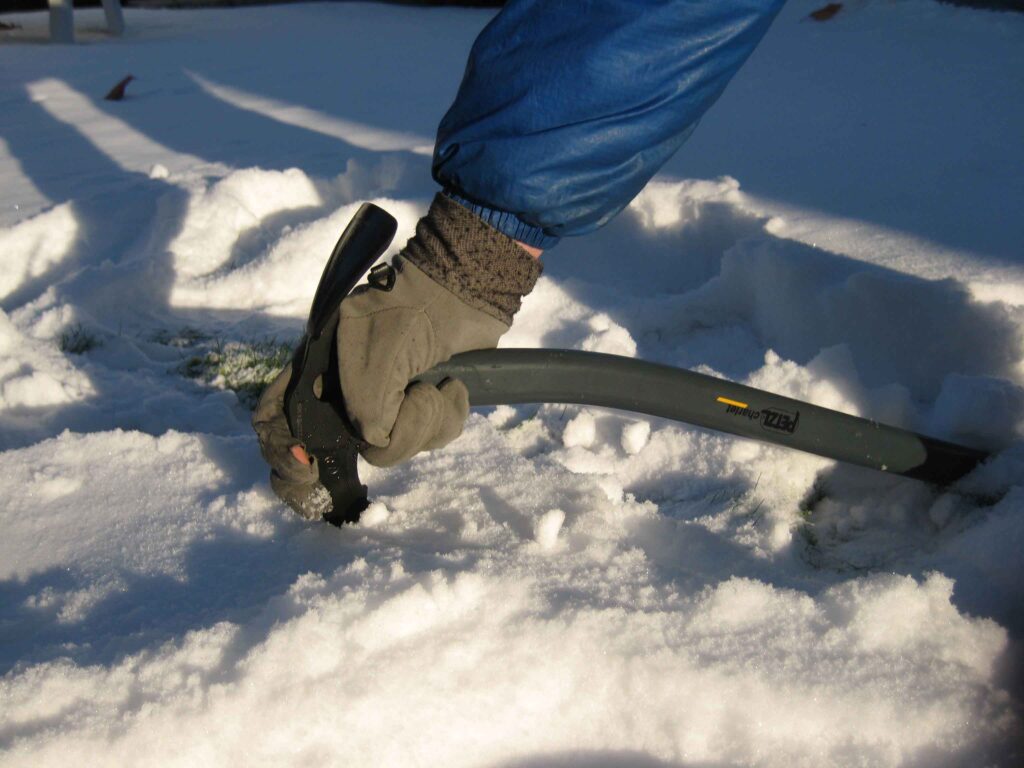
In the high dagger position (piolet poignard), hold the head of the axe, wrapping your fingers over the pick in front of the shaft while you wrap your thumb under the adze behind the shaft. To place the axe, reach high and stab the pick into the slope. A high dagger placement often provides better security on very steep slopes than the other two dagger positions.
When it comes to using an ice axe in climbing applications (not self-arrest applications), there are a few additional techniques that you should be aware of.
Self-Belay Position (Piolet Manche)
The self-belay, or “deep plunge,” is a dependable way to move on steep snow. You drive the axe straight down as far as it will go while keeping your hand on the head. Once buried, the head acts like a solid grip—almost as if the shaft were tucked into a snug sleeve of snow that locks it in place.
There are two main ways to hold the tool. In softer snow, when most of the shaft sinks in, you can wrap both hands around the head. This creates a remarkably stable stance.
On harder or icier surfaces, the axe won’t plunge as deeply, so using both hands on the head can pop the spike out during a slip. Instead, place one hand on the head and the other around the shaft right where it enters the snow. If you do slip, the upper hand drives forward while the lower hand pulls back. That opposing pressure keeps the tool planted and stops the slide before it becomes something far more exciting than you intended.
Anchor Position (Piolet Ancre )
Sometimes you need a quick stick with your axe to get over a bulge or to add security in a crevasse crossing. To do this, hold the tool in your dominant hand just above the spike and whip it overhead like you’re driving a nail. As the swing finishes, snap your wrist forward—this gives the pick extra bite. Once set, the head and shaft become solid handholds you can use to move up and over whatever’s in your way.

Ice Climbing (Piolet Traxion)
When people use the French term, piolet traxion, they are talking about classic two tool ice climbing. This is often employed in terrain that exceeds 50-degrees, but not always. It just depends on your skillset.
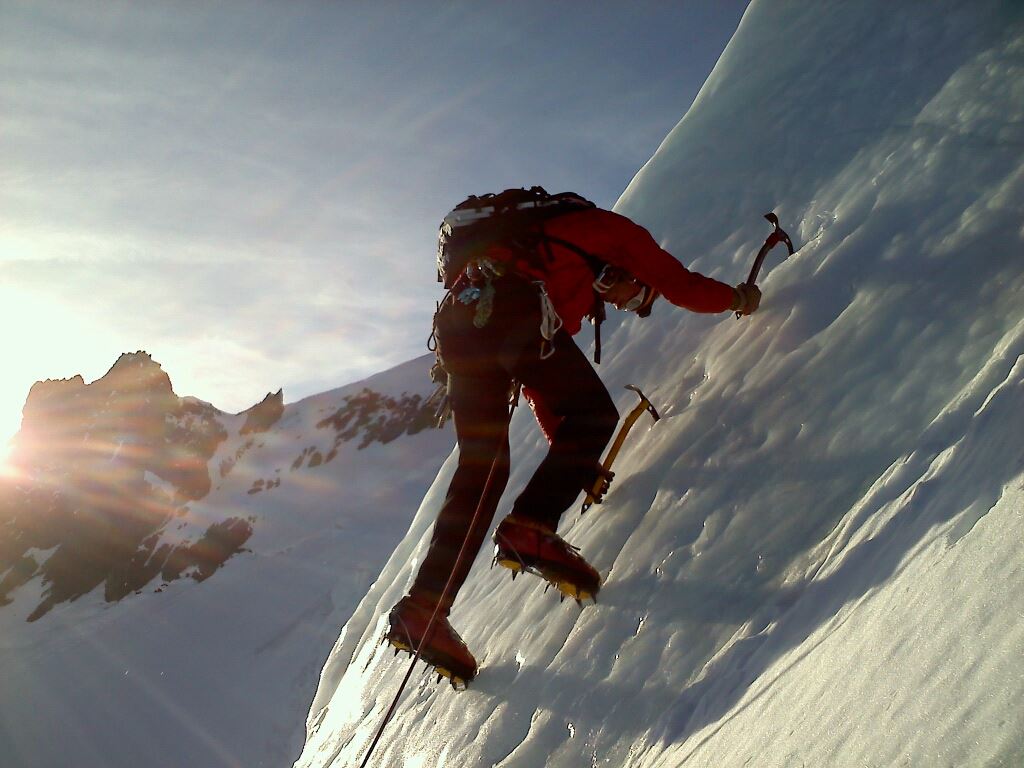
It is important for alpine climbers to have a wide array of tools in their kit. The ice axe, if used properly, is one of the best tools you can possibly carry…