






























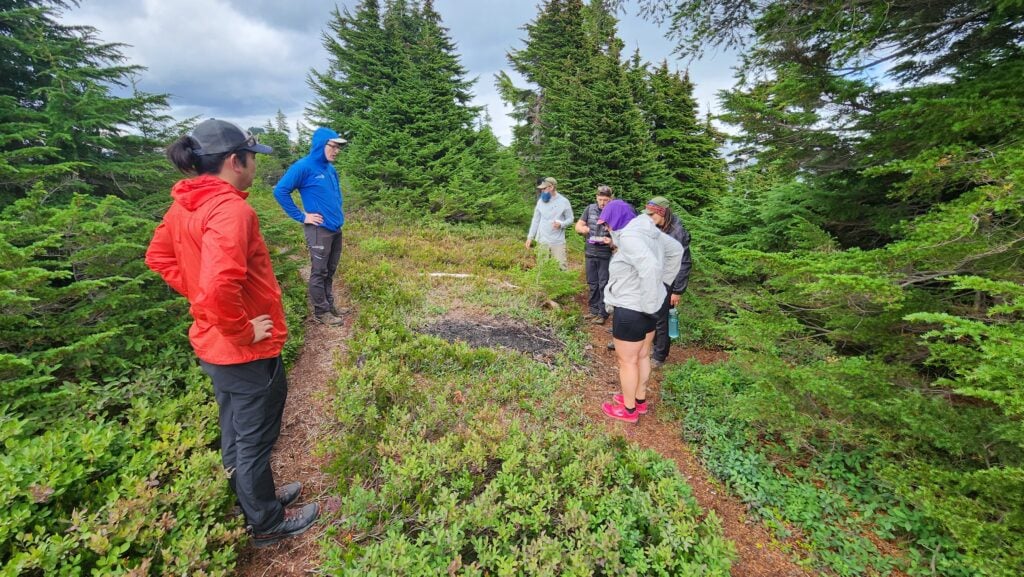


Every time we step into the backcountry we have an impact. We walk on terrain that may be changed by our method of travel. We build fires and go to the bathroom. We pick up interesting things and often – usually unintentionally – leave trash. The Leave No Trace curriculum is designed to provide students with a framework for teaching minimum impact practices for anyone visiting the outdoors. This is a quality that is highly important to outdoor educators and enthusiasts of all kinds.
The Leave No Trace curriculum is recognized throughout the world, especially in the outdoor industry, as well as by land management agencies. Leave No Trace Level 2 Instructor graduates represent every corner of the outdoor industry, including — but not limited to — outdoor retail workers and executives; school teachers; representatives from the US Forest Service, the Bureau of Land Management, and the National Park Service; state, county and city parks officials; and scout leaders, college outdoor club members, outfitters, and guides.
The Leave No Trace Level 2 Instructor Course provides participants with extensive training in Leave No Trace skills and ethics. This program is designed for those who work extensively in the outdoors as teachers, volunteers, rangers, instructors and guides. Those who complete this program, will be able to provide Leave No Trace Level 1 Instructor programs.
Those who complete this training will be certified as Leave No Trace Level 2 Instructors by the Leave No Trace Center for Outdoor Ethics.
Successful graduates of the Level 2 Instructor course have the ability to train others in Leave No Trace skills and ethics. Level 2 Instructors can conduct Leave No Trace Level 1 Instructor courses (two-day) and Awareness Workshops (one-day or shorter).
For those who desire a shorter and more economical program, check out our 2-day Leave No Trace Level 1 Instructor course. The Leave No Trace Level 1 Instructor course is designed for outdoor leaders who will be providing the Leave No Trace training to their trip participants and clients, but not necessarily teaching the curriculum in depth.
 Curriculum