American Alpine Institute offers a wide array of instructional programs, peak ascents, expeditions, and private programs. Browse the different program types here.
Intensive mountain skills instruction and summit climbs
Group Summit Climbs
Programs (8)
Introductory summit climbs with some skills instruction
Expeditions
Programs (36)
Longer trips in remote locations to ascend major peaks, including the Seven Summits
Private & Custom Trips
Programs (41)
Custom adventures for individuals or groups – with the best-trained guides in the industry
Treks, Tours, & Backpacking
Programs (11)
Full-service, non-technical adventures for all outdoor enthusiasts
Government, Military, & Veterans
Programs (3)
Training for government personnel and vocational programs for veterans using VA benefits
Youth Climbing Programs
Programs (3)
Our youth programs inspire young adventurers to explore the outdoors, build confidence, and develop climbing and leadership skills in a fun and supportive environment.
Mountain Center
Programs (5)
Short classroom and outdoor courses, films, lectures, and other low-cost programming for the local outdoor community
American Alpine Institute offers mountain activities of all kinds, including rock-climbing, ice-climbing, mountaineering, and more. Browse activities here.
This is mountain climbing in its most classic form – over rock, snow, alpine ice, and glaciers, in pursuit of major summits.
Rock Climbing
Programs (37)
Once mere skill-practice for mountaineers, rock climbing is now a highly developed sport, with numerous sub-disciplines such as trad, sport, and aid.
Ice Climbing
Programs (11)
One of the most fundamental skills of mountaineering, ice climbing comprises skills for tackling both waterfall ice and alpine ice/glacier ice.
High Altitude Climbing & Seven Summits
Programs (31)
Climbing the highest mountains in the world is a special discipline of mountaineering, with unique challenges and rewards.
Backcountry Skiing & Boarding
Programs (22)
Guided skiing in world-famous backcountry, and skills instruction for skiers, split-boarders, and ski mountaineers
Avalanche Training
Programs (14)
Avalanche safety training is a must for anyone who ventures into the backcountry in winter, and we offer the gold standard in avalanche education.
Hiking And Backpacking
Programs (15)
Living and moving in the mountains is a reward in itself, and provides the fundamental skills that underlie all mountaineering.
Wilderness Skills
Programs (8)
Those who venture into the wilderness must draw from a deep skill base, including navigation, outdoor cooking, water purification, and countless others.
Outdoor Educator & Guide Training
Programs (15)
Technical and non-technical leadership courses from the AMGA's longest-accredited guide service
Technical Rescue & Medical
Programs (8)
Industry standard technical rescue and wilderness medicine instruction
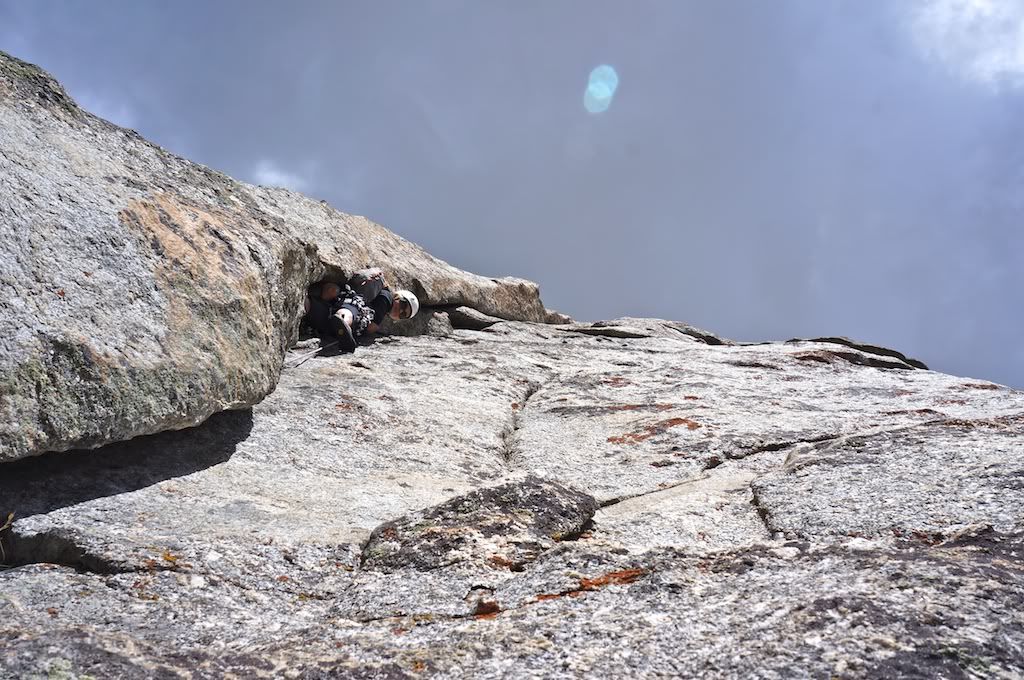
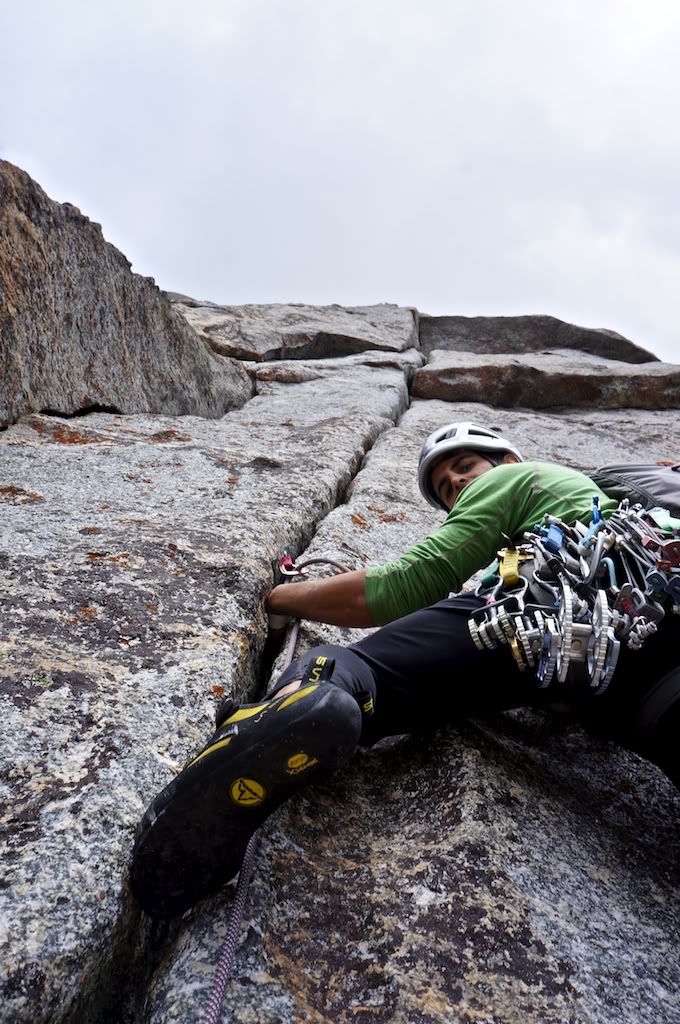
Ever since the first time I went to the Wind River Range with Drew back in the 80s, I have been inspired and compelled by the Wind’s seemingly endless supply of alpine beauty. After doing several trips to the area near the Cirque of the Towers, Warbonnnet Peak, guarding Jackass Pass on the way to the such classics as Pingora and Wolf’s Head, always glimmered at me like a throbbing obelisk of stunning splitter. For some reason, I thought the Wind River Range was on the way on my cross-country jaunt from Park City, UT, to Seattle, WA. Just for future reference: it is not. As for the climb, it was put up in the 80s (I think) by badasses Charlie Fowler and Jeff Lowe. This route is characterized by nearly immaculate, steep-to-overhanging, splitter. 8/9 pitches were at least 45 meters long… strenuous enduro-fest style pitches typically comprised of a perfect crack running the same size for most of the pitch’s length. Think Indian Creek in granite 700 feet off the deck. Most of the gear was large. An ideal rack for this climb would be singles up to #1, 3x #2, 4x #3, 4x #4. I know that sounds unreasonable, but when you’re climbing rattly hands and fists at .11 on a 180 foot pitch, it makes sense real quick. I often found myself afraid to go higher because I had used my two #4s on the first 80 feet and there was still 80 more feet of off-width treachery above. The crux pitch, like all the other pitches, was long, sustained, and slightly overhanging. I think I lost about 1/3 of my bodyweight on it.
Warbonnnet, from near Big Sandy Lake. The line follows right center of the main face, following the ramp and white vein to the giant chockstone.
Liz leading the 3rd pitch. A sustained and long .10+ corner. Very high-quality hands.
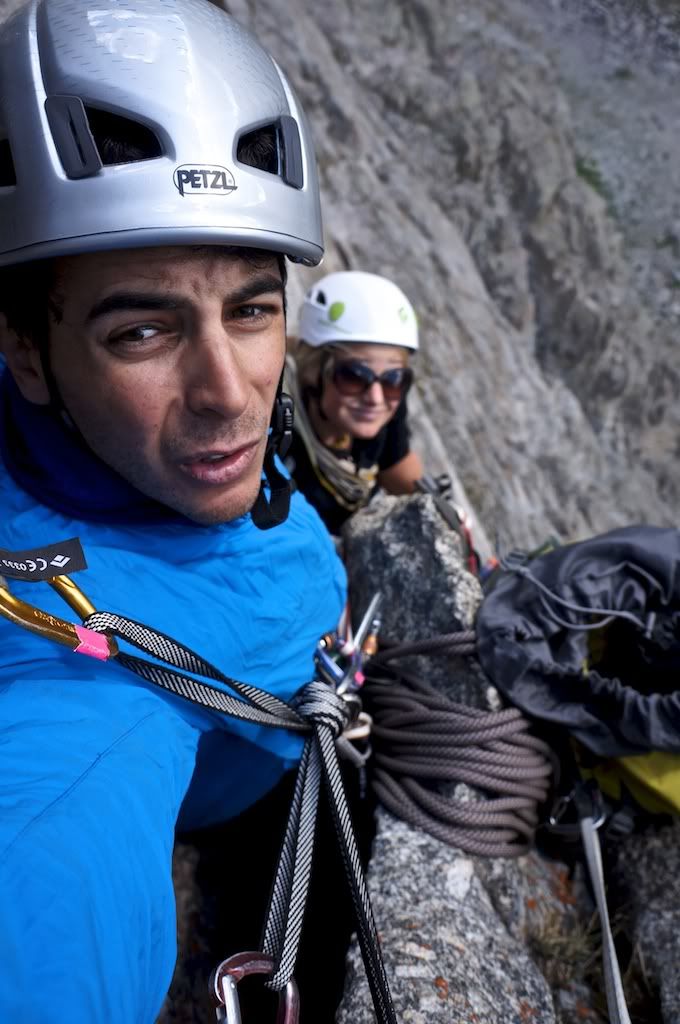
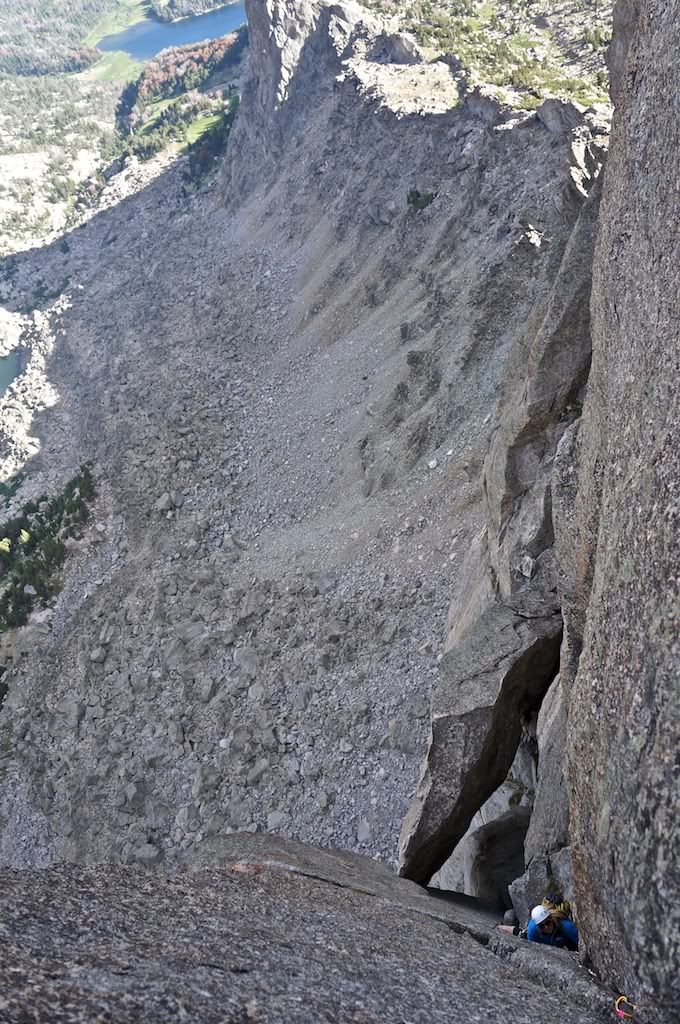
The scramble begins at the end of this (9th) pitch and nearly 800 feet of climbing. I was ready for a pastrami sandwich, foot massage, and a diet coke at this point.
–Liz Daley, Instructor and Guide
Join Us Today
Ready to Start Your Adventure?
Explore our courses, peak ascents, and expeditions led by world-class mountain guides.