













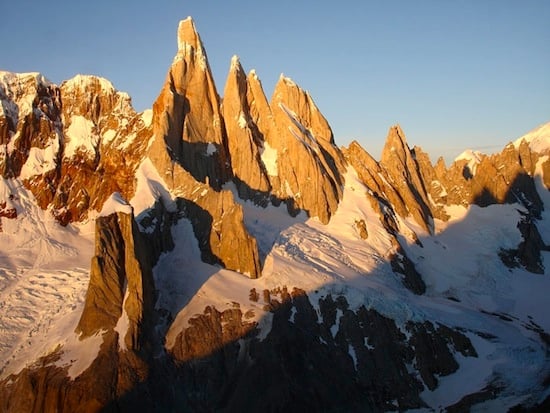
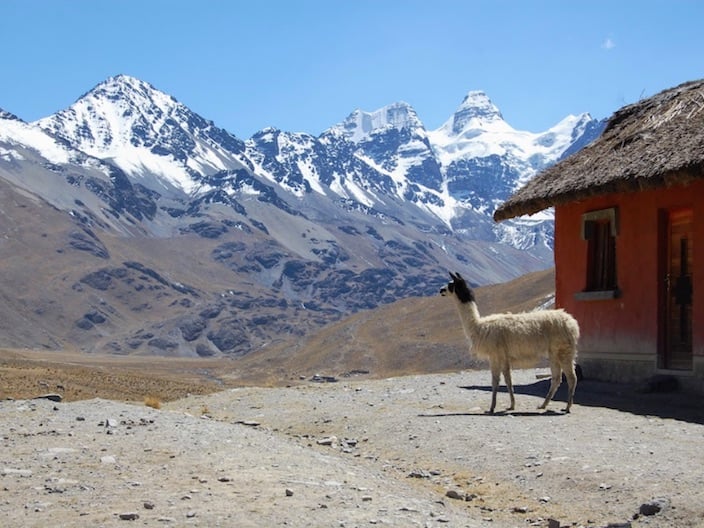


I love those rare moments when you see an activity that sets your imagination alive and you say to yourself, “I want to do that.” It is the inspiration that drives most of us to start along the path to become climbers, skiers and skilled outdoor participants.
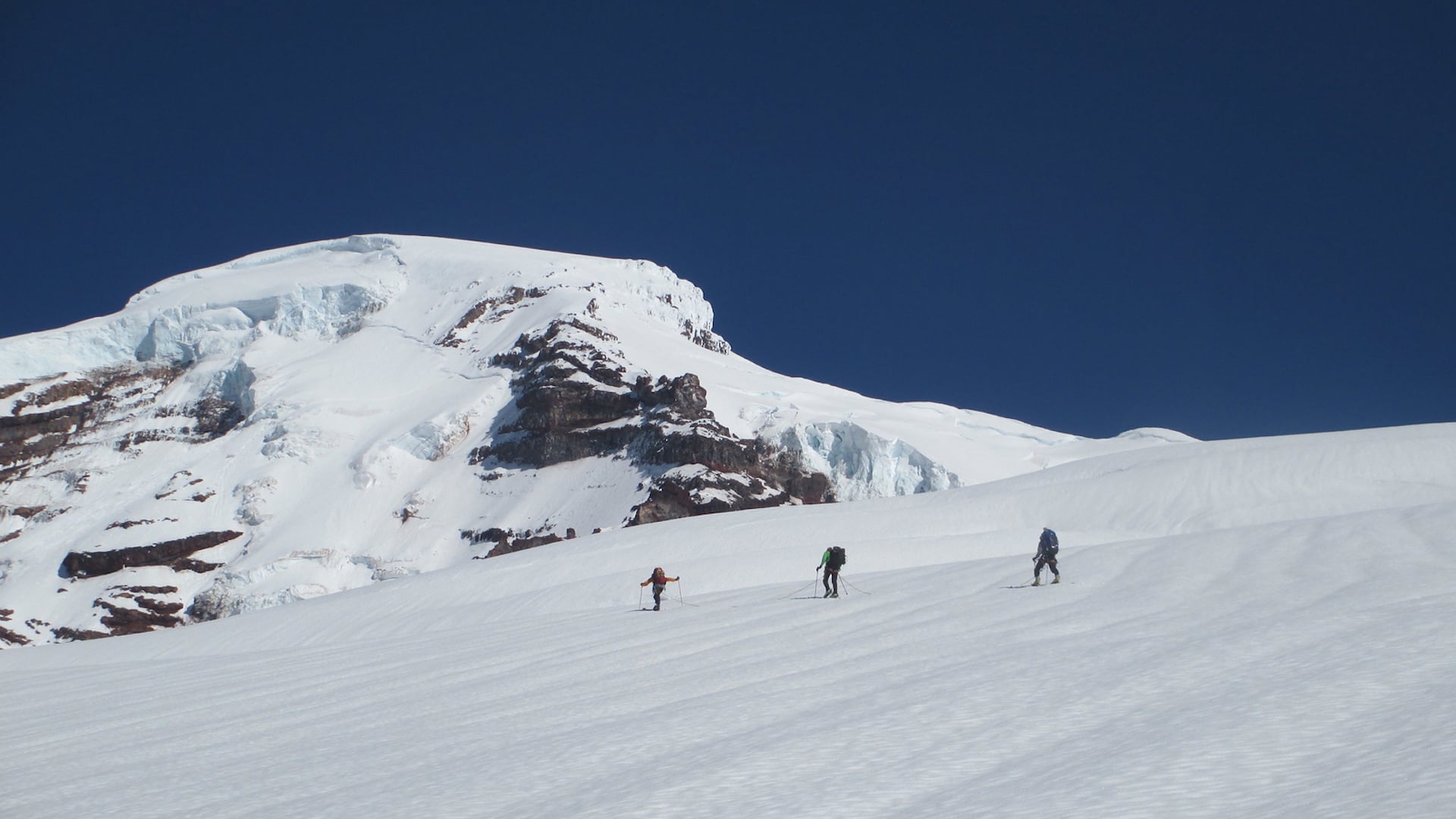
In June of 1985, during staff training for the summer climbing season in the Cascades, ten of us ascended the south side of Mt. Baker. Alan Kearney and Kitty Calhoun slept in late and carried skis to the summit. Long after we had left the summit and were plunge stepping down the mountain, they came sweeping by on perfect corn snow, carving interlacing turns down the Easton Glacier below us until they disappeared from view, popping up a few minutes later as two tiny dots next to our campsite.
Both jealous at the ease of their descent and intrigued at the possibilities, I told myself that I would someday acquire the skills and equipment to accomplish the feat of skiing 5,000-feet or more off the summit of a Cascade volcano.
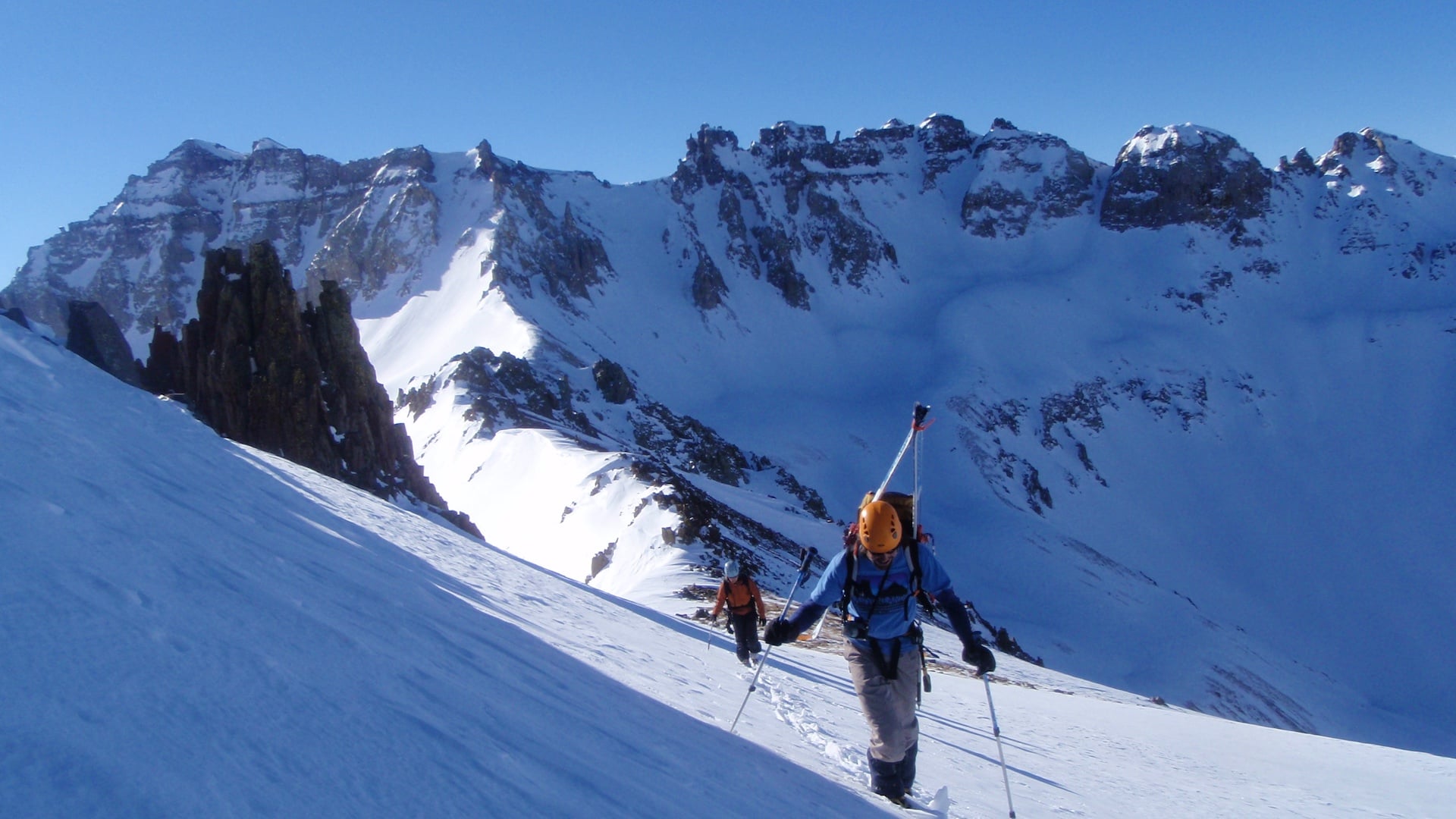
Over thirty-years later and with ski descents of most of the volcanoes of the western states and many seasons of backcounty skiing under my belt, ski mountaineering is now a very popular mountain sport. In June on Mt. Baker, the number of skiers ascending to the top nearly equals the number climbing to the summit. It would have been hard to imagine as I watched the rare sight of Alan and Kitty skiing down the mountain, that I would someday have the opportunity to guide parties on ski descents of Mt. Baker.
In May I was fortunate to guide two skiers on a three day Mt. Baker ski mountaineering trip. It was and exceptional experience for the quality of the skiing and the enjoyment I derived from helping two enthusiastic students learn the skills needed to ascend and ski off of a big mountain like Mt. Baker.
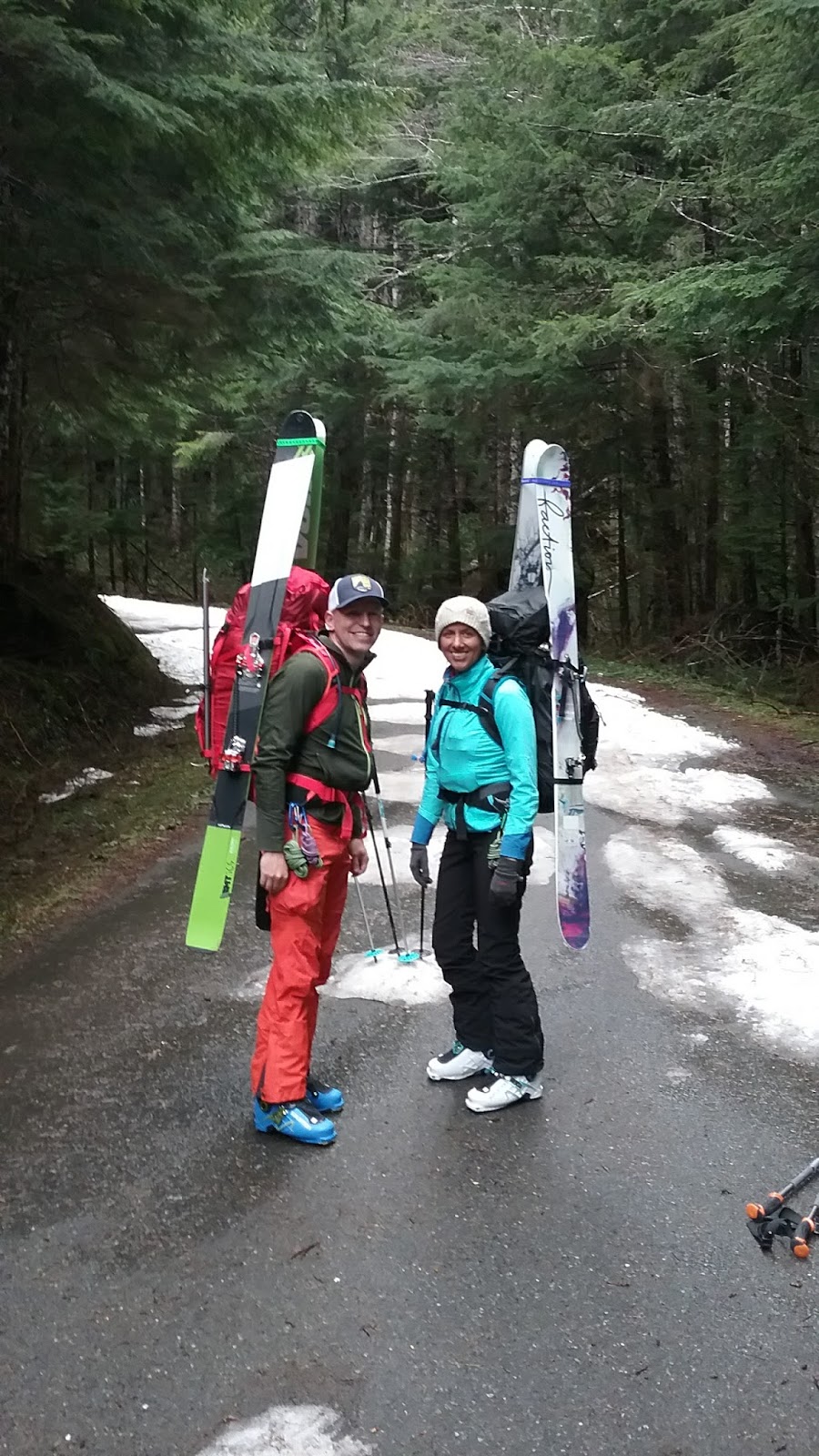
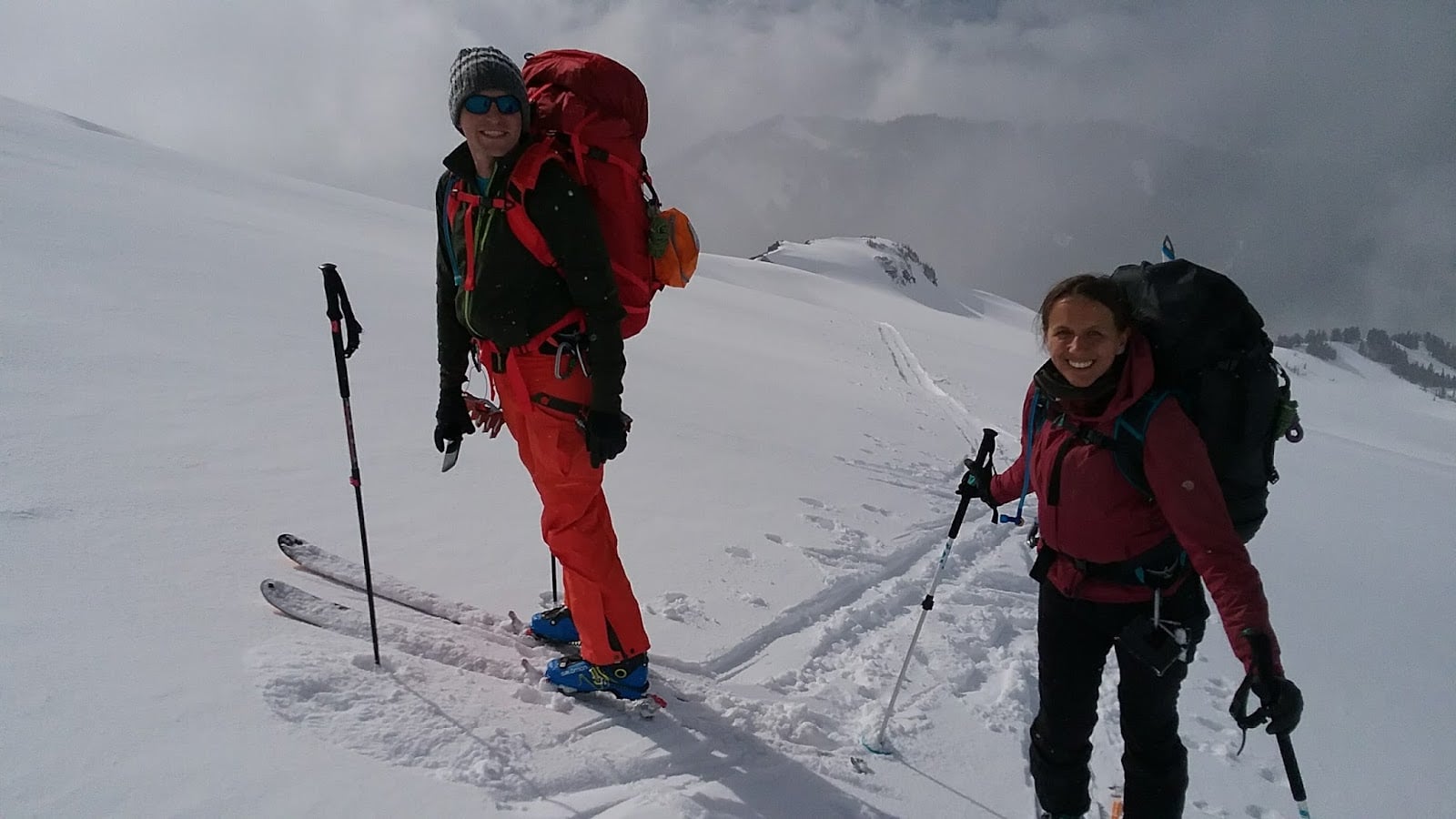
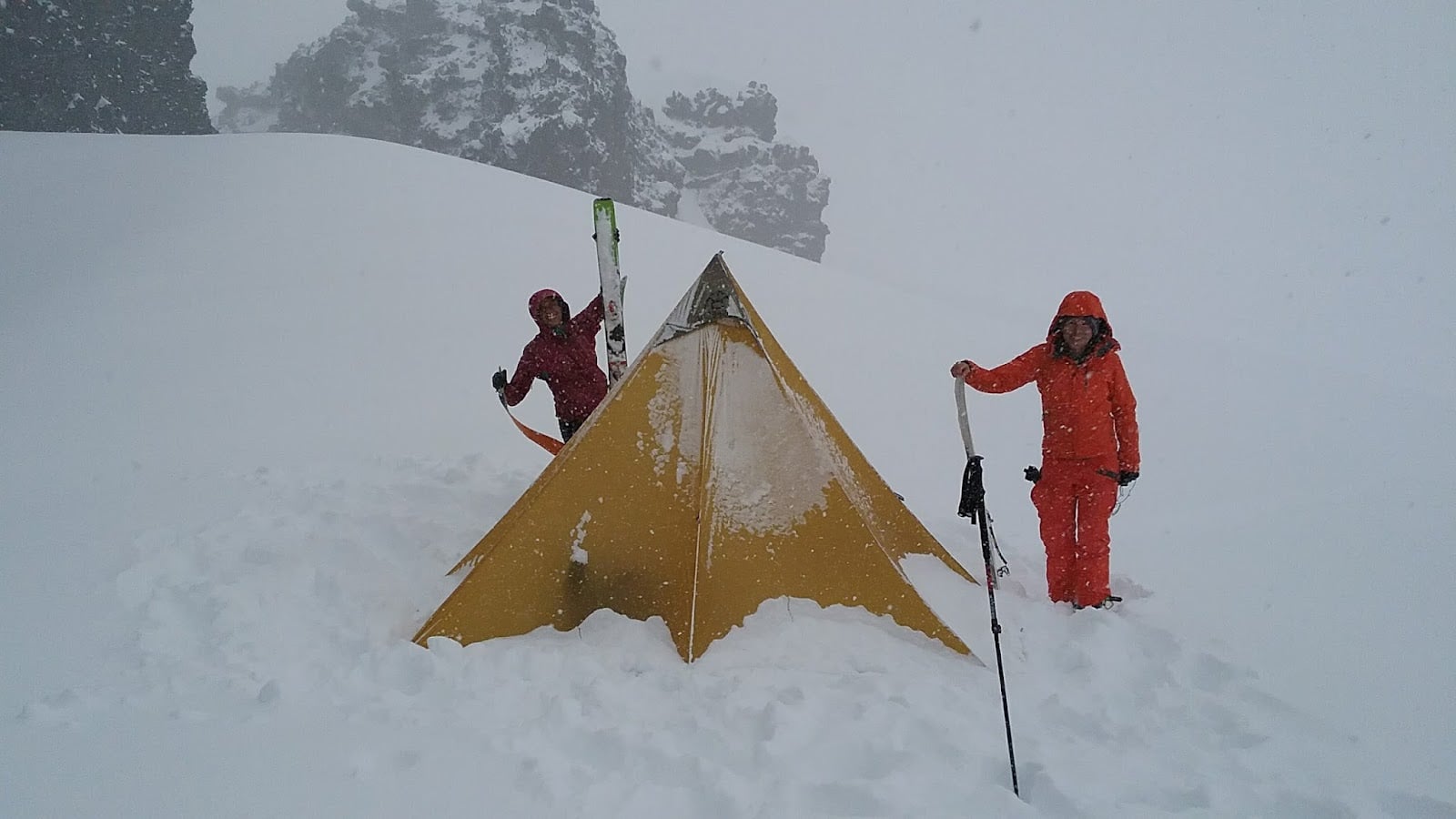
Jared and Cindy at our high camp after the second day attempt to reach the summit.
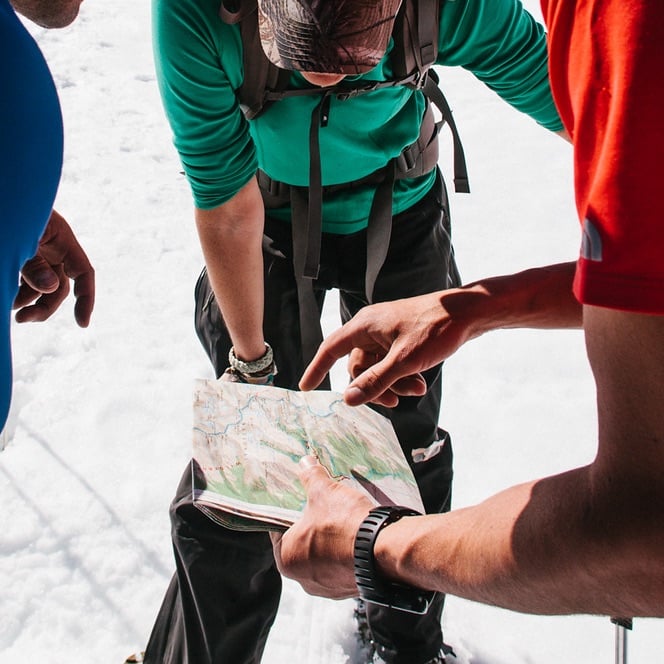
Day two was spent in a white ascending to Coleman Saddle and back to camp after giving up on an ascent of the mountain without visibility. The conditions gave us the opportunity to work on white out navigation, roped glacier travel and hazard evaluation. The skiing was excellent, 2-5 inches of fresh cold snow. The storm helped to underscore the importance of visibility when descending alpine terrain. Back at camp, we spent the remaining daylight hours practicing crevasse rescue skills.
At four am on our last morning I poked my head out of the tent in the early light to find a cloudless sky. The upper plug of Mt Baker was dark against the morning horizon. The thermometer read 21 degrees F inside my tent. Our feet crunched the cold snow as we packed excitedly for our departure.
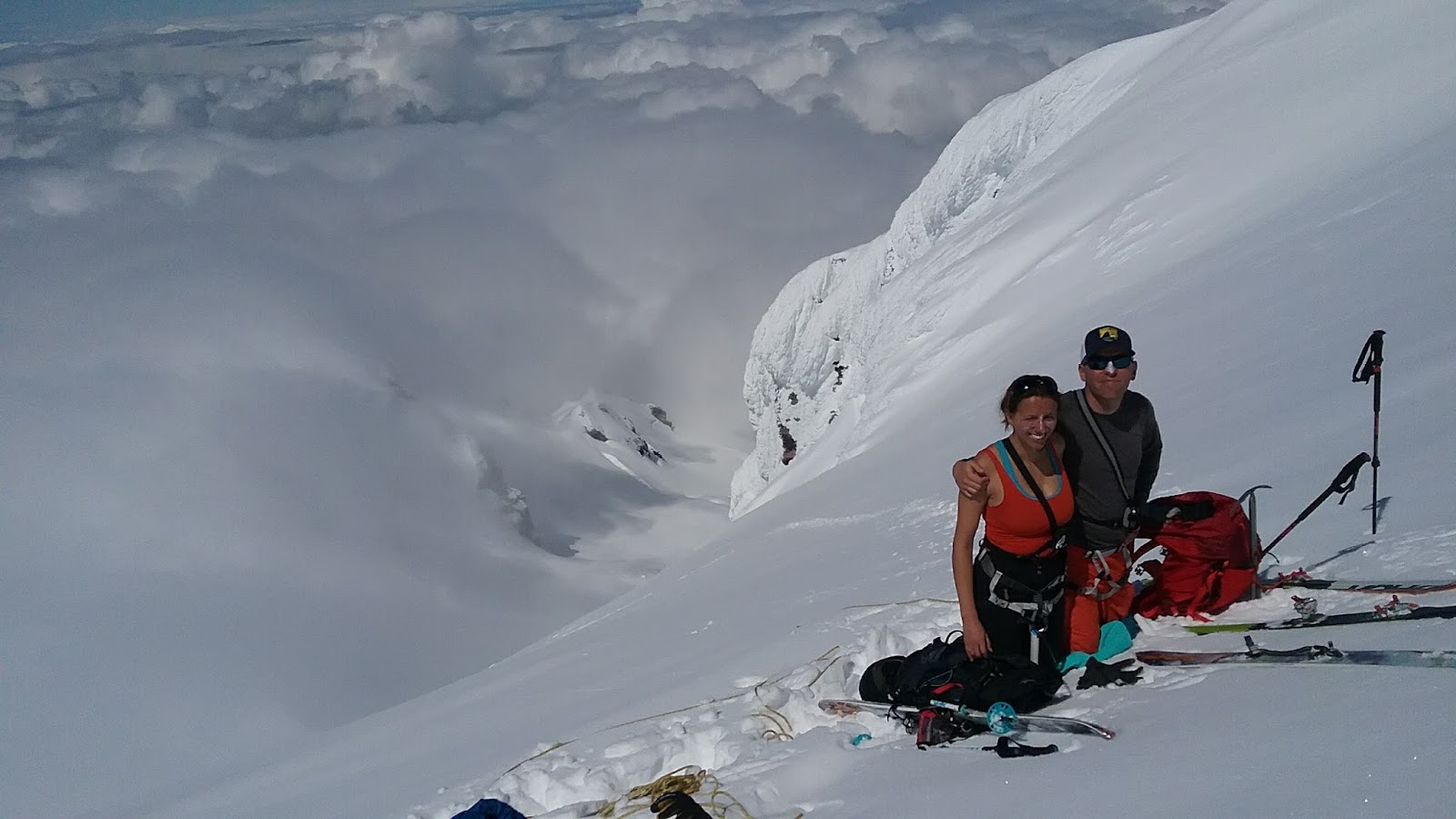
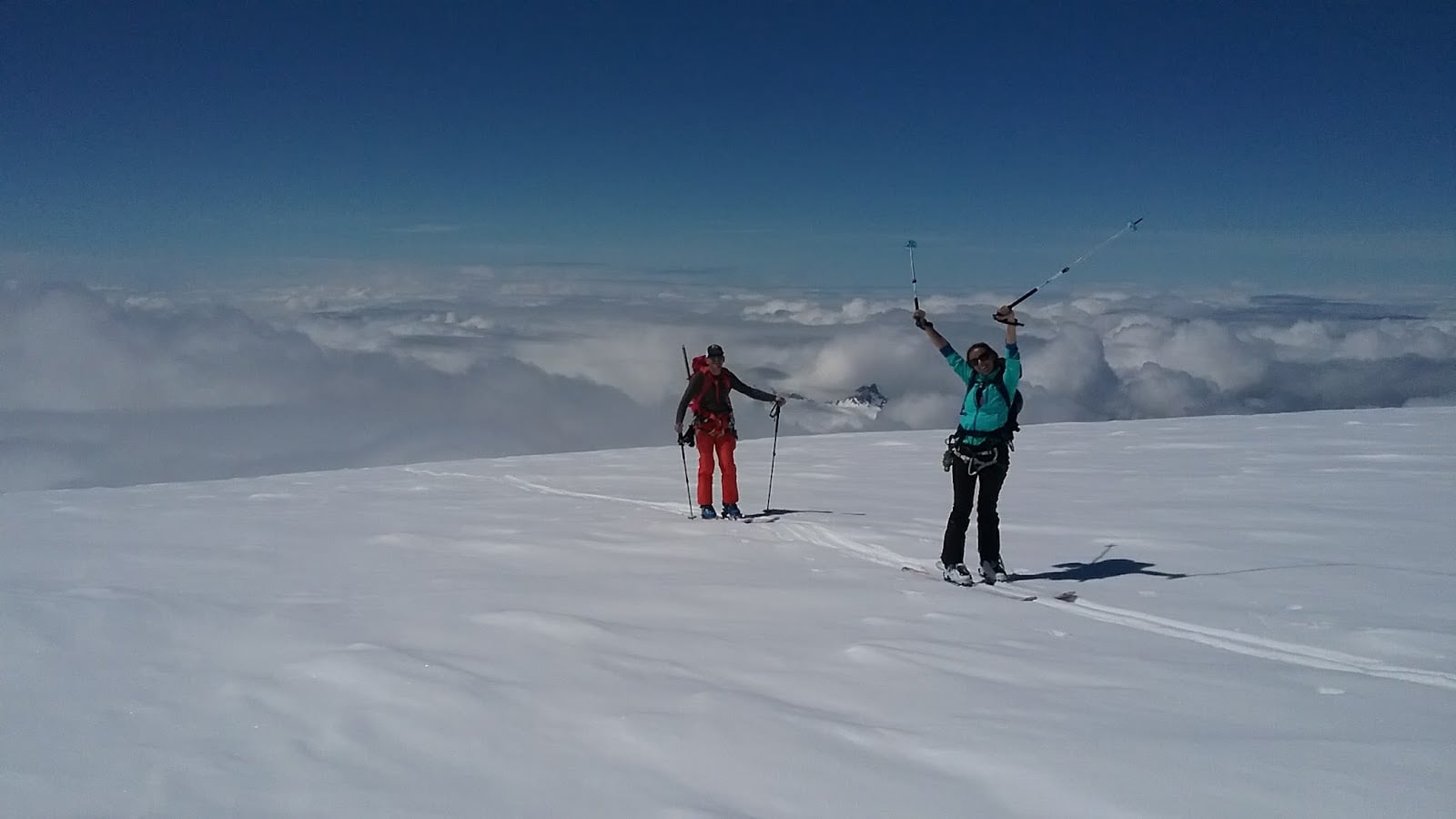
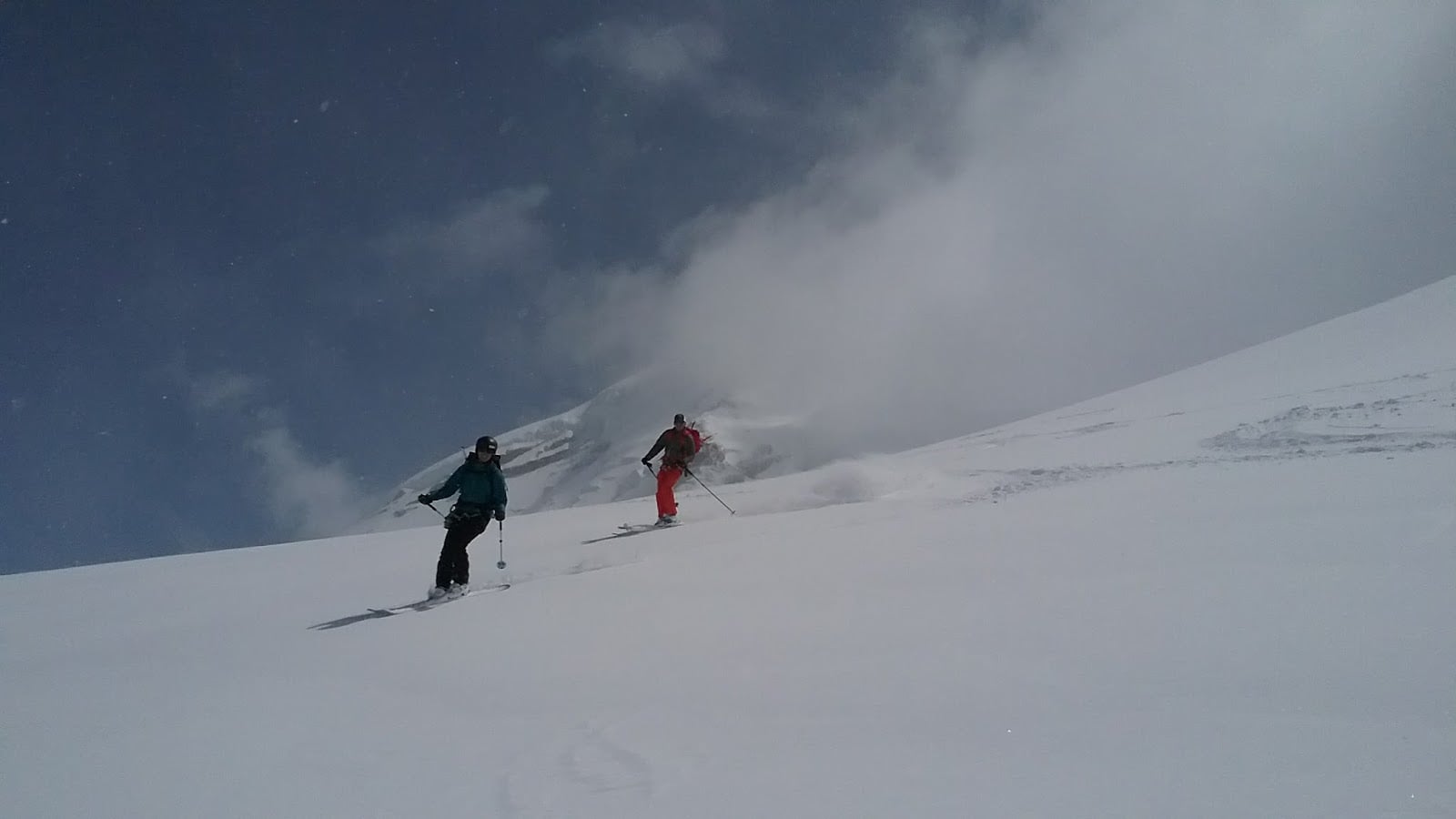
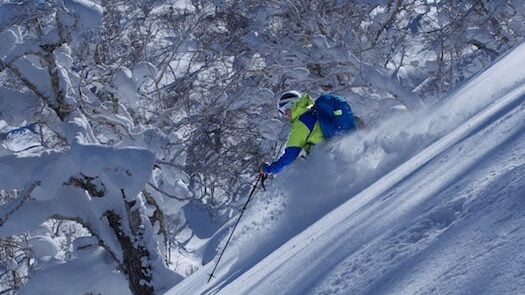
Fantastic powder skiing in May at the 8,000 foot level
Back at camp we loaded up our kit and continued down the mountain and out the road to the car. The clouds, so spectacular from above, preserved the cold temps and provided us with good snow all the way to the woods at the bottom of Grouse Creek. As with the best ski descents, walking in ski boots was limited to a five minute tramp down the pavement.
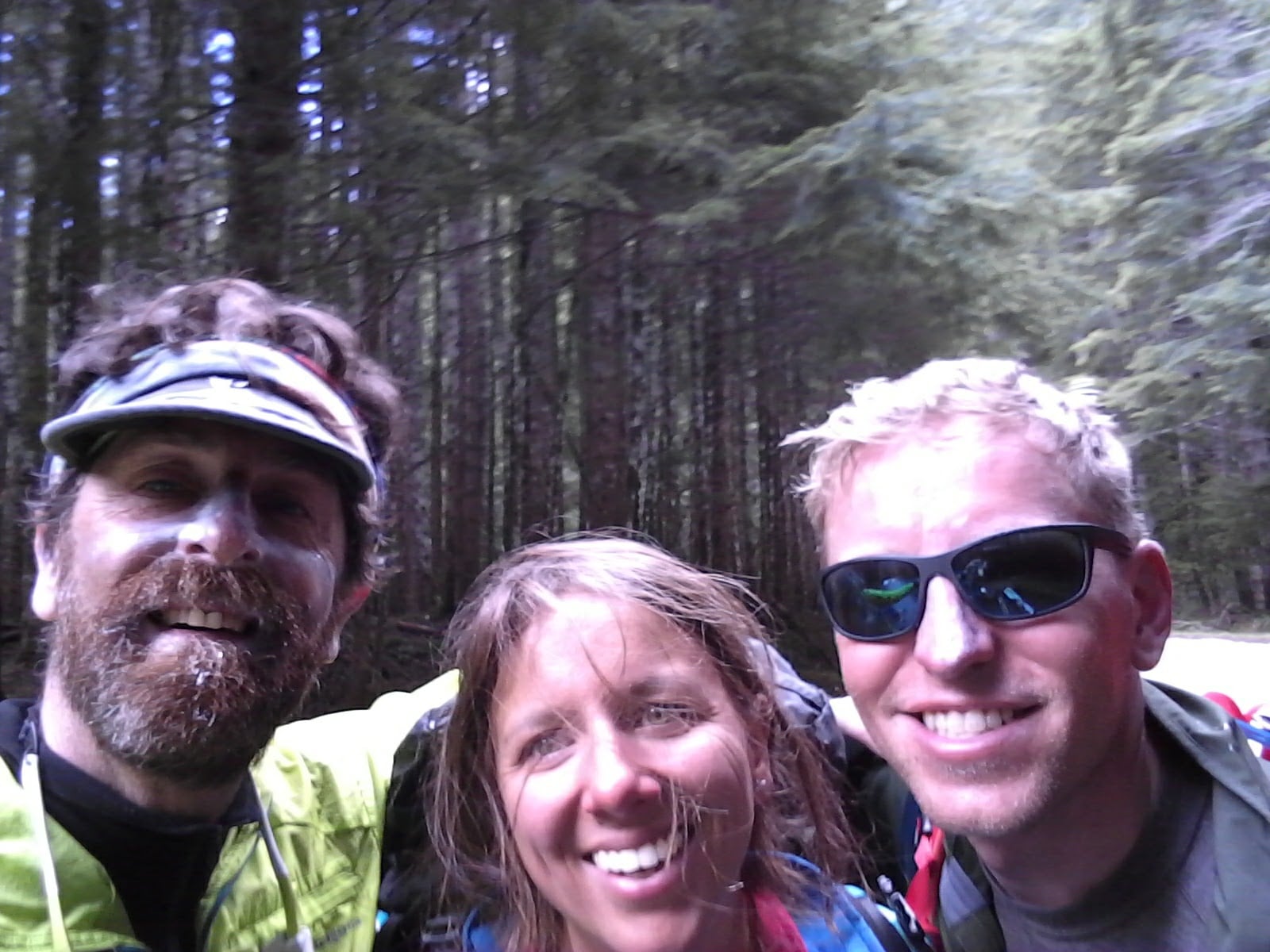
Back at the car after an enjoyable time out.
Back at camp we loaded up our kit and continued down the mountain and out the road to the car. The clouds, so spectacular from above, preserved the cold temps and provided us with good snow all the way to the woods at the bottom of Grouse Creek. As with the best ski descents, walking in ski boots was limited to a five minute tramp down the pavement.
Sometimes those “I want to do that” moments provide a lifetime of satisfying experiences.
-Gregg Oliveri