














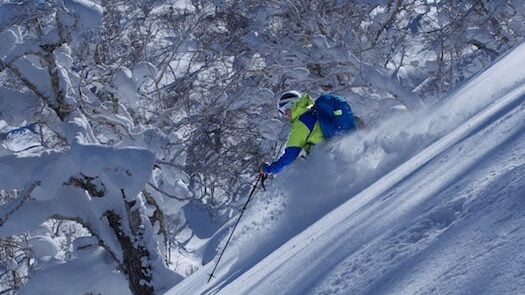

A spindrift avalanche is a light, powdery flow of snow that cascades down a mountain face — more like a snow waterfall than a traditional slab or loose snow avalanche.
Here’s a breakdown:
Spindrift avalanches are caused by loose, unconsolidated snow being blown off ridges or cliffs by wind or gravity. The snow moves as a fine, misty cloud that can pour down steep faces or gullies. Unlike slab avalanches, which involve large cohesive layers of snow breaking loose, spindrift is composed of individual snowflakes or small clusters moving freely in the air.
It is not uncommon for this kind of snow to accumulate in the gullies where ice climbers climb. When there is wind, this snow can move and come down on a climber like a waterfall. It is incredibly important to hold on to your tools. It will end. However, you still need to ensure that you’re secure.
It is incredibly important to recognize that many climbs, especially in bigger zones, like the Canadian Rockies, may be in gullies, but those gullies are also garbage chutes for large hazardous snowfields above. Check the avalanche forecast carefully before climbing.
AAI runs an array of avalanche courses and ice climbing programs.