















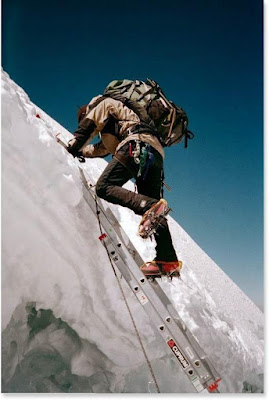
AAI Executive Director Jason Martin
crossing the bergshrund on Huayna Potosi in 2003.
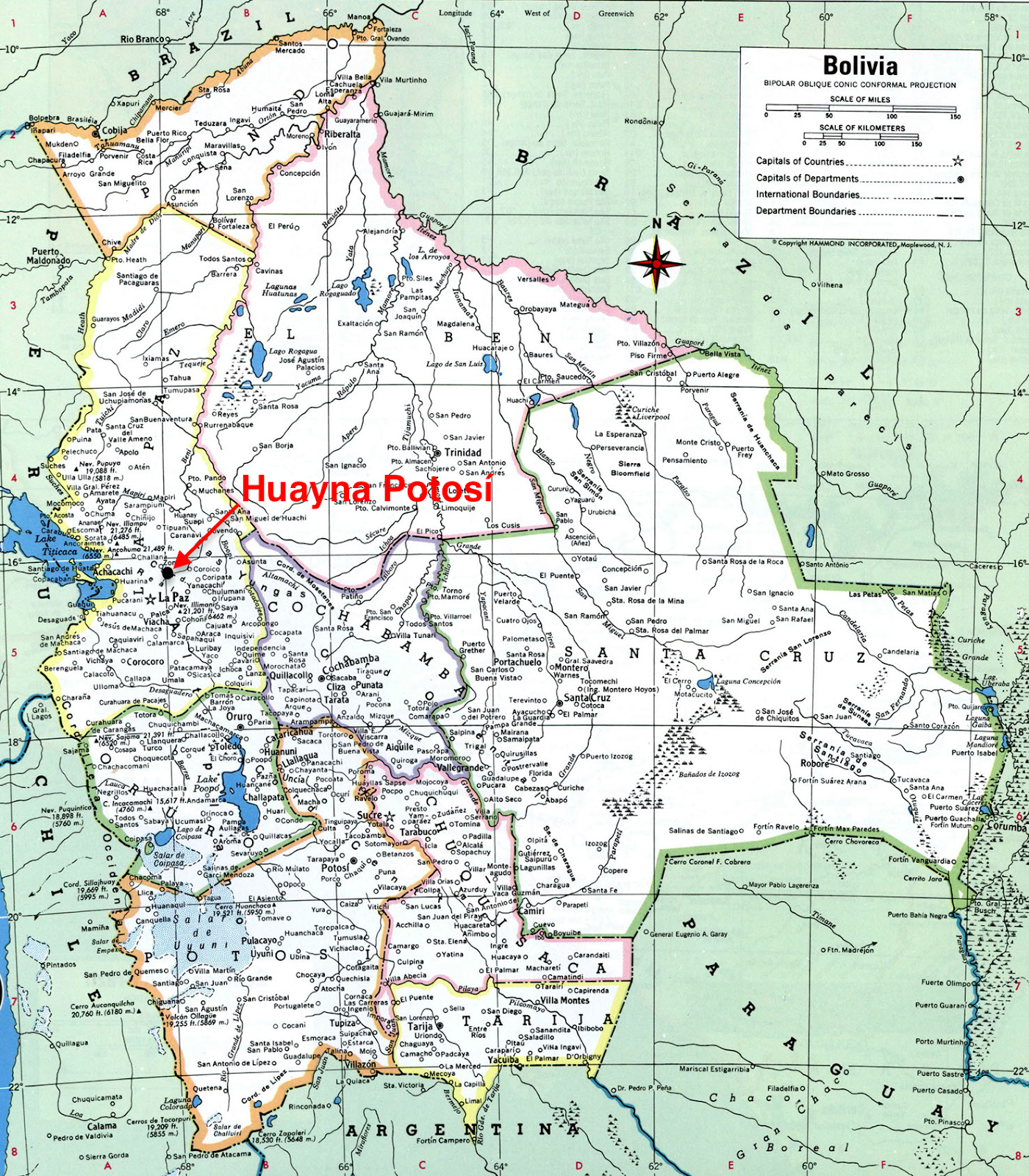
Map Of Bolivia
The French Alpine system gives the Normal Route a grade of “PD” (though some sources give it a AD-) due to a few sections of exposed ridges and moderately steep glaciers with crevasses. However, whether or not it is the “easiest” 6000m peak is a debatable statement, as there are other mountains of similar altitude which have a equal or slightly lower difficulty grade.
Huayna Potosi is, however, one of the most accessible 6000+ meter peaks in the world. You can arrive at the base of the mountain by car, and it has two base camps that you can use to assist your climb. Furthermore, the second base camp is located at an altitude of 5130m, only about 1000m lower than the summit. The nearby city of La Paz itself sits at 3640m, making acclimatization, gathering supplies, and obtaining other amenities relatively easy.
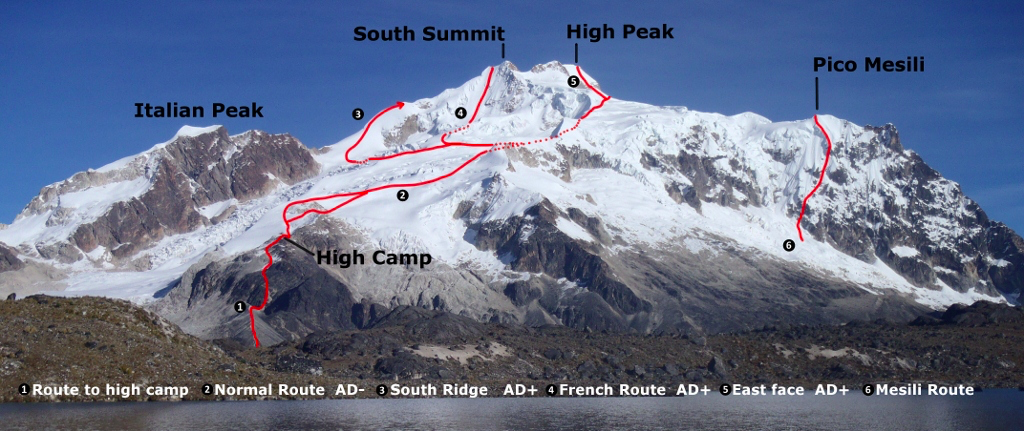
From http://www.boliviaclimbinginfo.org/
Click to Enlarge
There are a handful of established routes to reach the summit. But the least technical and by far the the most popular is the Normal Route.
Advantages of Climbing the Normal Route
- Easy access, as the first base camp can be reached by car, and the second with a straightforward 2-hour hike
- The route isn’t highly technical (PD/AD- grade), meaning the barriers of entry regarding cost, gear, and skills required are lower when compared to many peaks at this altitude. Conditions are always at play though, and occasionally there are pitches of steep ice on the route.
- This route is highly traveled, and for that reason, it is easy to find information on the route and it’s current conditions
- It avoids some of the complexity and danger compared to other routes on the mountain such as the West Face
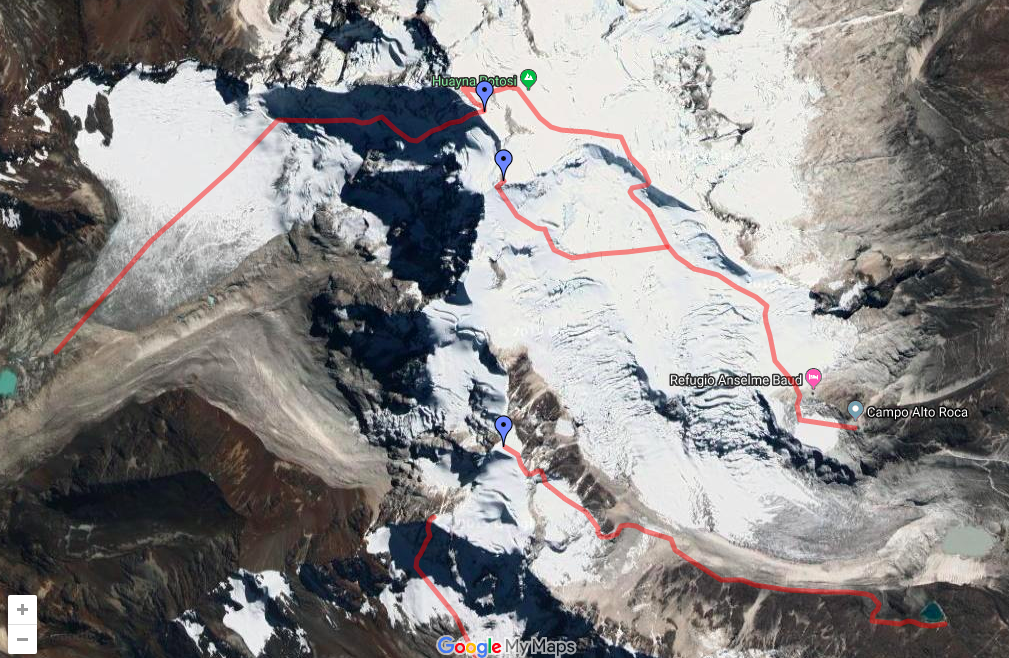
A topo of commonly climbed routes on Huayna Potosi can be seen here.
Click to Enlarge
The Normal Route was first climbed in 1919 by Rudolf Dienst and Adolf Schulze. Since then it has been climbed by thousands, and in the peak season (May-September) it sees regular summits.
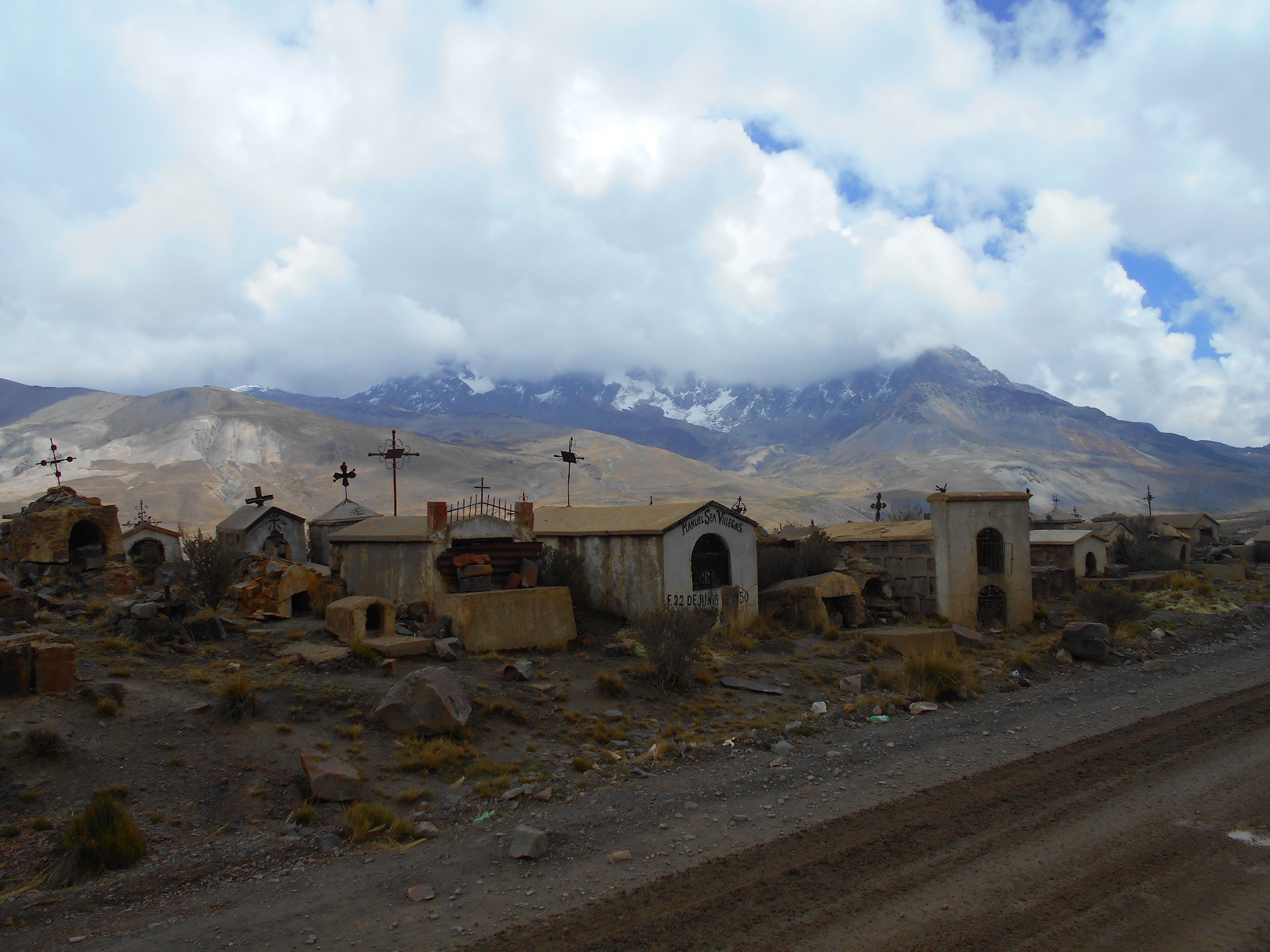
A Cemetery At Huayna Potosi’s Base
The Normal Route has a relatively straightforward approach. In addition, there are two base camps on the way where you can stay the night and buy very basic supplies (food, water, etc…).
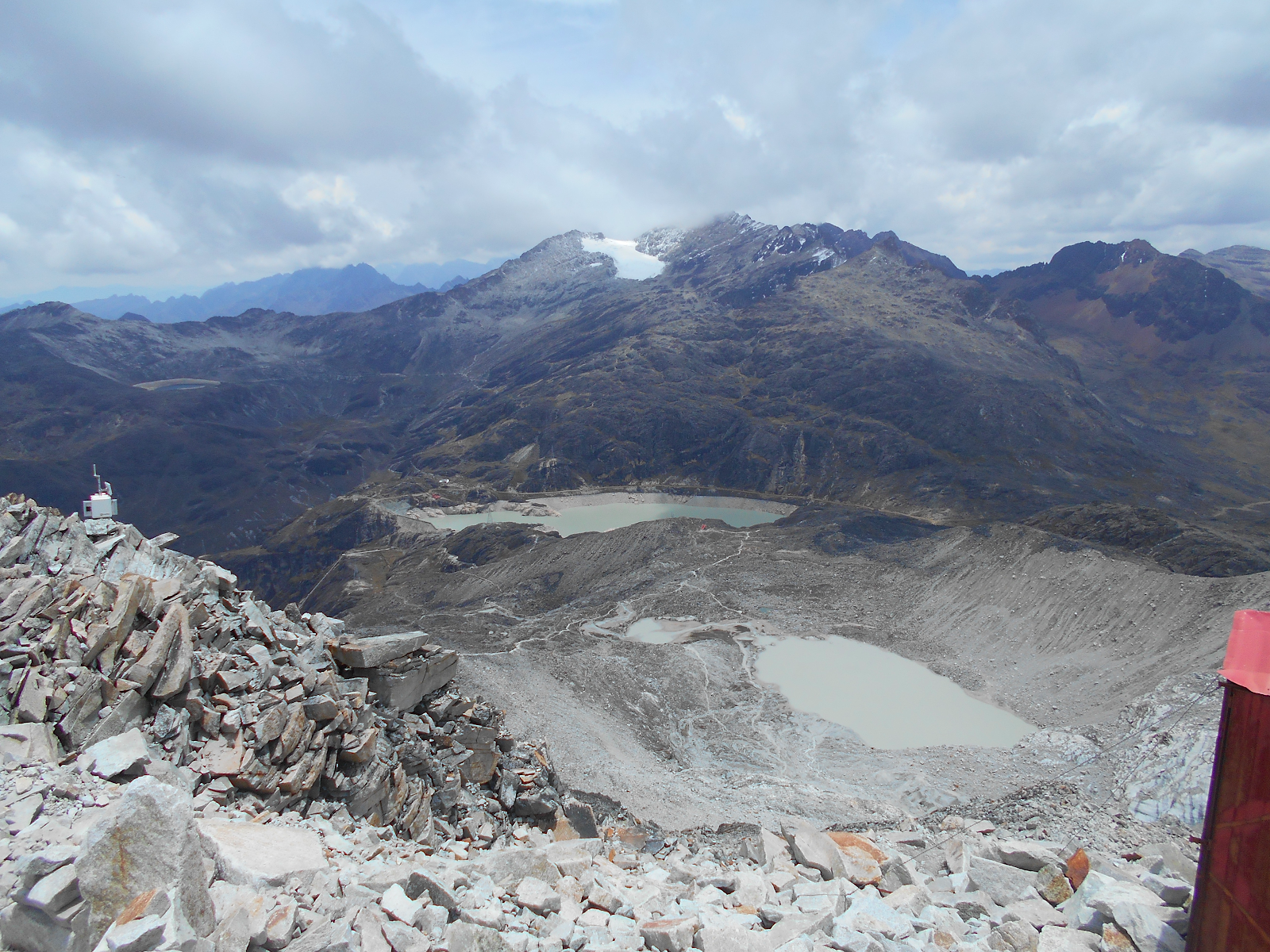
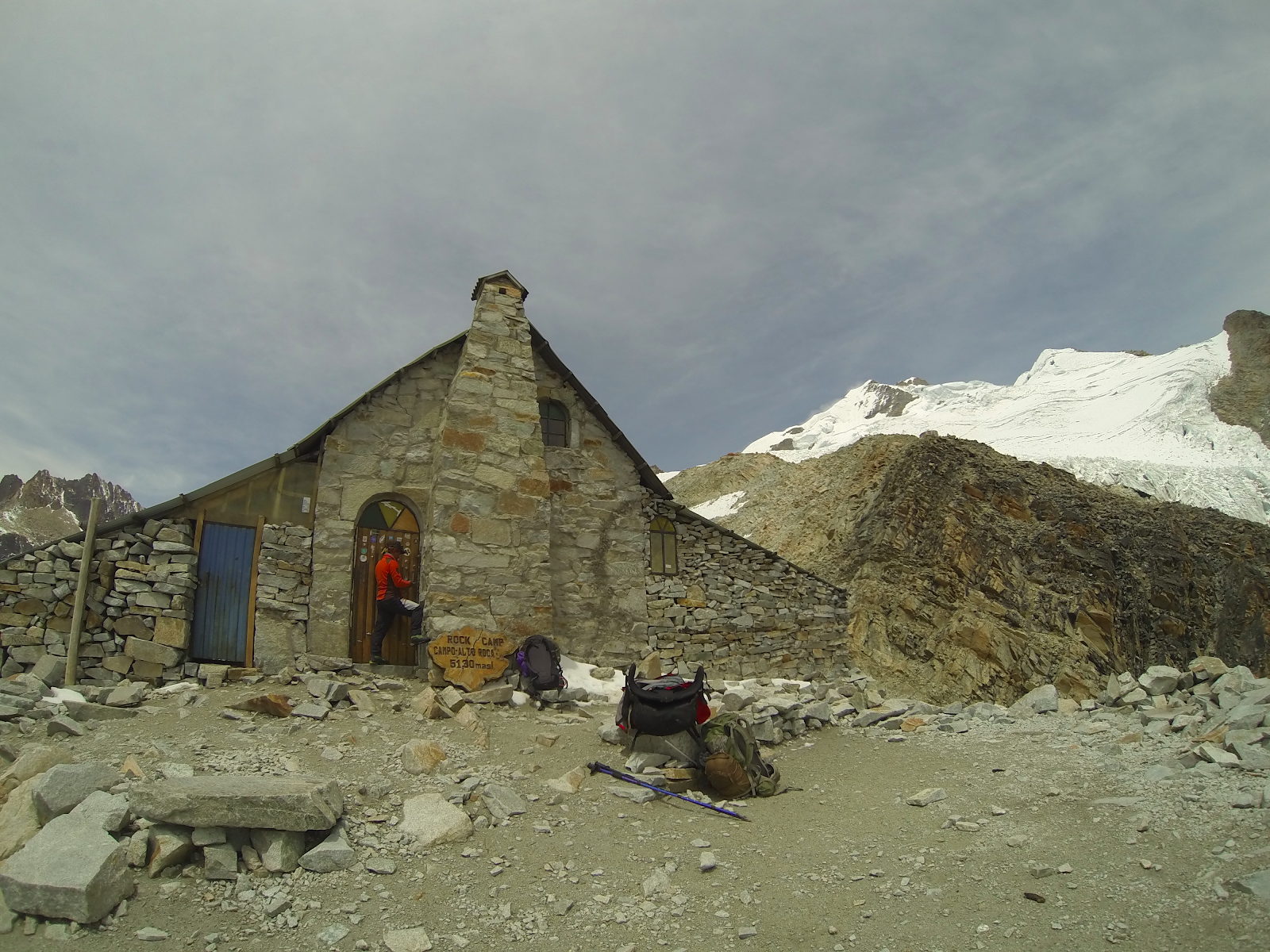
A View of Zongo Pass Seen From Camp Alto
For our ascent, we first arrived at the lower base camp to acclimatize for an extra day. We explored some of the surrounding lakes, and even went out for a few quick rock climbs at the nearby Zongo Pass area.
After spending the night at the refugio, we woke early, and headed up the well marked trail to the high camp. Here we took the opportunity to practice glacier navigation and ice anchor construction. After spending the second day out exploring, we returned back the high base camp to prepare our packs for that evening’s assent.
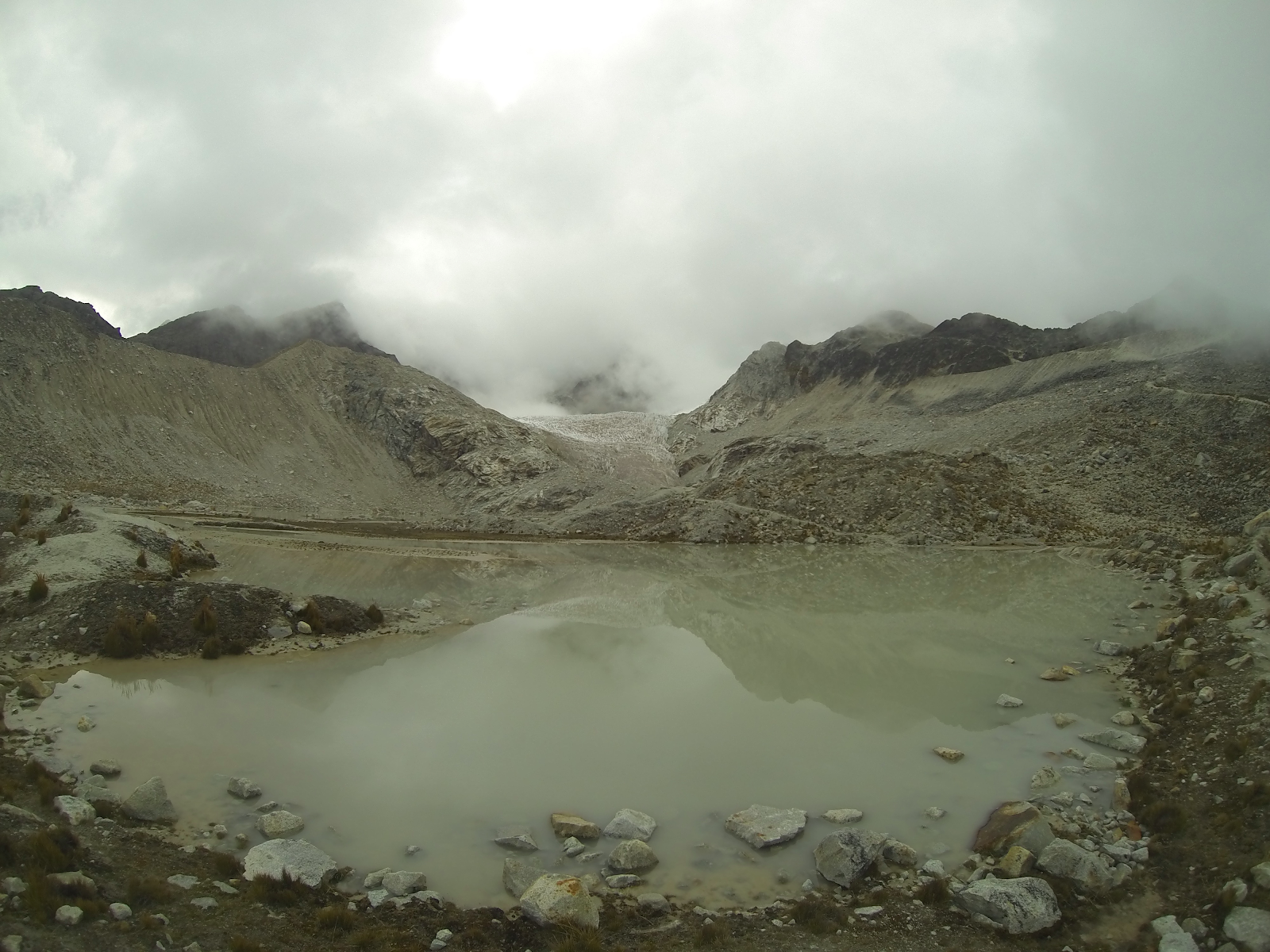
Laguna Milluni
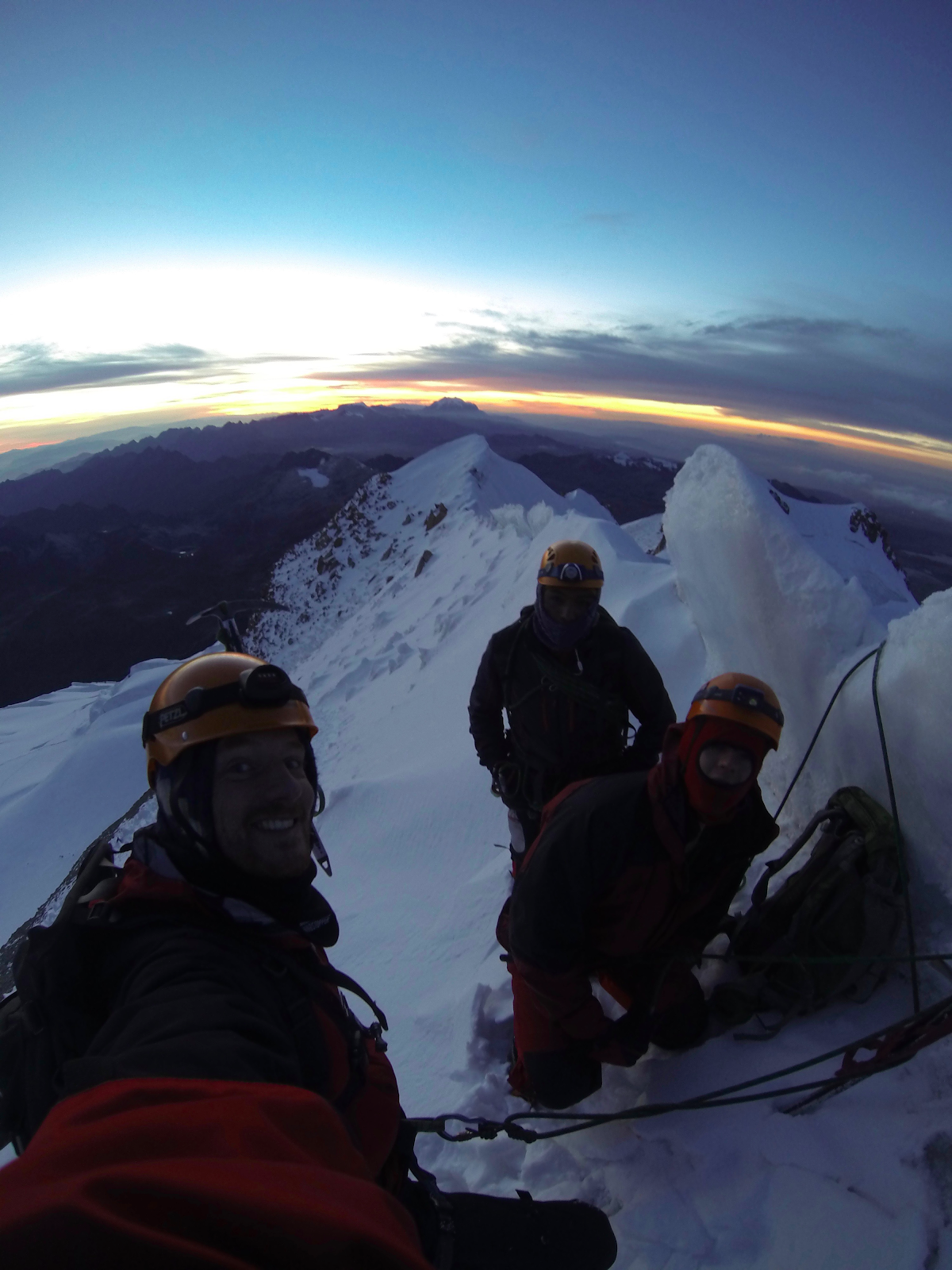
The Summit
It is advisable to reach the summit near dawn, as the intense South American sun quickly softens the glacier, not only making walking more dangerous, but it also increases avalanche danger and causes consistent rock fall.
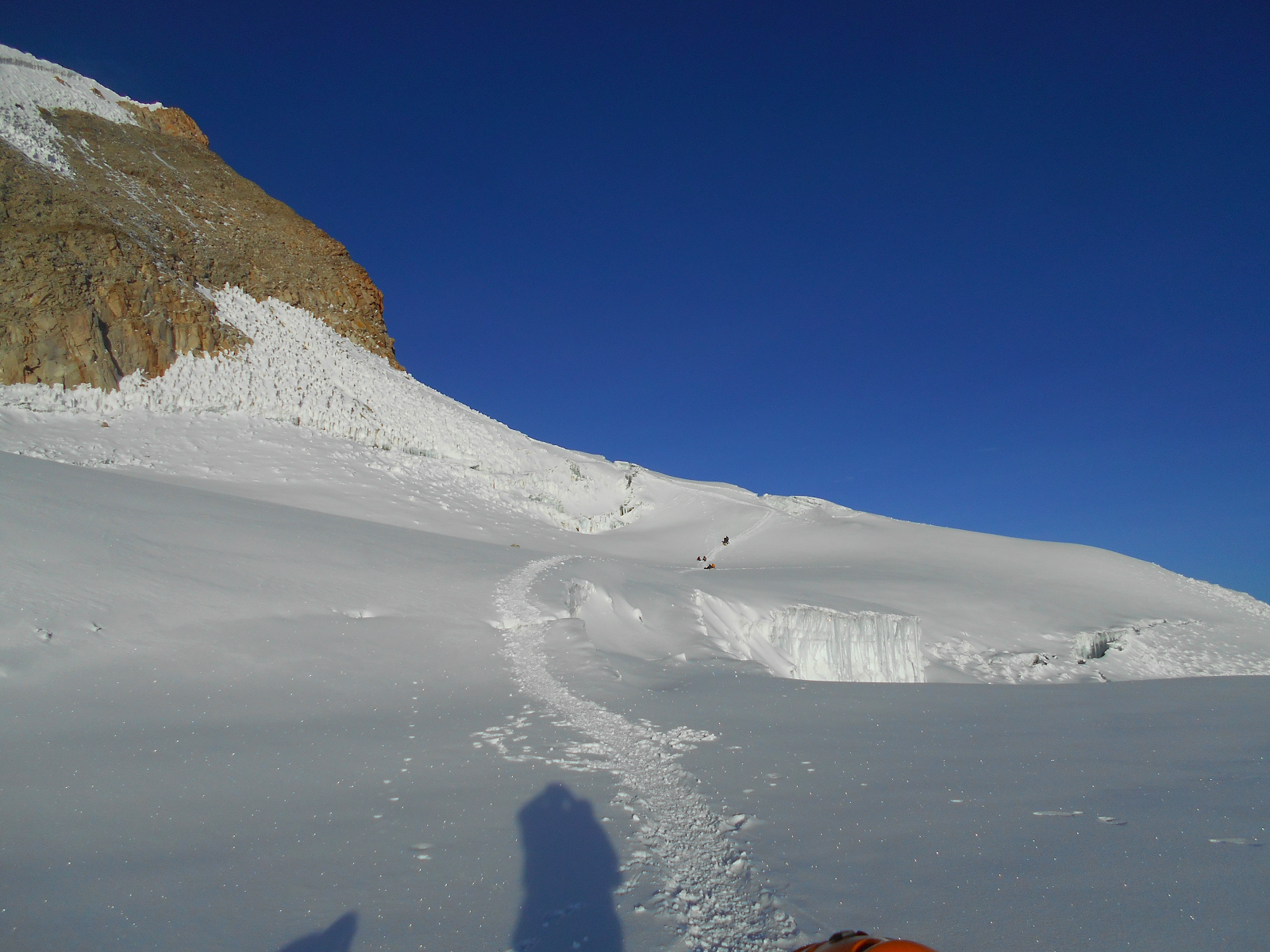
A Few Parties Descending After Reaching the Summit
The summit itself is a large glaciated ridge. Here you will have excellent views of the surrounding mountains, and will even be able to see the glow of nearby La Paz. For the descent, you simply follow the path you took, taking extra care on the steepest part of the descent.
Once arriving at Camp Alto, most groups continue down to base camp as soon as possible, especially if any party members are experiencing symptoms of altitude sickness. Though the time of ascent can vary dramtically, most groups will be able to make it to the summit and return back to the first basecamp in 8 to 12 hours.
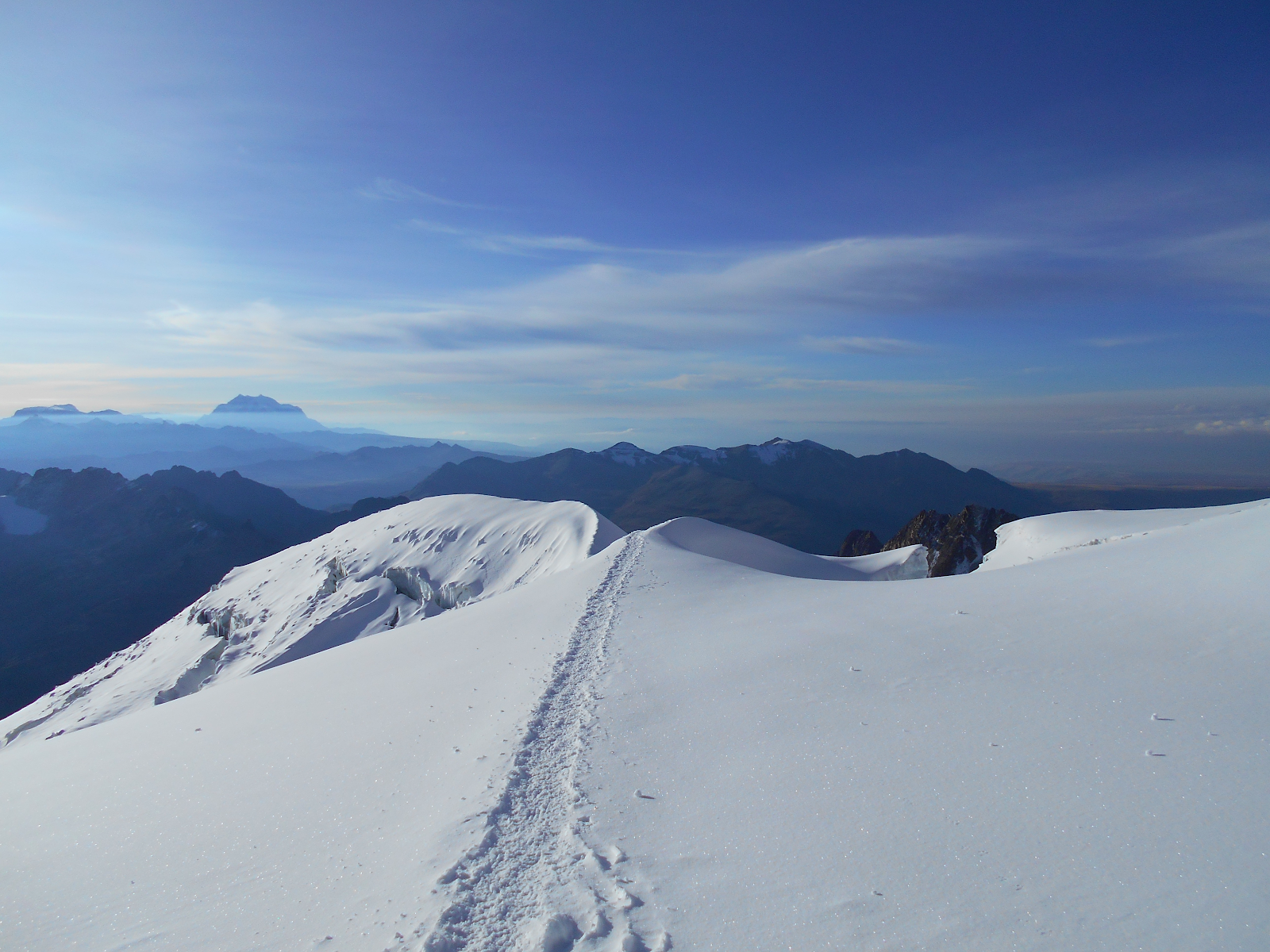
Returning to Campo Alto
Huayna Potosi is excellent intro to high altitude climbing. It requires a mix of glacier travel and crevasse navigation skills, and it is a good place test yourself at 6000m. After successfully completing Huayna Potosi, many climbers return to La Paz, rest a few days, and then go off to enjoy some of the other climbing near the city, or take their new skills and acclimatization to attempt higher and more difficult mountains nearby such as Illimani or Ancohuma and Illampu.
–Jacob Bushmaker: Avid Climber, Professional Traveler and Founder of The Wandering Climber. He has climbed in over 20 countries across 4 continents, and is an expert on South American climbing destinations. (Go here now and get tons of information on where he’s been, and plan your next journey).