




































Reco technology was born from hard-earned experience. In the late 1970s, Magnus Granhed helped organize the rescue of friends buried in an avalanche—an event that pushed him to search for a better way to locate people under snow. His solution became Recco: a simple, passive transponder now built into the clothing and equipment of more than 150 outdoor brands.
The idea is straightforward. A Recco detector sends out a radar signal that bounces off the small reflector embedded in gear. When the signal returns, rescuers know they’ve hit something containing a Recco tag. In theory, this makes it possible to locate a buried person, even if they’re not wearing an avalanche transceiver.
In practice, though, the system has serious limitations. Recreational users don’t carry Recco detectors; search teams do. That means you can’t rely on Recco for partner rescue—the crucial first minutes when survival is still likely. Detectors themselves aren’t particularly selective either. They can bounce off phones, keys, and other clutter, generating false positives that slow the search. As a result, Recco is far more useful for organized rescue operations than for staying alive in an avalanche.
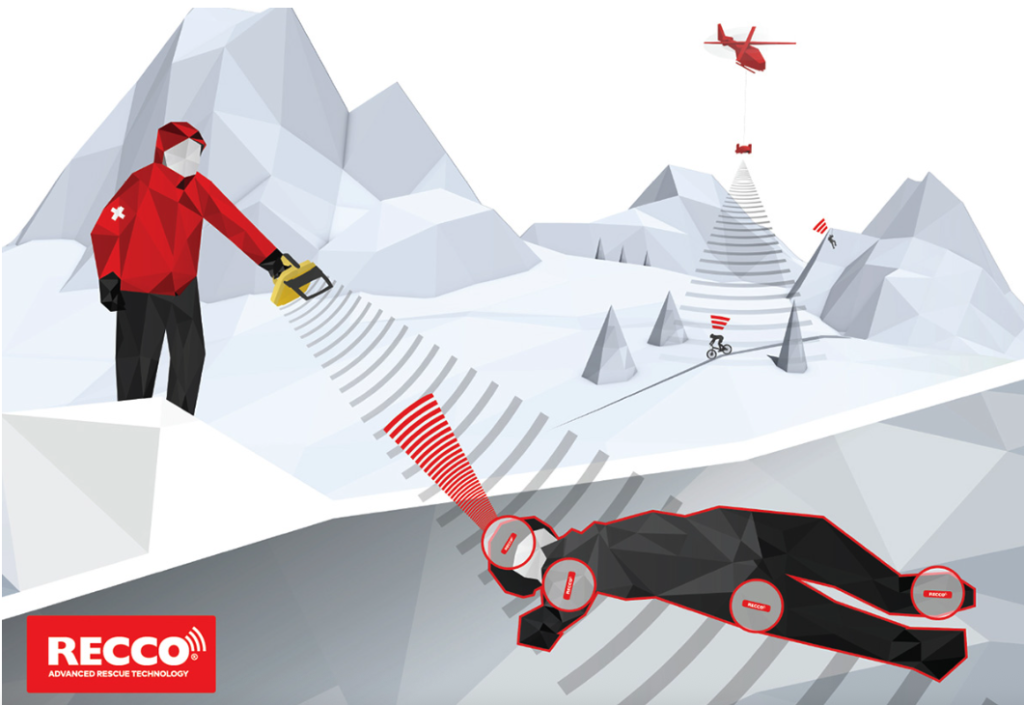
Where the system shines is in large-scale searches, especially from the air. Helicopter-mounted Recco detectors can sweep big areas quickly when tree cover is light, and they’ve helped locate numerous missing individuals. Tragically, those finds are almost always body recoveries, not saves.
Recco reflectors aren’t harmful, and having them embedded in your gear can help search teams bring closure to families. But they’re not a replacement for avalanche transceivers, shovels, probes, or good terrain decisions. Think of Recco as a last-line tool—not a life-saving one—and plan your avalanche safety around the things that really keep you alive.