


















Rappelling is always a dangerous option as a lot can go wrong…but in the mountains, sometimes the speed of rappelling is safer than down-climbing. In alpine ice climbing, the use of an ice bollard can provide an exceptionally good option for descent.
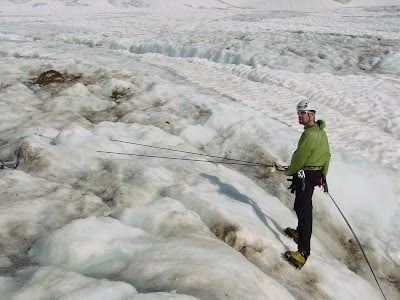
Bollards are not the strongest anchors available, but they are quick and effective. If you choose to use a bollard, it is important to do two things. Back them up and reset the rope after each rappel.
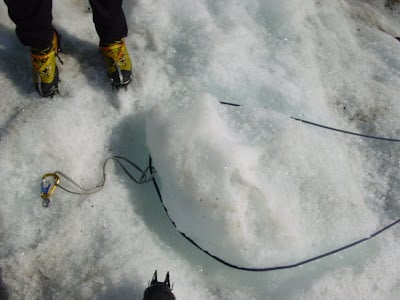
To back-up a bollard, create the bollard and then preset the rope. Place a piece of snow protection (e.g. a picket buried as a deadman) and then loosely clip a sling to both the piece and to the rope. Once this is set-up, the heaviest person with the heaviest pack should rappel first. The theory is that if the heaviest person with the heaviest pack doesn’t blow out the bollard, then a lighter person should be able to remove the back-up piece and safely rappel.
To reset the rope after each rappel, simply treat the rope like dental floss. Pull on each end of the rope once your down. Resetting the rope like this will ensure that it doesn’t freeze into place and get stuck.
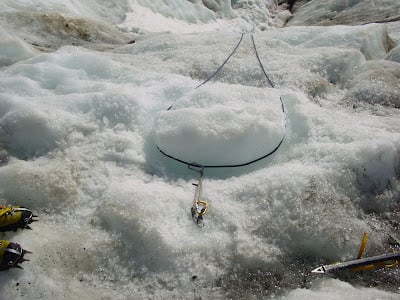
Bollards may be used in snow as well as in ice. But it is important to make them quite a bit bigger. Snow is often more likely to fail, so backing up a snow bollard for the first rappeller is essential.
Ice and snow bollards are not tools that you should learn on the fly. Practice now, so that you’re perfect when you actually need them.
–Jason D. Martin