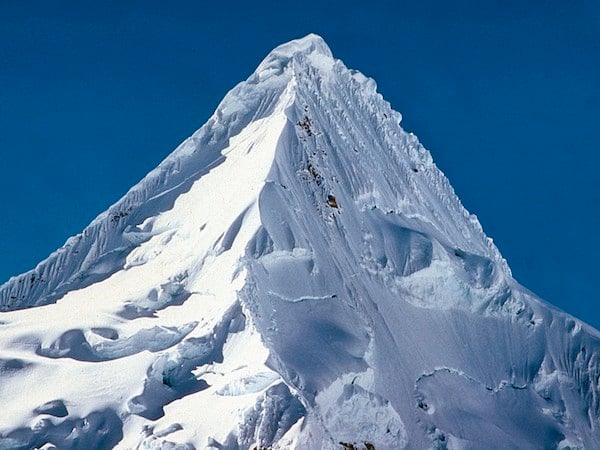
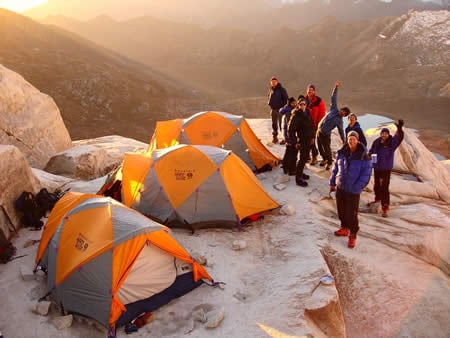
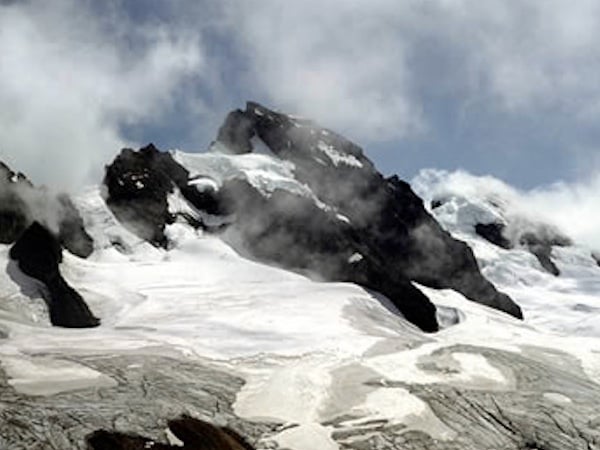
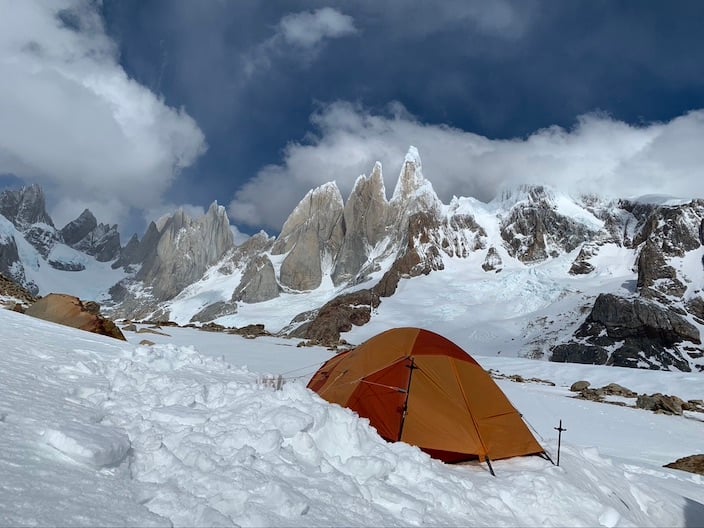
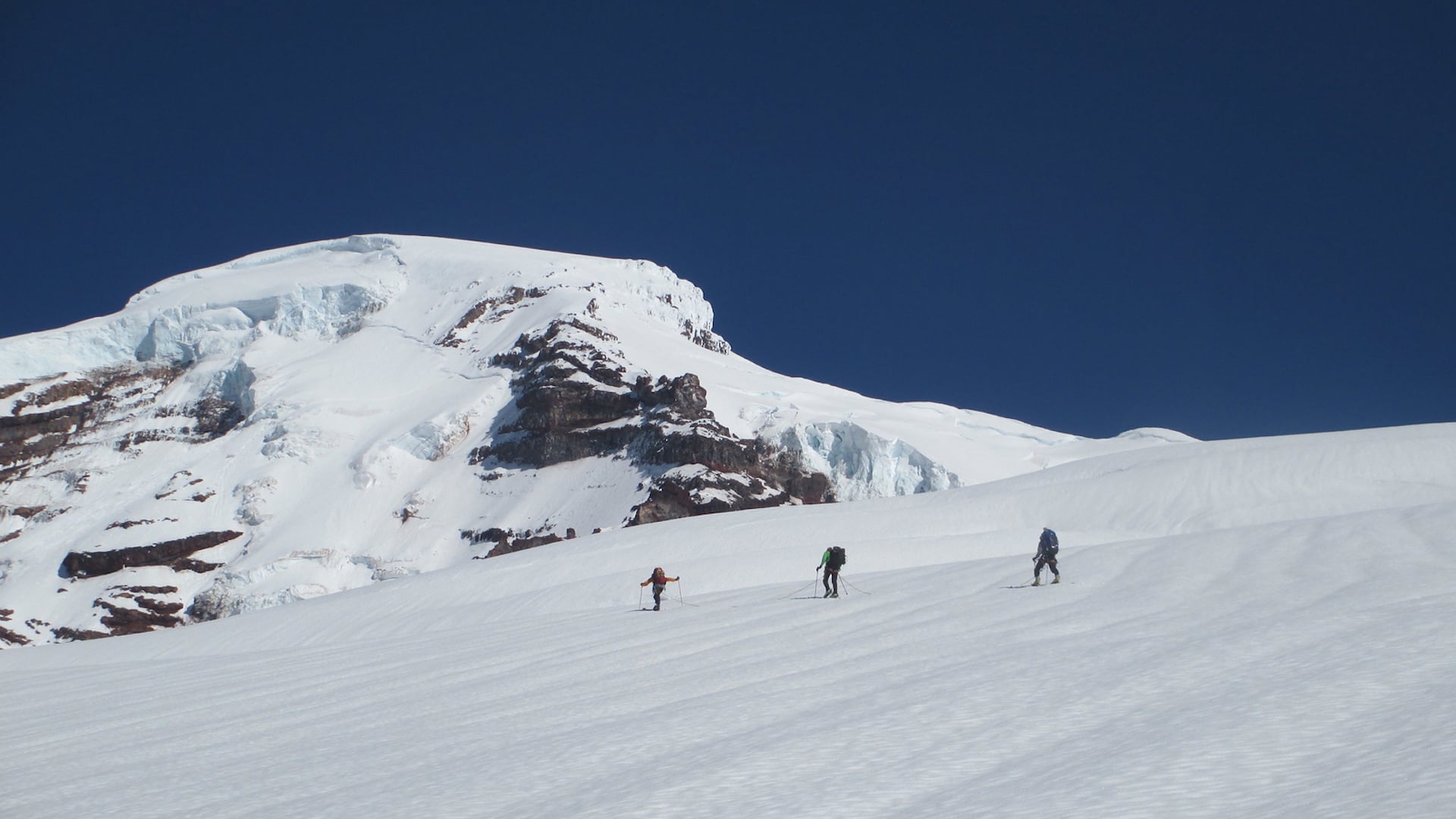
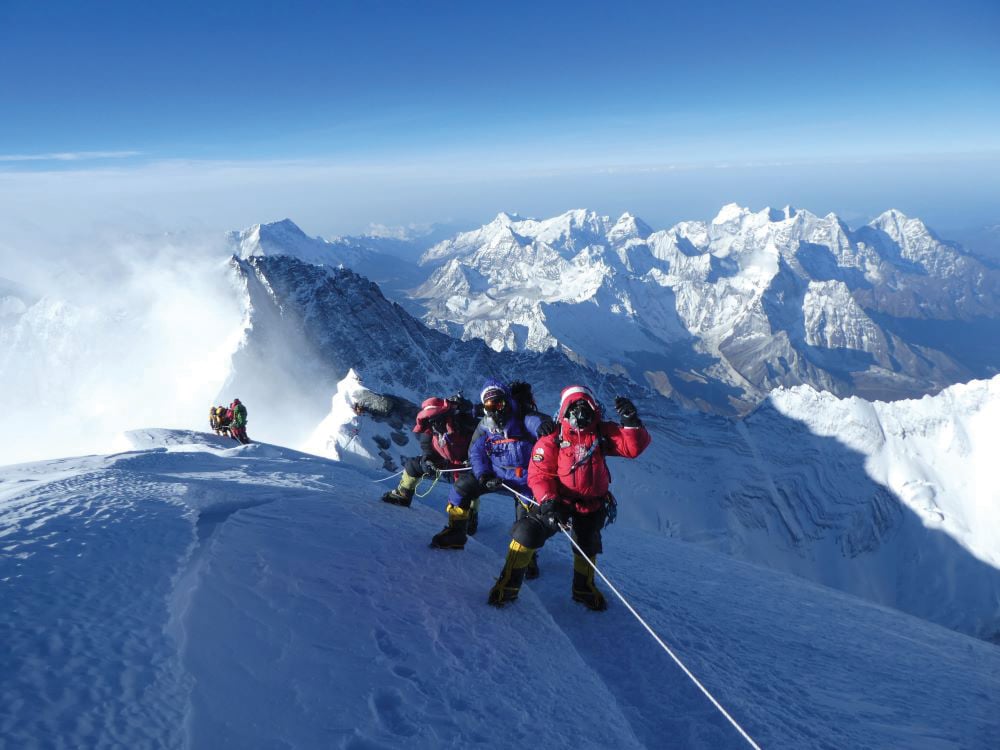
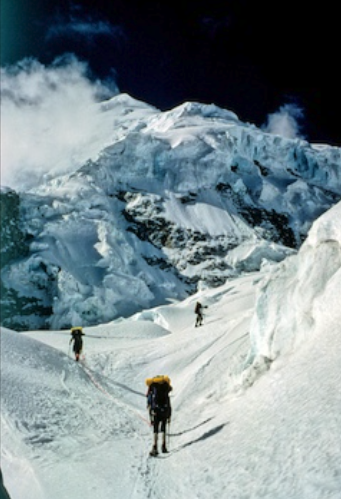
A rope team navigates through complex glacial terrain on a climb of Huascaran. AAI Collection.
Base for the expedition is Huaras, at the very foot of the Cordillera Blanca. After spending a day there checking and repacking gear, we drive north to Nevado Pico Oeste. We set our first camp at 12,600 feet and with the help of animals, the next day move up to our second camp at 15,000 feet. The third day takes us to one of the most beautiful mountain camps in all the world, right on the col between Pisco Oesto and Nevado Huandoy. Our route to the summit takes us through interesting crevasse fields and up some 30-35 degree slopes and provides us with spectacular views the whole way. With our gradual ascent, expedition team members should feel good on this climb and upon its completion be well prepared for an attempt on Huascaran.
After resupplying in the valley, we drive to the town of Musho right below Huascaran and then, with our gear again on animals, we set out for base camp at 14,400 feet. We complete our acclimatization with an easy ascent to Camp I at 15,600′ and then continue up over easy ice slopes and crevasse fields towards the peak’s west face and establish Camp II at 18,000 feet. Glaciers flow down from Huascaran Norte and Sur to a saddle between the two massive peaks, and then off the saddle to the west, first gently and then in a steepening icefall. We avoid the unstable areas of the icefall by traversing under the south summit’s western face, climbing moderate ice slopes and short steep sections to reach the shelter of a bergschrund above the icefall where we put our Camp III at 19,600 feet.
From this camp we make attempts on both peaks of Huascaran. The seldom climbed north peak is more technically demanding than the south, and we keep this as a goal second to reaching the higher summit; but normally after success on the latter, at least part of the team is able to climb its big glacial face. On Huascaran Sur, we move to the saddle and then turn up the steeper 30-45 degree north face of Huascaran Sur. The climb finishes with a fine pitch on a 45-degree snow rib which leads right up to the summit plateau. The excitement is great as we make our final steps to the top of the Western Hemisphere’s highest summit requiring technical climbing skills, and the views of the Cordillera Blanca, the Cordillera Negra, and out over the Amazon Basin are fittingly magnificent.


















 Details