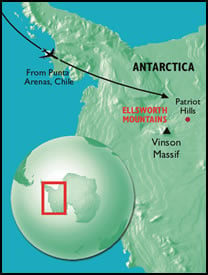
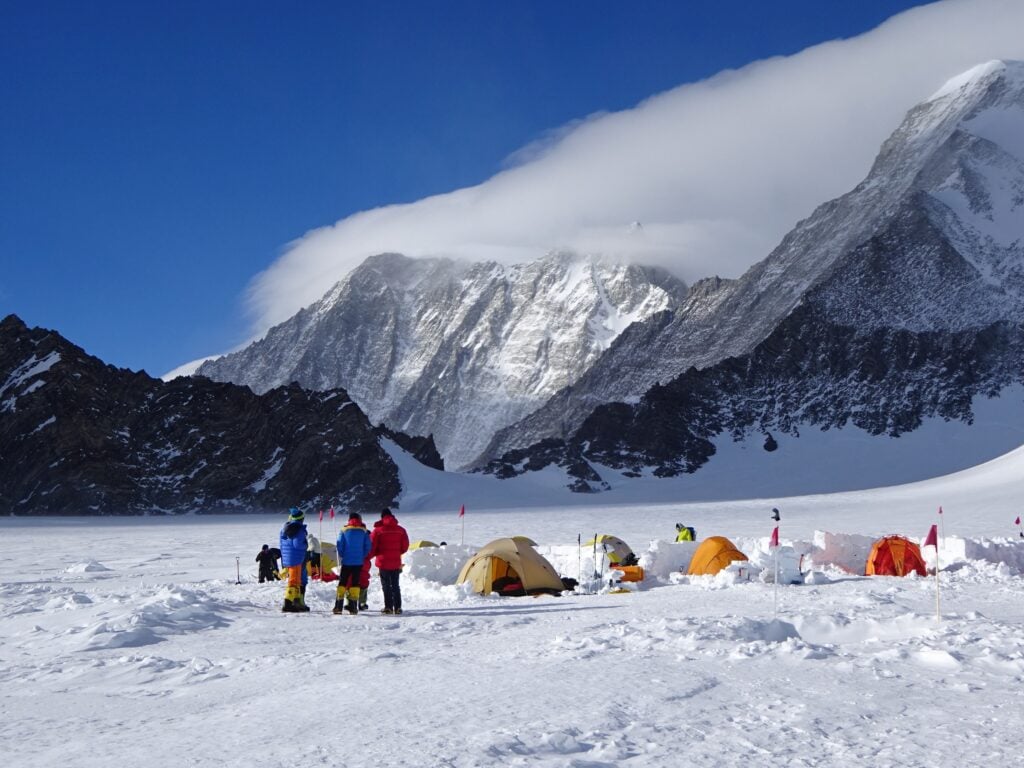
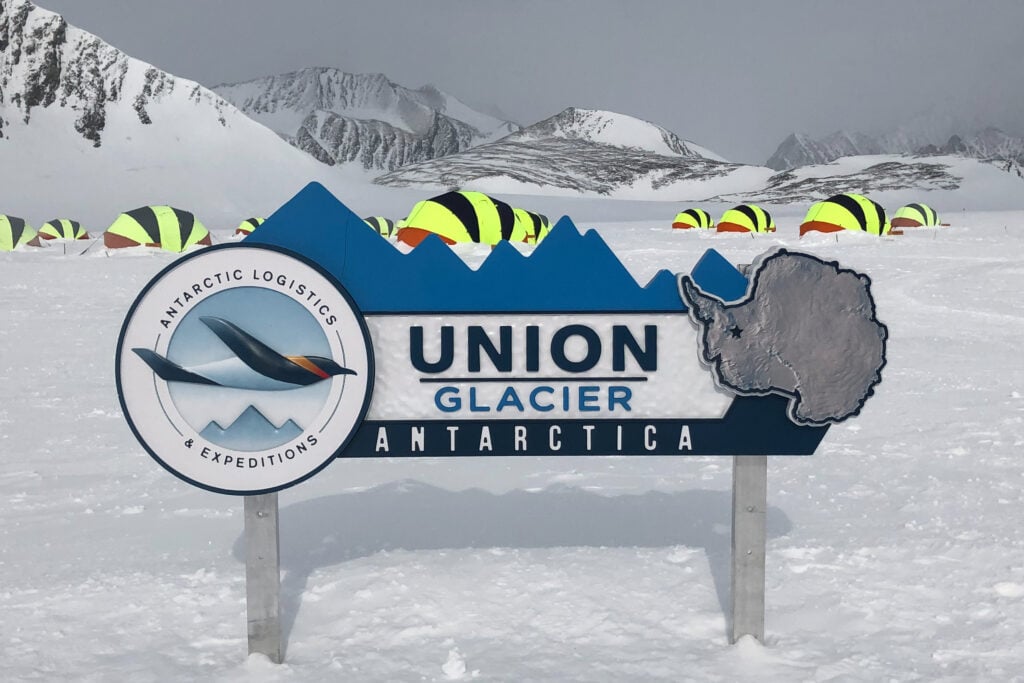
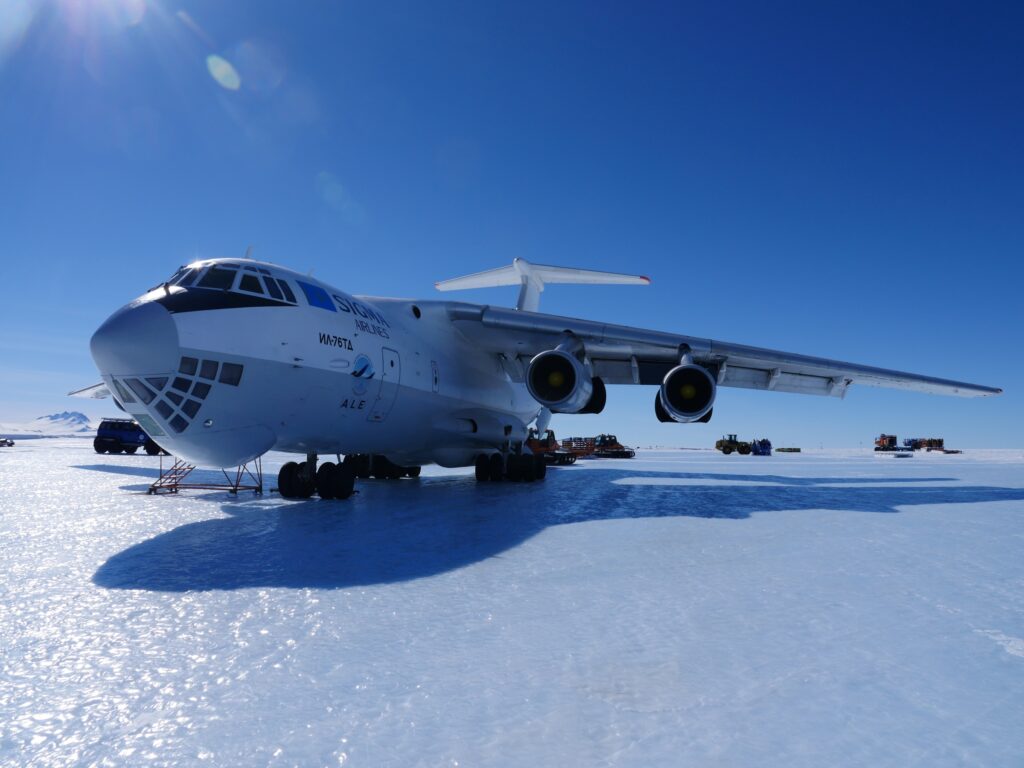
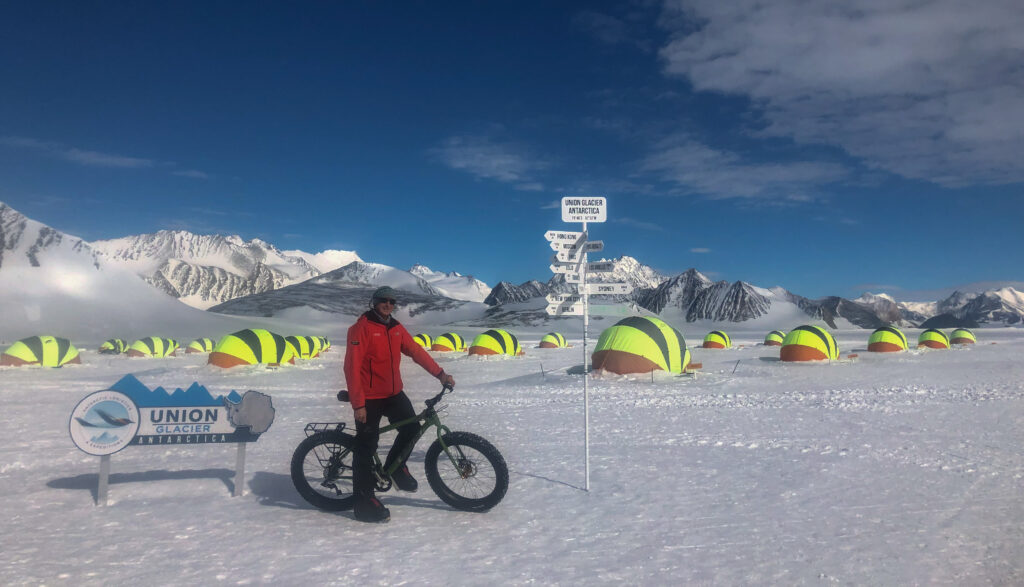
We meet in Punta Arenas in Chilean Patagonia and then fly to a base by the Patriot Hills at 80 degrees South, called Union Glacier Camp, where there is a seasonal tent encampment and where our aircraft can make a wheeled landing on a natural blue-ice runway. We spend one night there and the next morning fly about an hour north in smaller, ski-equipped aircraft to our base camp at 7,874 feet on the Branscomb Glacier at the base of Vinson. Here we will review the Leave No Trace techniques that we will be using, go over crevasse rescue and glacier travel procedures, and do the final organizing of our gear.
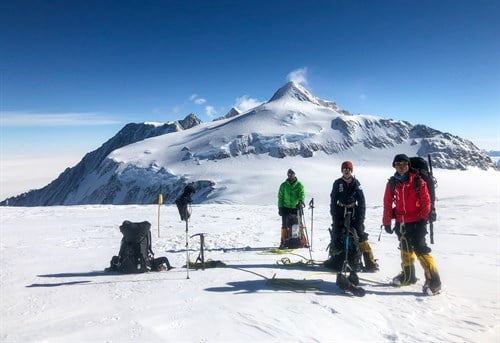
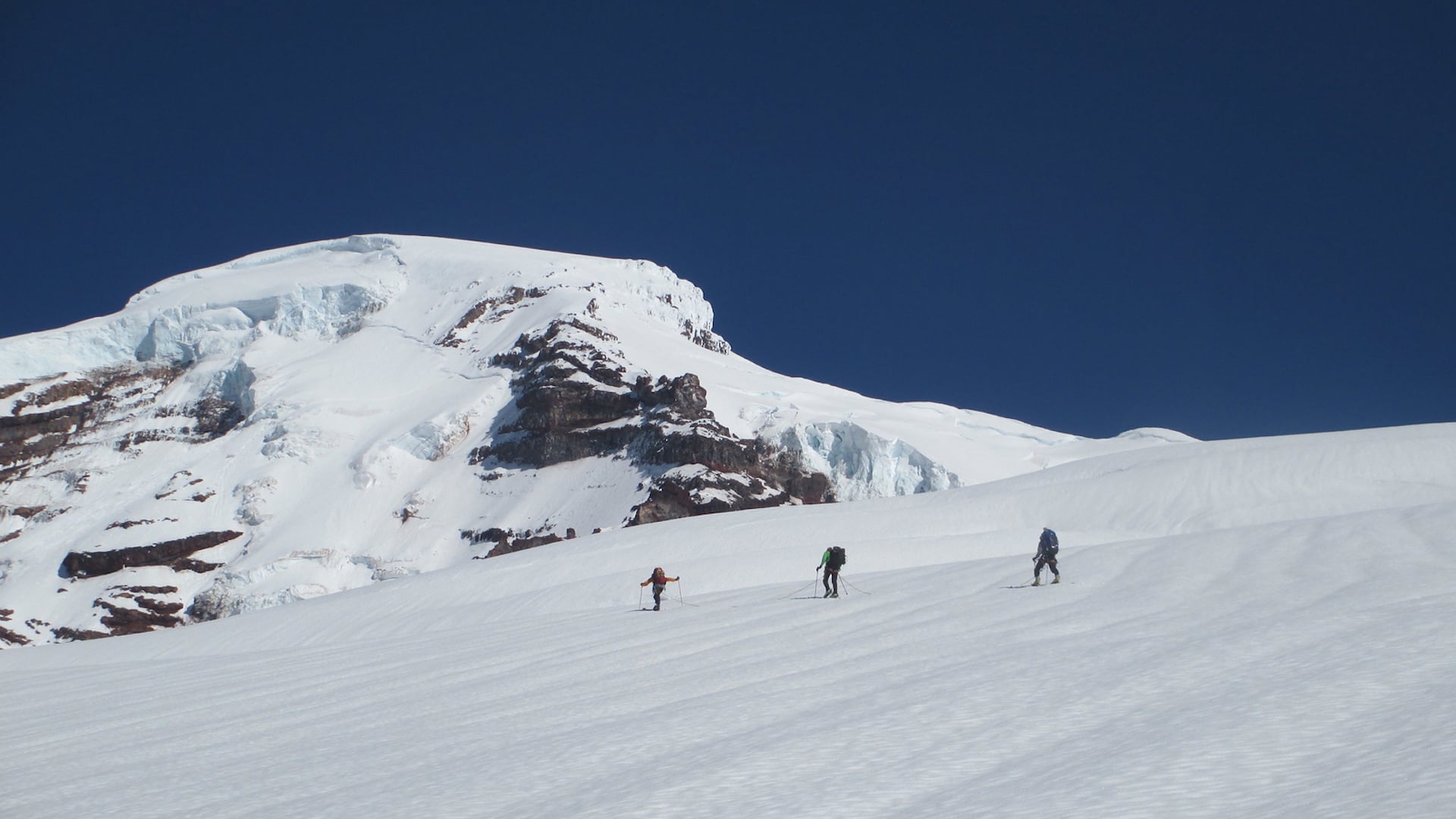
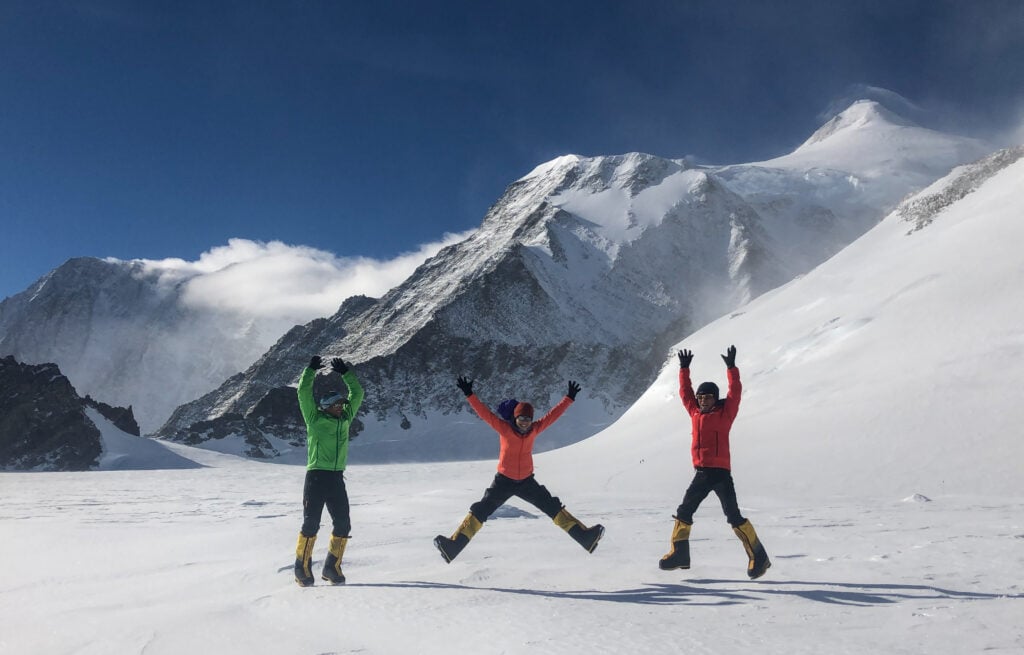
The climb involves interesting glacier travel on the wide and gently sloping lower reaches of the Branscomb Glacier. We pull our sleds up the glacier far below the impressive ice falls that cascade from the main Vinson plateau, 1,500m/5,000ft above.
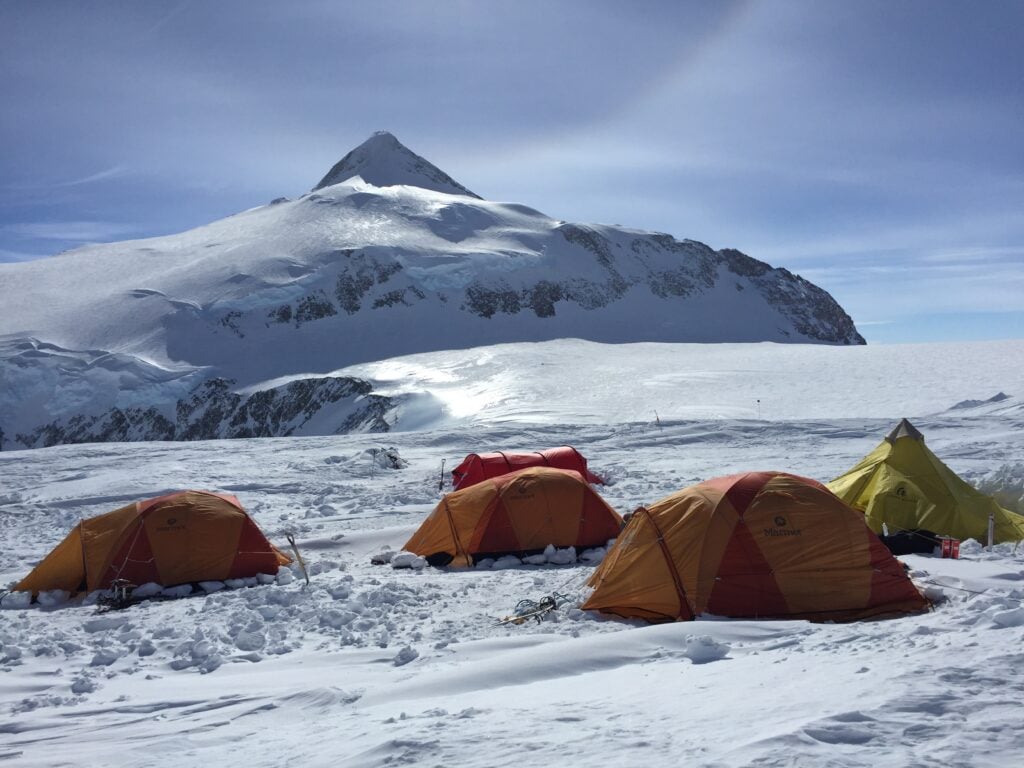
The Base Camp is situated on the Branscomb Glacier at approximately 2,100m/6,900ft and we use two higher camps at approximately 2,700m/8,850ft and 3,850m/12,600ft. The Low Camp is situated further up the glacier just beyond the second icefall, below an ice-wall, which drops directly from the main summit which is about a 7-hour walk from Base Camp punctuated by regular breaks to take in the scenery. We carry half of our equipment in a rucksack and the other half we tow behind on a small plastic sledge.
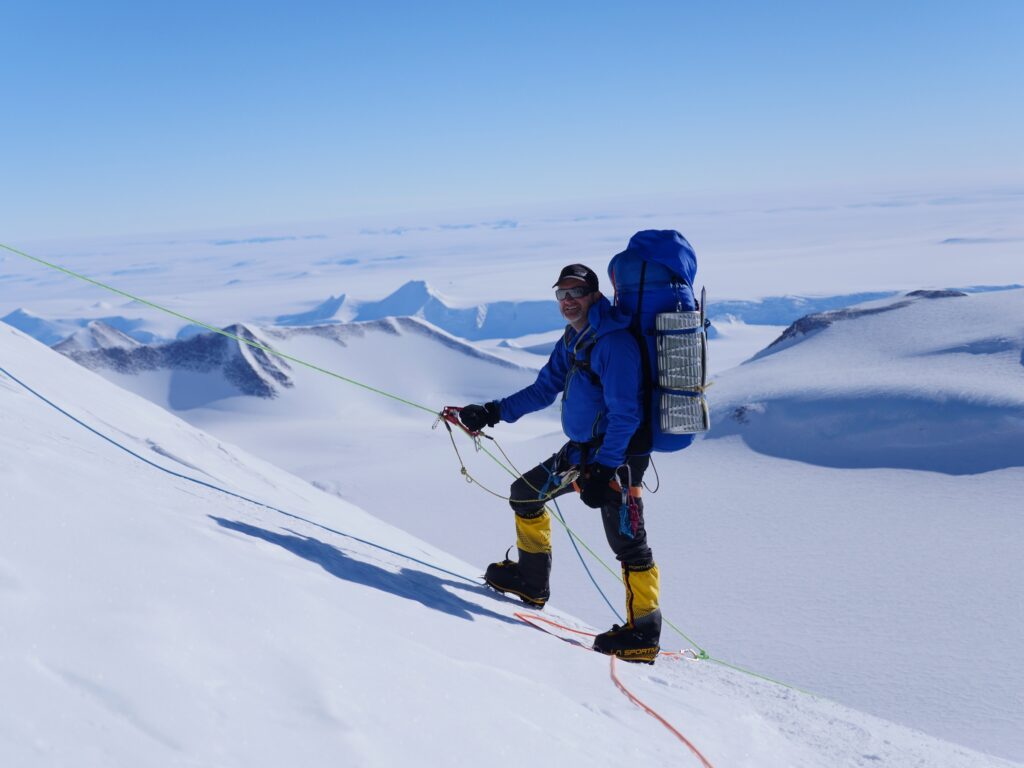
From Low Camp, we climb a 1,200m/4,000ft snow arête (up to 40 degrees steep) on fixed rope for approximately 800m/2,600ft. Fixed rope techniques will be taught during the expedition. The snow arête leads us to High Camp which takes about 6–9 hours. High Camp is nestled beside a rocky ridge adjacent to the main summit plateau.
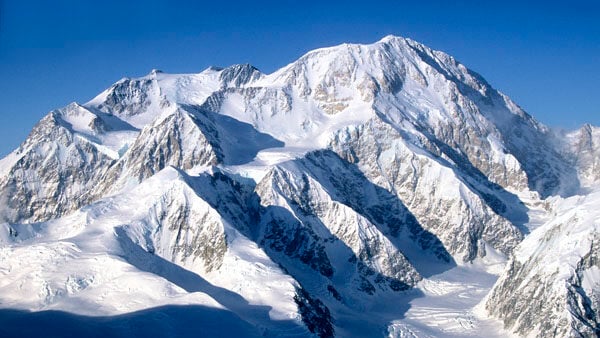
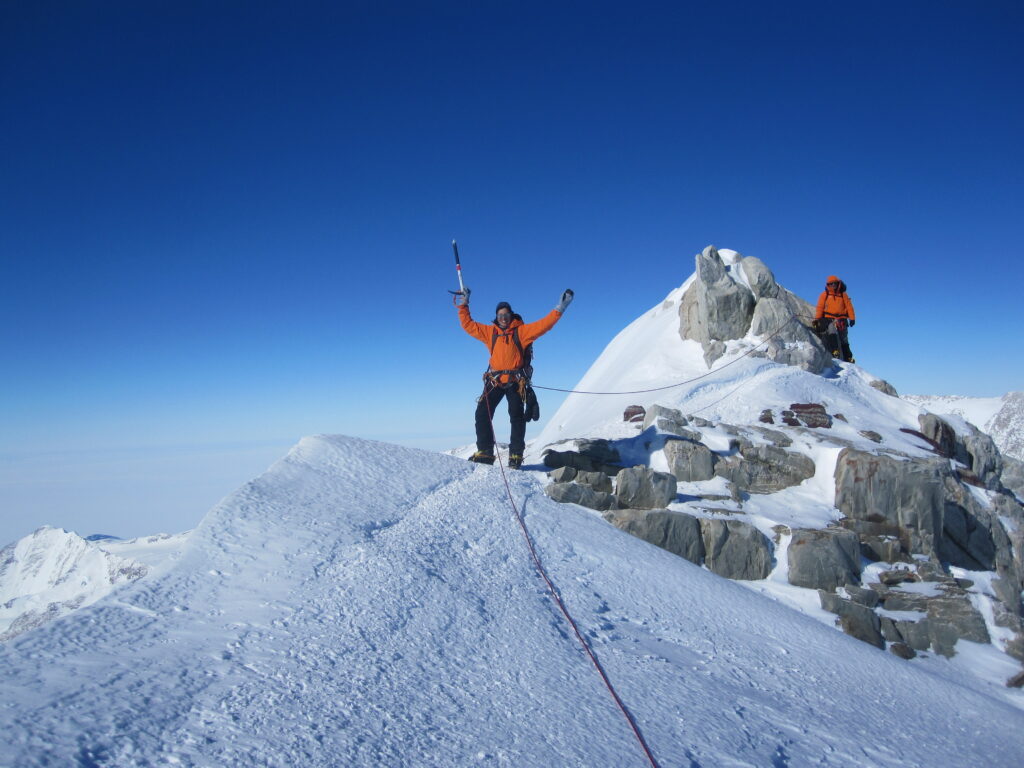
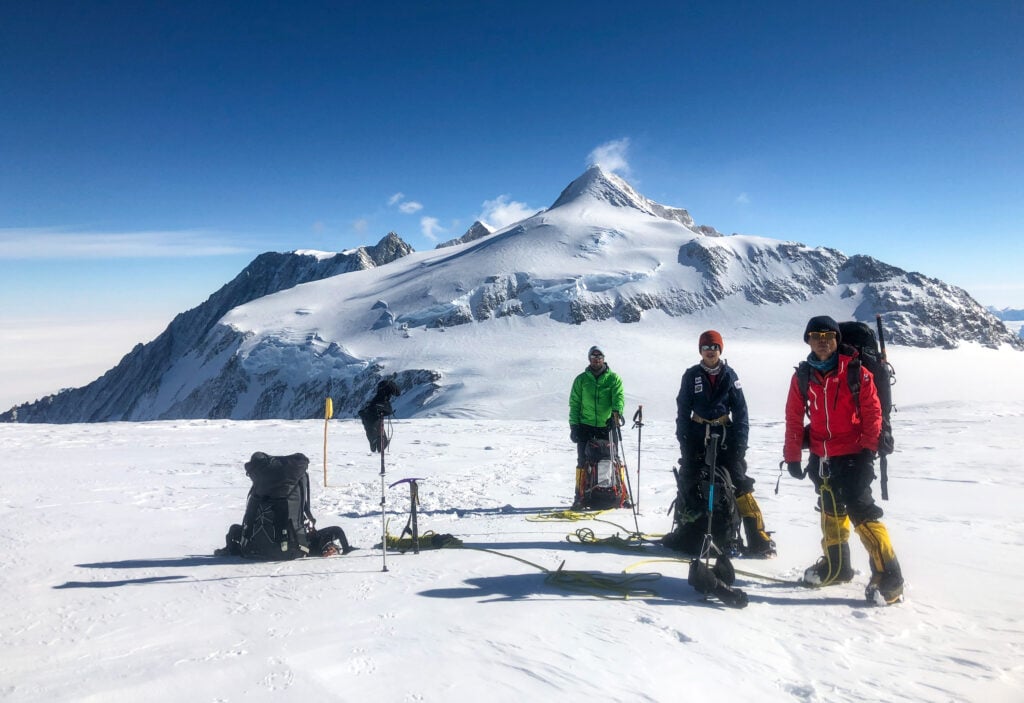
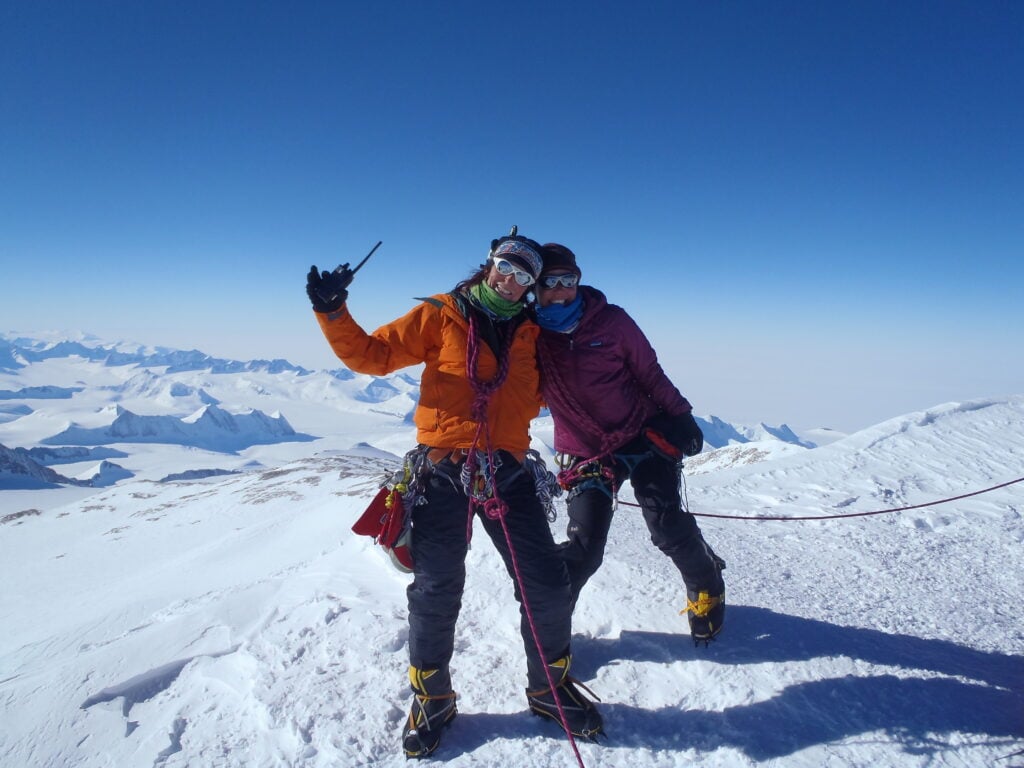
The climb from High Camp to the summit normally takes between 7 and 10 hours, depending on the speed of the party. The descent back to the top camp takes around 2½ hours. On summit day as you climb the glacial plateau, you will first pass Branscomb Peak on the left and the final Vinson summit pyramid then lies directly ahead. From here we climb the picturesque East Ridge, weaving in and out of small rock steps until we arrive at the stunningly beautiful summit and the highest point on the Antarctic continent.
There is a Sierra Club book in a metal tin on the summit of the peak for those wishing to record their ascent–only about 1,200 climbers have reached the peak since it’s first ascent in 1966. The descent from High Camp down to Base Camp can be achieved reasonably comfortably in one day. We collect the toilet bags and other waste on the way down the mountain.
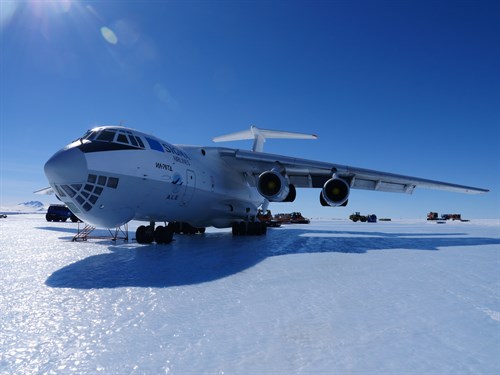
Transport aircraft near SL. AAI/AC Collection.















 Details