
















Itinerary
ALPINE MOUNTAINEERING AND TECHNICAL LEADERSHIP PART 2 Itinerary
Please keep in mind that this is a standard, yet loose, itinerary. It is subject to change depending on conditions, weather, group dynamics, pace, and summit strategies.
Program Details
Alpine Mountaineering and Technical Leadership 2 (AMTL 2) is a 12-day course that will introduce students to more advanced techniques in climbing rock, snow, and ice. This course can be broken down into segments covering multi-pitch rock climbing, rock rescue, and ice climbing, all interspersed with 2 to 4 summit attempts. This course is designed to allow students to lead routes and objectives on a variety of mediums to create a more self-sufficient climber.
It is extremely important for those who participate in this course to understand that this itinerary is not set in stone. Changes may take place at any time due to weather or summit strategies. If you do not understand why an itinerary change occurred, please ask your guide.
An additional note about this course: Many nights of this course are in the front country, meaning access to a grocery store will be frequent. We recommend still having all your food planned out for the course, but there will be moments when you can stop to restock. Consult with your instructor during the rendezvous.
Itinerary
Day 1
Rendezvous at the AAI and Rock Climbing Day
Plan to meet your fellow climbers and instructor(s) at the AAI Equipment Shop promptly at 7:00am. Your guide(s) will take the time to go over equipment, finalize rentals and purchases, review the itinerary, and ensure everyone is adequately prepared.
As soon as the rendezvous is complete we will make the 3-hour drive to Leavenworth, WA. Here we will cover traditional rock climbing leadership skills such as racking, anchor placement, SRENE, practical application of passive and active protection, and more. The
class will be camping at a front country campground that evening. A total of 4 days and 4 nights will be spent here.
Day 2
Multi-Pitch Rock Day
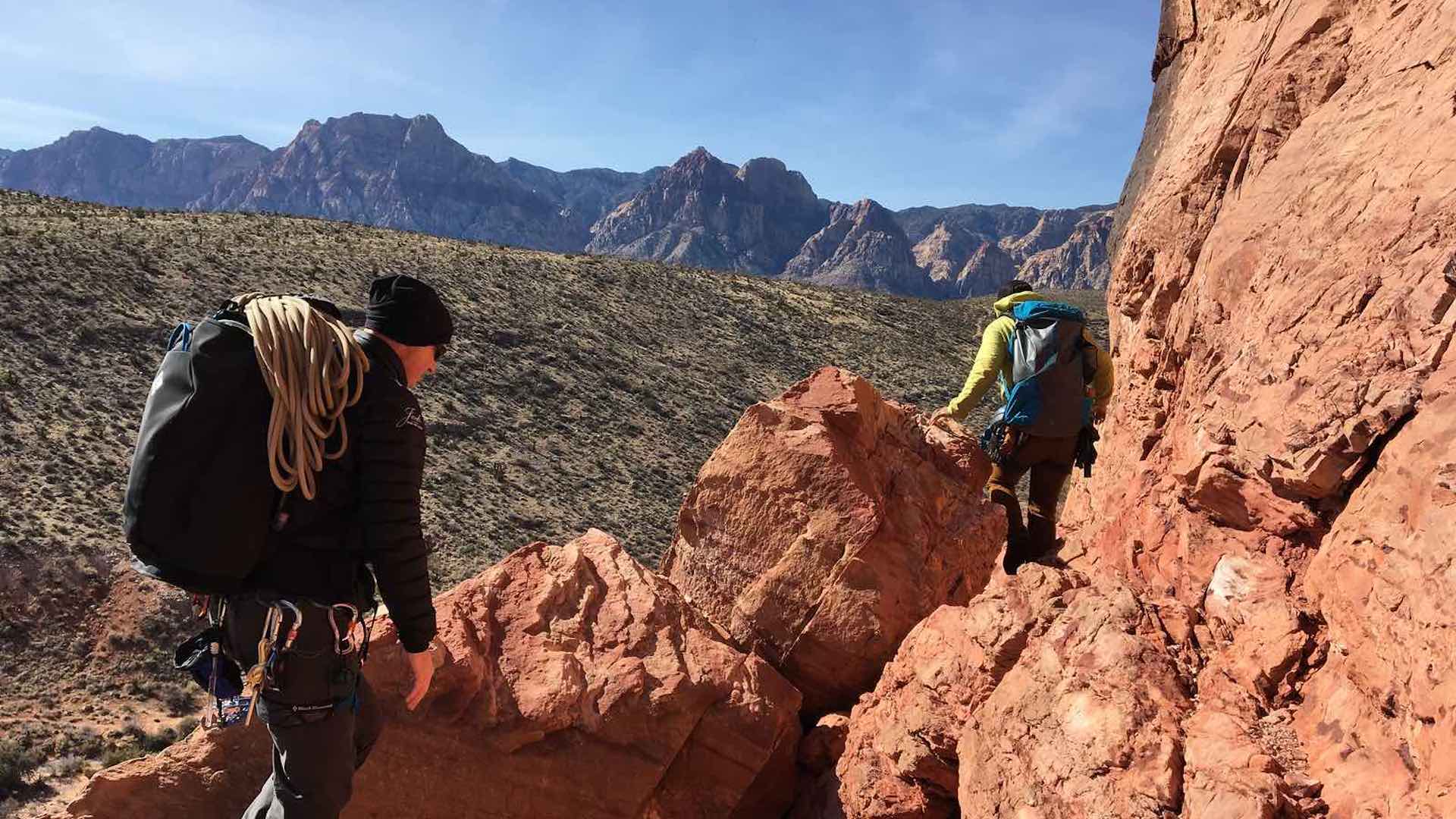
The second day will consist of mock leading drills on a 50-100 foot fourth class or low fifth class cliff in order to allow students to become proficient in anchor building and multi-pitch transitions. This is done with an instructor nearby on a fixed line providing direct feedback, with students practicing leading on toprope, eliminating the fear of falling. Multi-directional anchors, leading procedures, multi-pitch transitions, and anchor and rope management will all be covered. We will be camping at a front country campsite tonight.
Day 3
Multi-Pitch Rock Day
The third day will be spent practicing improving your multi-pitch transitions and rock lead skills by mock leading and executing a few real leads on easy lines. Cleaning anchors, rappelling, mental strategies for climbing and falling, and continued practicing climbing on lead are all concepts that will be covered. We will be camping at a front country campsite tonight.
Day 4
Final Multi-Pitch Rock Day
The final day of lead climbing will conclude with a full multi-pitch lead climb with instructor supervision. The discussion of falling and fall factors will be covered as well as continued leads on single and multi-pitch climbs. This evening we will head back to our front country car camp and discuss a tentative itinerary for the next several days.
Day 5
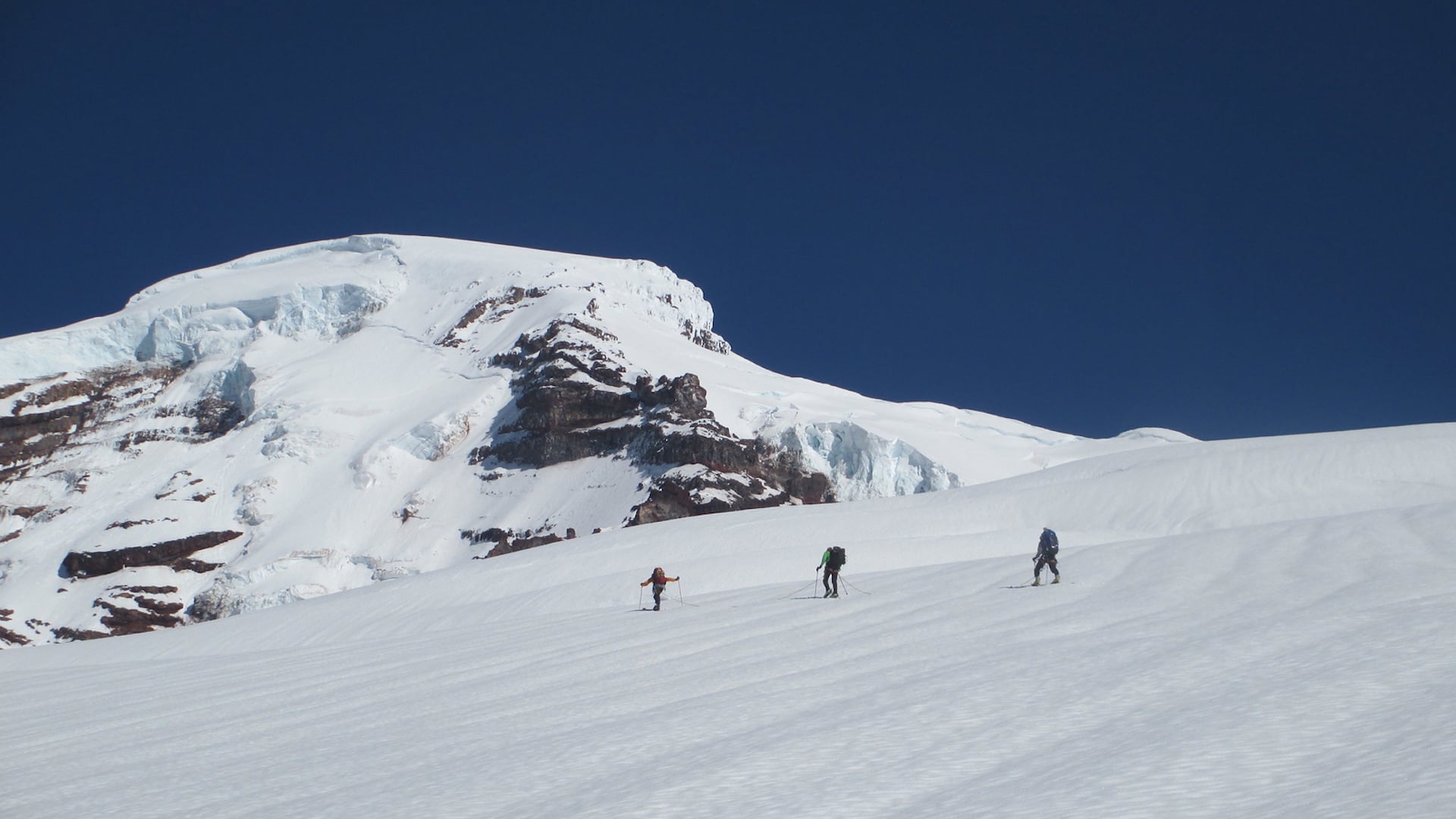
Alpine Ice Introduction on Mt. Baker’s North Side (7000ft/2133m)
On the fifth day, we will have an early start, make breakfast, pack up, head out, and make our way to the North Side of Mt. Baker. The next three days will be focused on developing ice climbing skills, advanced crevasse rescue, and alpine climbing skills. We will hike into basecamp, roughly three and a half miles, to about 6500 feet. Once we set up camp, we will jump right into covering advanced crevasse rescue using the drop loop system. When we are done for the day, we will head back down to camp, where we will likely cover additional
topics over dinner.
Day 6
Alpine Ice Introduction on Mt. Baker’s North Side (7000ft/2133m)
It is not uncommon for the summit bid to be on the 5th day if the weather window looks better. However, we typically plan for it to be on the final day. We will have an early alpine start – sometime between midnight and 3 am. The push to the summit can take anywhere from 4 to 8 hours depending on where base camp was, group pace, and conditions. After the summit bid, we will hike down, pack up camp, and hike out to the vans. We will then drive to the location that we will be learning rock climbing, typically near Washington Pass.
Day 7
Alpine Ice Introduction on Mt. Baker’s North Side (7000ft/2133m)
This day will be a follow-up to day six, covering ice climbing skills in further detail and expanding on concepts relating to v-threads, multi-pitch ice climbing, ice bollards, and snow climbing belays. After the day is finished students will head back to camp, pack up, and hike out to the vans. Alternately, part of the team or all of the team may elect to stay and attempt a technical route on Mt. Baker like the North Ridge, Coleman Headwall, East Ridge, or Colfax Peak, skill and condition dependent. If this is the case the team may move basecamp higher up on the mountain. If the group hikes out they will be staying at a front country or car camp.
Day 8
Rock Rescue Day (Location Varies)
We will make our way to a nearby crag where the group will hike in and work on self-rescue skills in high-angled terrain. This day can be factored in almost anywhere along the trip if a weather day is needed. We will be covering hauling systems, belay escapes, lowering systems, and knot passes. At the end of the day, we will hike out to a front country campsite.
Day 9-12
Ascents (Location Varies)
The final 4 days are reserved for a series of ascents in which students will be applying all of the skills acquired during the previous 8 days. Ascents will be determined based on weather and conditions, as well as group dynamics and skill level. We include several opportunities for students to take the lead on these ascents, always with instructor guidance and supervision. Your lodging, as well as approach time and distances, will vary depending on the routes chosen. On the final day, we will pack up camp, head out, and make our way back to the AAI Headquarters. Plan to return anywhere from 3-7 pm.