














Itinerary
ALPINE MOUNTAINEERING AND TECHNICAL LEADERSHIP PART 1 Itinerary
Please keep in mind that this is a standard, yet loose, itinerary. It is subject to change depending on conditions, weather, group dynamics, pace, and summit strategies.
Program Details
Alpine Mountaineering and Technical Leadership 1 (AMTL 1) is a 12-day progression into alpine climbing designed to build a complete skill set across rock, snow, and ice. The program starts with foundational techniques and steadily advances, with consistent time spent climbing so each skill becomes second nature. Along the way, you will develop route finding, hazard assessment, and self-rescue skills while making a series of classic alpine ascents on rock routes and glaciers. The program concludes with a final climb led by you and your team, applying both technical systems and leadership skills developed throughout the course. Conditions in the mountains are always changing, so the itinerary remains flexible and may shift based on weather and objectives. If changes occur and you want more context, your guide will walk you through the decision-making.
Itinerary
Day 1
rendezvous at the American Alpine Institute equipment shop and rock day
Plan to meet your fellow climbers and instructor(s) at the AAI Equipment Shop promptly at 7:00 am. Your Guide and an Equipment Specialist will take the time to go over your gear, finalize rentals and purchases, review the itinerary, and ensure everyone is adequately prepared.
As soon as the rendezvous is complete, we will travel to Mt. Erie. This climbing area overlooking the North Puget Sound will be the classroom for the day. We will cover basic concepts of free climbing, rappelling, anchor placement, belaying, knot tying, and movement on rock. The class will be camping at a front-country campground that evening.
*On some courses, your Guide will opt to have the rock day at the end of the course and go directly to Mt. Baker on the first day. This is done if the weather appears to be more favorable to necessitate this change.
Day 2
Hike to Camp on Mt. Baker (5600ft/1706m)
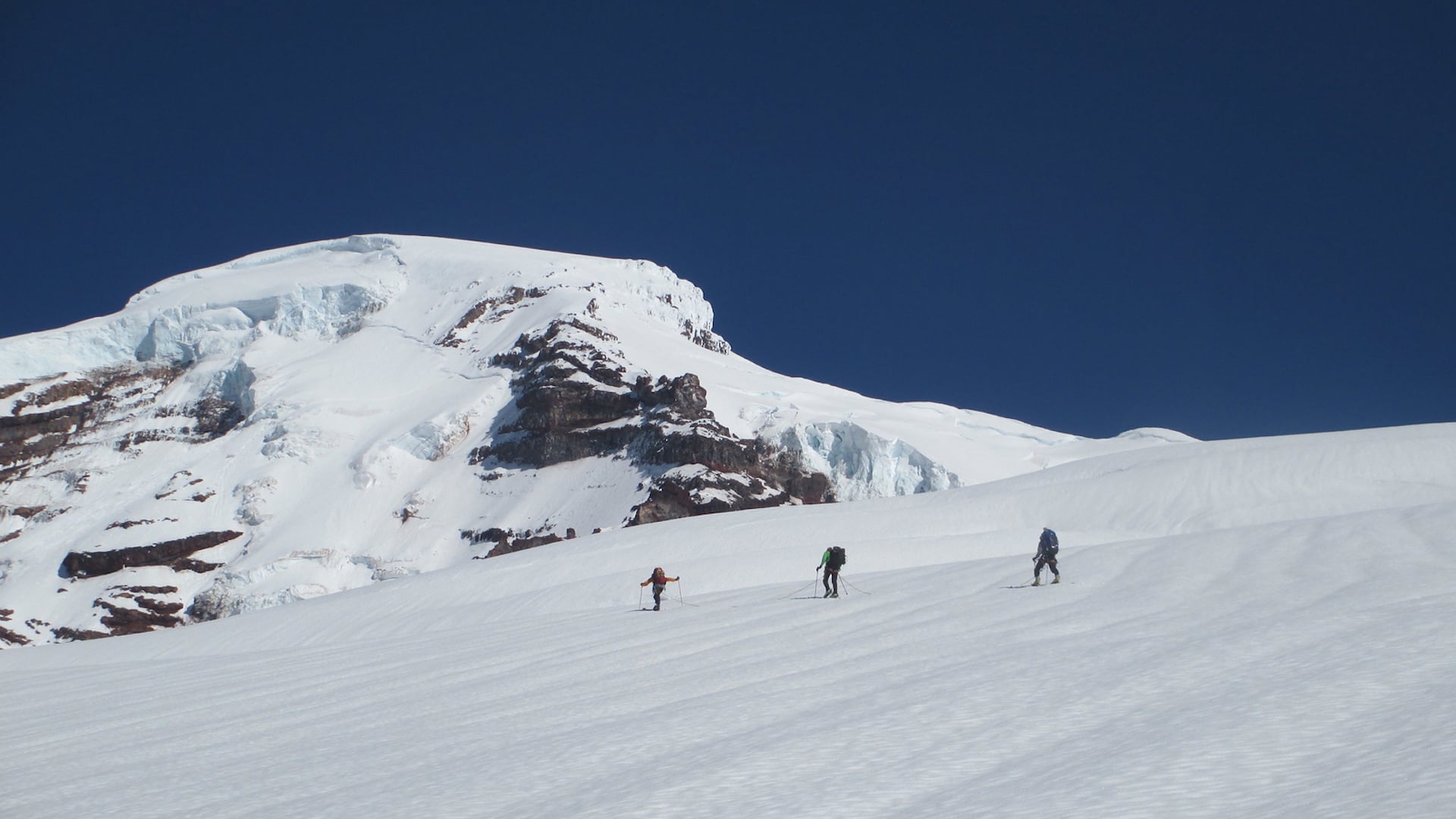
We will break camp early in the morning to make the drive to the trailhead of Mt. Baker. Which route on Mt. Baker you will ultimately climb is based on conditions, Guide preference, weather, etc. The hike will be no more than 5 miles to where you will establish your camp for the next couple of days. Typically, this is around 5000-6000ft. After camp has been set up, the remainder of the day will be spent covering concepts of alpine camping techniques, Leave No Trace principles, glacier travel, glaciology, mountain weather, geology, and the rough schedule for the next few days.
Day 3
Snow School on the Glaciers (6500ft/1981m)
The third day will be spent practicing glacier skills. We will cover the concepts of self-arresting, crampon techniques, glacier travel, and rope team skills and management. Snow skills will be conducted a short distance from camp, at about 6000ft to 6800ft. We will return to base camp that night.
Day 4
Crevasse Rescue (6500ft/1981m)
This will be another long day of skills practice on the glacier. We will start early in the morning and make our way farther up on the glacier like the previous day. The day will be spent covering the most essential tool for glaciated mountain travel; crevasse rescue. We will be setting up and practicing hauling systems, building snow anchors, and prusiking up a rope. This night will also be spent at base camp.
Day 5
Snow Skills and Crevasse Rescue Continued
This is another day spent honing everything learned already and doing crevasse rescue drills. If there is time, basic ice climbing skills will be touched on by top roping on the glacier seracs. This evening has the potential to move base camp higher up on the glacier to about 7000ft to make the summit bid more efficient the next morning. It will be an early night!
Day 6
Summit Bid and Hike Out (10,778/3285m)
It is not uncommon for the summit bid to be on the 5th day if the weather window looks better. However, we typically plan for it to be on the final day. We will have an early alpine start – sometime between midnight and 3 am. The push to the summit can take anywhere from 4 to 8 hours depending on where base camp was, group pace, and conditions. After the summit bid, we will hike down, pack up camp, and hike out to the vans. We will then drive to the location that we will be learning rock climbing, typically near Washington Pass.
Day 7
Introduction to Multi-Pitch Rock Climbing
This day will be spent climbing at a local crag called Fun Rock. Students will be reviewing basic climbing concepts and covering more intermediate climbing concepts such as toprope systems, traditional climbing gear removal, rappelling, knot passing and more. The evening will be spent reviewing the objective and itinerary for the following day. That night will be spent at a front country car campsite between Mazama and Washington Pass.
Day 8
Alpine Rock Route (7807 ft/2379m)
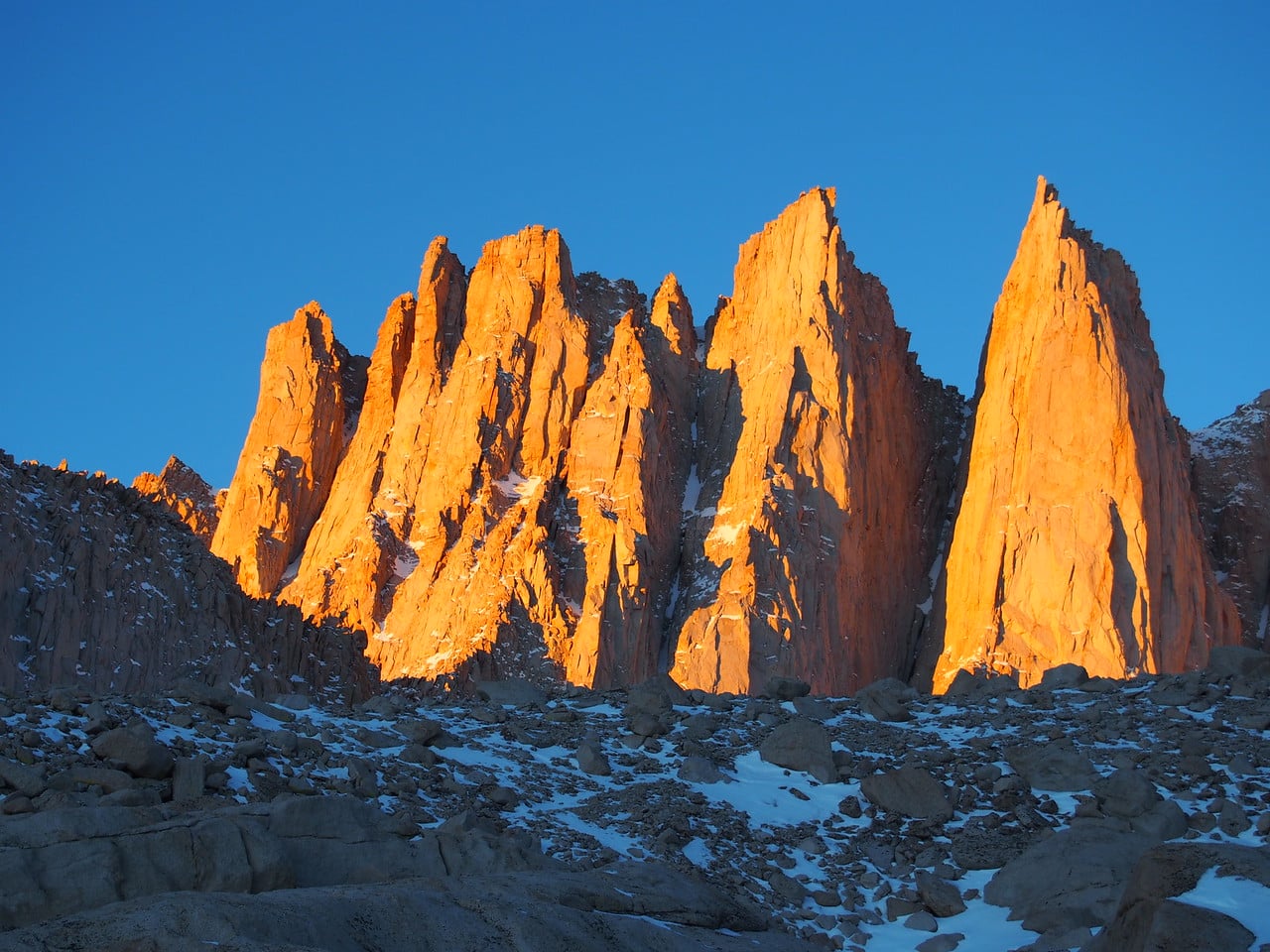
This will be the first day of practical application of rock climbing skills. Today we will drive 20 minutes back up to Washington Pass and climb the South Arete of South Early Winter Spire. There are several other options in the area, and instructors may choose alternative objectives based on weather and student skill. Students will cover multi-pitch climbing, rappelling, route-finding and risk management as well as additional concepts as they come up and time allows. In the evening students and instructors will talk about their route options for the following day. We will camp at the same campground as the night before.
Day 9
Alpine Rock Route (7720ft/2353m)
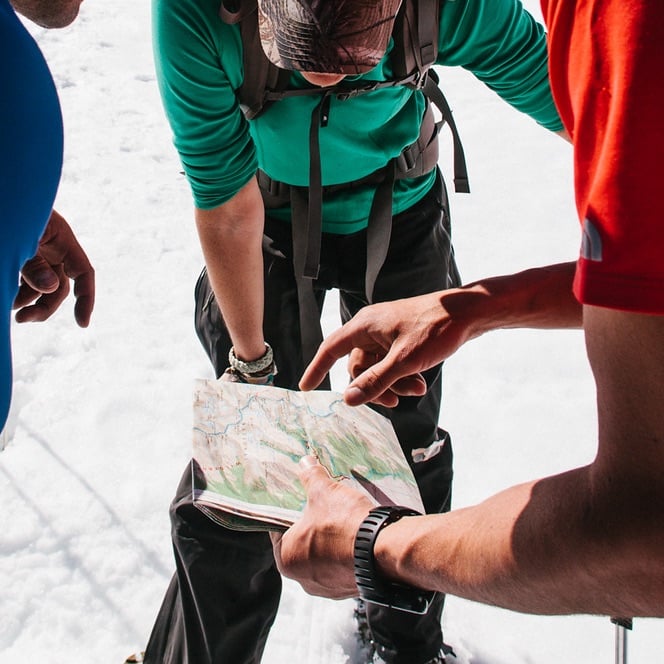
We will venture back to Washington Pass for a second day of practical application, but this time we will climb the Becky Route on Liberty Bell. Much of the same skills as the day before will be covered, but in greater detail to reinforce concepts. Again, there are several other options for routes based on student skill and weather. In the evening, students will review skills from the preceding days. This might include a review of single-line crevasse rescue and the knot pass. We will camp at the same campground as the night before. Over dinner, we’ll begin planning the final, “student-led” ascent, using guidebooks, maps, and advice provided by your instructor.
Day 10
Alpine Rock Route (elevation and distance vary depending on objective)
Today we wake, pack, and drive to one of several areas for the glacier segment of this course. Though we typically climb Mt. Shuksan for this portion, we will occasionally climb Eldorado Peak, Sahale Peak, Silver Star Mountain, or another major non-volcanic summit. Day 10 may also, on occasion, be spent doing another day of alpine rock, at the guide’s discretion.
After driving to the trailhead for the final ascent, we may hike in and set up our base camp, in which case the approach could be anywhere from three to five miles, or we may camp at a forest service campground. If there is time, we will start our review of glacier travel procedures. Your instructor will discuss topics such as glaciation, navigation, or geology over dinner.
Day 11
Student Led Ascent (elevation and distance vary depending on objective)
Today we will hike to a glacier training area and do a full skills review and training. We will review cramponing and ice axe technique, and then, time allowing, may move on to the more advanced skills of snow and/or ice screw anchor building and running protection, and team crevasse rescue. We will also discuss the next day’s route to the summit and will go to bed early in anticipation of an early rise the next morning. This day may also be summit day based on guide discretion, in which case we will summit and hike out and leave the final day for additional skills instruction.
Day 12
Summit Day (elevation and distance vary depending on objective)
Some of the summit choices can include Shuksan via the Sulphide Glacier, Eldorado Peak via the Eldorado Glacier/East Ridge, or Sahale via the Quien Sabe Glacier. We will plan on summiting early, then return to camp, pack up, hike back to the van at the trailhead, and then drive back to AAI’s headquarters in Bellingham. We aim to get climbers back to town between 3-7pm.
*If students completed the summit the previous day, then this day will be additional skills training or another day of cragging before heading back to the AAI office.