















Every week, we take the reader into the interesting and ever-changing life of an American Alpine Institute guide. Every AAI guide is very experienced in alpine and rock climbing, and all have received professional training in advanced guiding techniques and rescue. Collectively they have one of the highest levels of wilderness first aid, avalanche, and Leave No Trace training among the world’s international guide services. For profiles on all AAI guides, please click here.
This week, we interview Kurt Hicks.
Age: 25
Hometown: Bellingham, Washington
Recent trips and expeditions with AAI: Ice climbing in California, Denali Preparation courses, Avalanche Level 1, Red Rocks, and alpine climbing at Snoqualmie Pass alpine
How do you stay in shape and what are your favorite training activities?
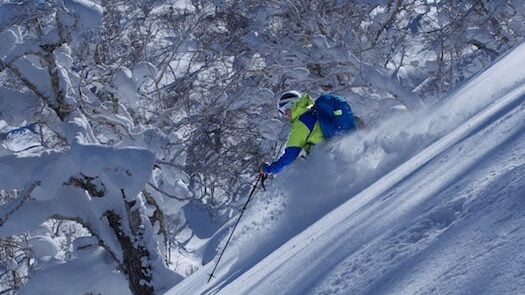
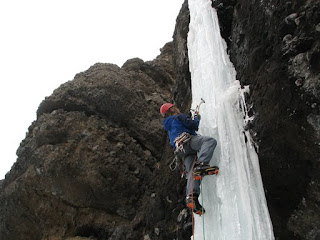
I ran cross-country and track from elementary school through college. Because of this, heading out for a trail run (the muddier, the better) always seems to help get me into reasonably good cardio shape, even if it is only a psychological increase in fitness. In terms of climbing shape, I rotate with the seasons – splitter cracks in the summer, alpine rock routes in the fall, ice and mixed climbs and some skiing in the winter, and a mix of those in the spring.
What are your other interests besides climbing?
I’m supposed to have interests outside of climbing (he laughs)? I prefer to spend my leisure time with family and friends doing a variety of things; there’s nothing quite like an late-afternoon barbeque, a game of Frisbee golf, a couple dark beers, and a comedy movie with friends. Come to think of it, I actually enjoy being ‘domestic’ once in a while…washing dishes, doing laundry, and working on home improvement projects, but I guess that probably comes from my active personality and lifestyle.
Where is your favorite place to travel?
I’ve always been enamored by the Canadian Rockies. I just love to spend time there in the winter, climbing ice and watching the wildlife. Watching sunrise from a few pitches up is pretty amazing. I’ll be traveling to Europe for the first time this fall, so I’m excited to finally see and climb in the French Alps.
On the Technical Side
Describe your climbing style.
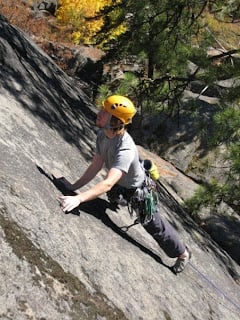
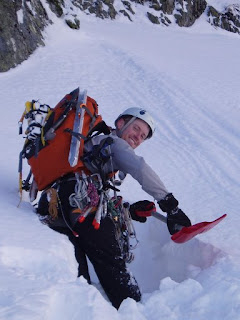
In a word, I’d characterize my style as “conservative.” As the saying goes, “there are old climbers and there are bold climbers, but there are no old, bold climbers.” Sure, some people get away with it, but I tend to gravitate towards routes that can be reasonably well protected, especially if I am climbing near my limit. In the alpine, I like going as light as possible, because it allows me to move faster, climb harder, stress my knees and back less, and (usually) be able to sleep in a bed at the end of the day.
A Guide on Guiding
Is there anything you know now that you’d wish you’d known when you were just beginning to climb?
I wish I would have known how consuming my climbing would become. Also, although I’ve gotten a lot better at it over the years, learning how to be more frugal with my money at an early age would have been very beneficial; it really helps when trying to fund a road trip or an expedition.
When you guide, what piece of advice do you find you give most often to climbers?
Know why you’re doing what you’re doing.
What qualities do you think are most important in a guide?
Patience, flexibility, effective communication, and a constantly analytical mindset.
Name a few guide”turn-ons” (for example, what makes a good climber on one of your courses?).
I enjoy working with climbers who are internally motivated, and are able to stay in good spirits when faced with the challenges of an alpine environment (bad weather, heavy packs, long approaches, etc). A solid repertoire of general backcountry living skills is always appreciated.
Describe your achievement of which you are the most proud.
I’m really proud of the direction I chose for my life. I love going to work every day…not everyone can say that.
Any closing comments on what you’re looking forward to in the next year?
Spring is coming…see you in the mountains!