










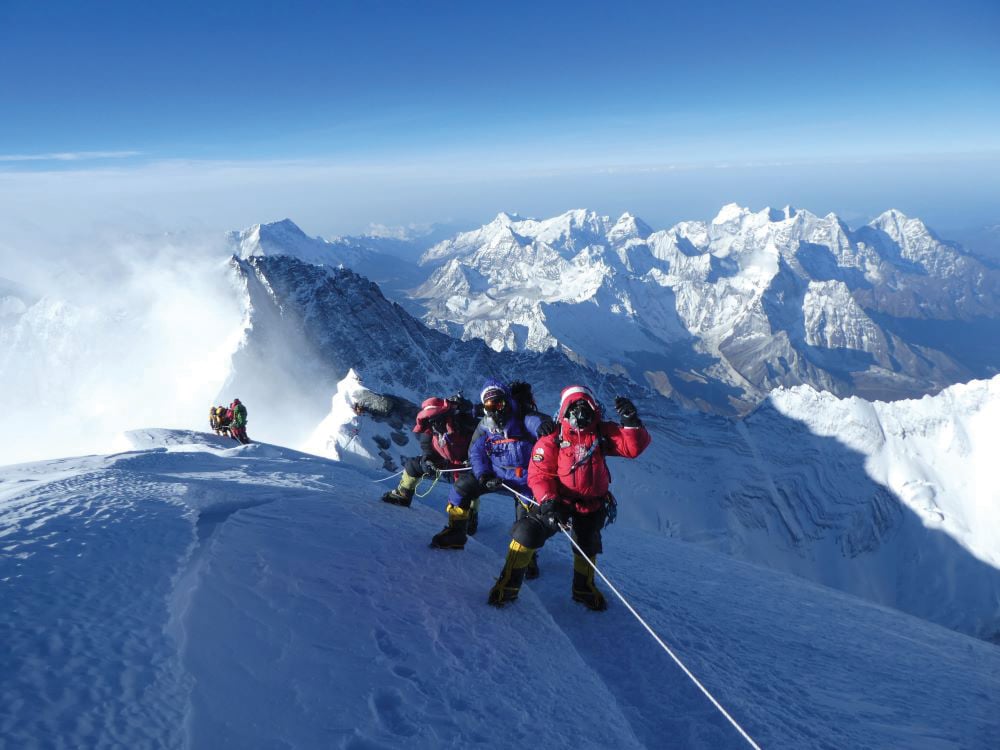







French technique—also called flat-footing—is a crampon method designed for efficient movement on low- to moderate-angle snow and ice. Instead of front-pointing, you keep all the crampon points in contact with the surface, which spreads your weight, improves stability, and saves calf strength.
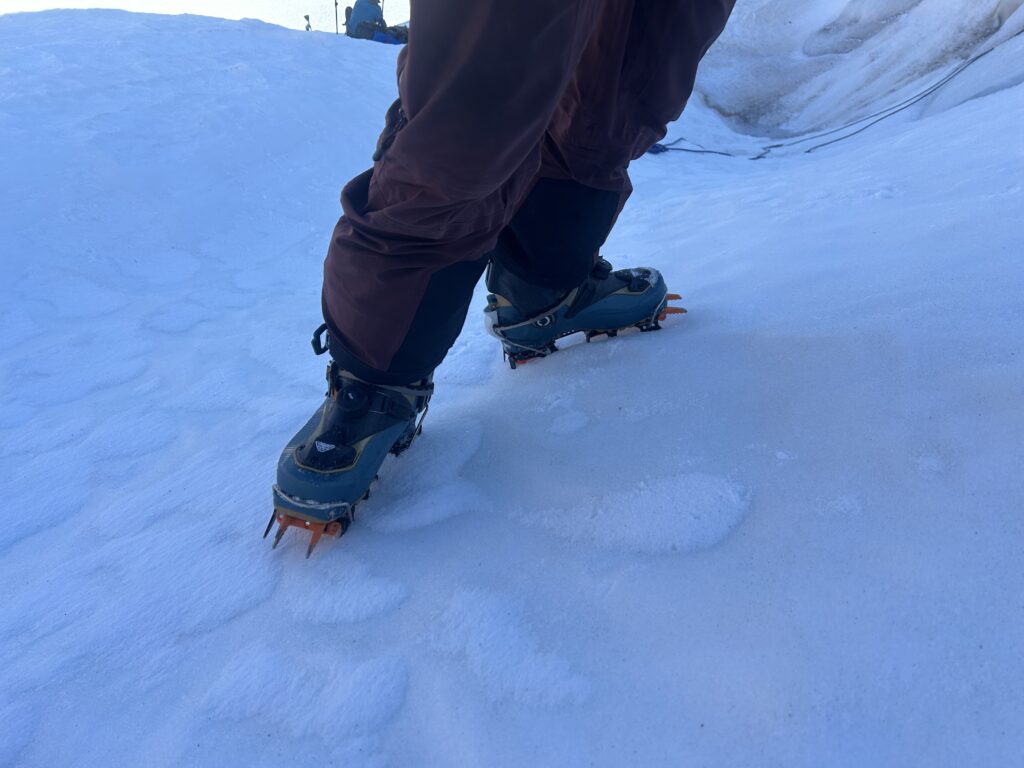
The key is foot placement. Set your feet flat, with toes slightly turned out as needed to match the slope. Knees stay relaxed, hips over your feet, and your weight stays centered. On traverses, the downhill foot remains flat while the uphill foot rotates slightly so all points engage. If you’re walking like a duck with purpose, or you’re crossing over your feet, you’re doing it right.

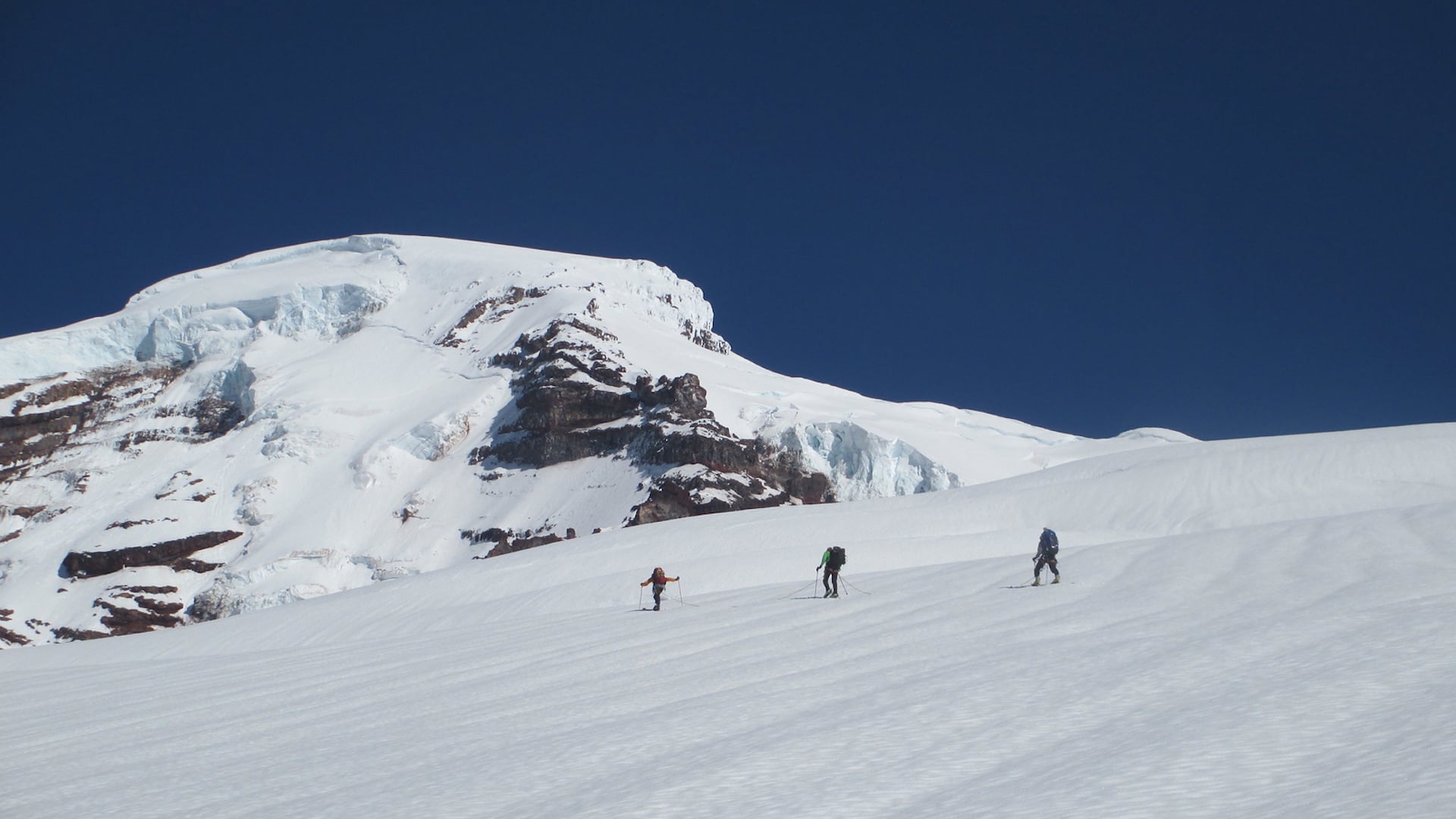
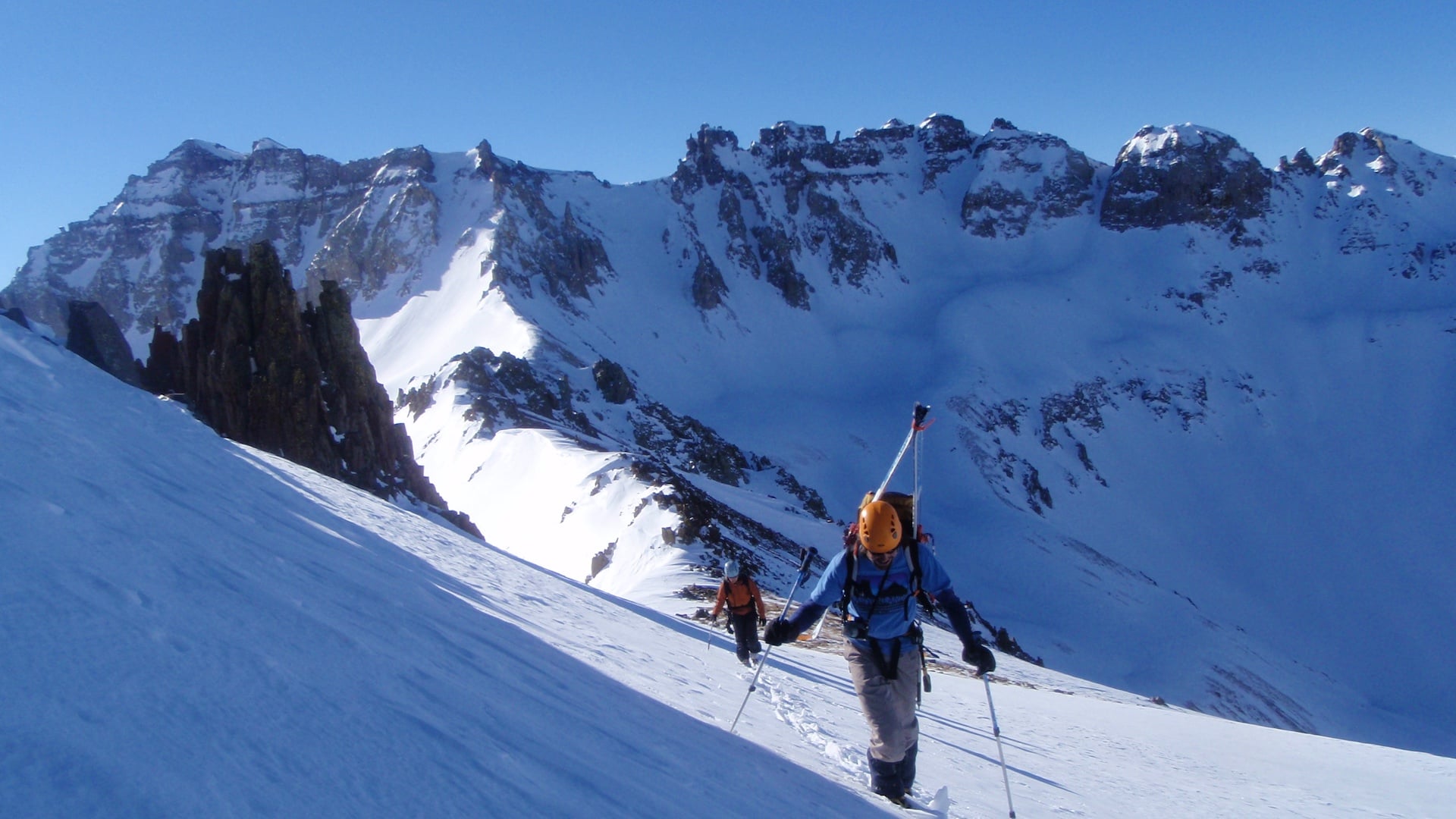
French technique shines on glaciers, snow slopes, and lower-angle alpine ice where efficiency matters more than brute force. It allows for a natural walking motion, better balance, and reduced fatigue—critical for long climbs or big days at altitude.
Proper boot stiffness is essential; soft boots make flat-footing sloppy and insecure. Pair the technique with good posture and deliberate steps, and you’ll move smoothly and confidently across terrain that might otherwise feel awkward or tiring.
In short, French technique is about finesse, efficiency, and not burning out your legs before the mountain gets interesting.