

























Every climber has been there — you’re mid-crux on perfect stone, your fingers locked into a sequence that feels like magic, and then it happens. A sharp sting, a tear, and suddenly your hand looks like it lost a fight with a cheese grater.
Congratulations, you’ve earned yourself a flapper — a badge of honor no one actually wants.
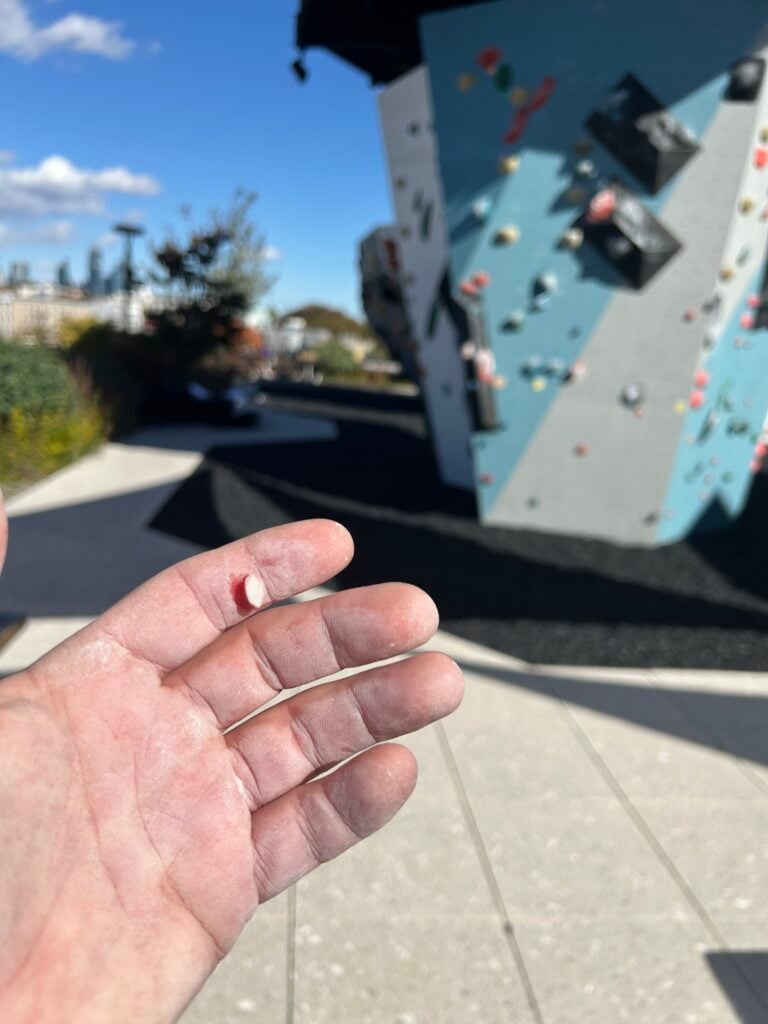
A flapper occurs when a callus rips partially or completely away from the skin, leaving a raw, painful wound underneath. They’re common among boulderers and sport climbers, but trad climbers and mountaineers aren’t immune. Granite, limestone, plastic — doesn’t matter. If you push hard enough, long enough, your skin will revolt.
Immediate Care
When you get a flapper, your first goal is to clean it. That means soap and water — yes, it stings, but it beats an infection. Trim off the dangling skin with sanitized scissors if it’s completely detached. If it’s hanging by a thread, you can lay it back down like a natural Band-Aid, though opinions differ on whether that actually helps. Once clean, apply antibiotic ointment and cover it with a non-stick bandage or climbing tape.
The key is to protect it without creating a sweaty, bacteria-filled sauna under your tape. Change dressings often, especially if you’re still climbing (which, let’s be honest, you probably are).
Climbing With a Flapper
If you absolutely must keep climbing, learn to tape smart. Use climbing tape, not duct tape; your hands aren’t plumbing fixtures.
To tape a climbing flapper, first, clean the area and fold a piece of tape sticky-side-to-sticky-side to place on the wound to protect it. Then, wrap the finger or hand with more tape in a crisscross or figure-eight pattern, overlapping each layer for a secure hold that covers the flapper completely. Ensure the tape is snug but not too tight, and finish by anchoring the tape ends to prevent them from peeling off during a climb. Here’s a short video on taping.
All that said, the real pros know when to stop. Continuing to climb on raw skin can delay healing by days or even weeks. Sometimes, the hardest move of the day is walking away from the wall.
Prevention: The Best Medicine
Flapper prevention starts with skin management. Sand your calluses down with a pumice stone or fine sandpaper to keep them even and flexible. Moisturize regularly (but not right before climbing) to prevent cracks. Hydrate, rest, and avoid marathon sessions that turn your hands into jerky.
Good skin care might not sound as exciting as sticking a dyno or onsighting a tough route, but it’s part of being a complete climber. After all, strong fingers are useless if they’re missing their skin.
So file, wash, tape, and heal — because the best flapper is the one you never get.