



































A firefighter’s belay is one of the simplest and most effective ways to back up a rappel. It’s a technique that provides peace of mind for both the person on the rope and the person managing the system below.
Historically this was referred to as a fireman’s belay, and the person providing the belay was the fireman. In an attempt to be more inclusive, this technique is now more commonly referred to as the firefighter’s belay. The person at the bottom providing the belay is not a firefighter, but a belayer, as that is what the person is actually doing…
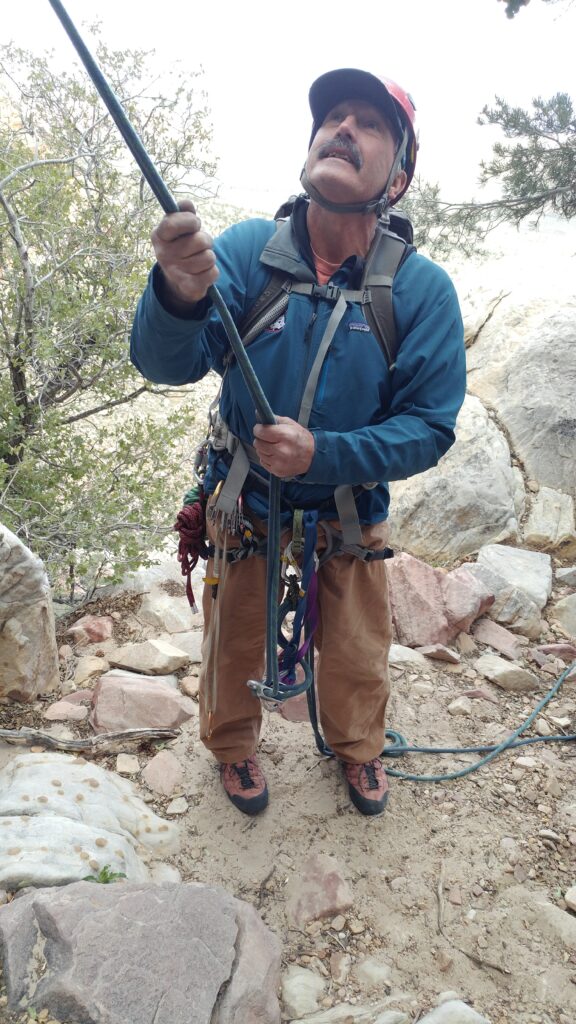
To perform a firefighter’s belay, the belayer positions themselves at the base of the rappel, holding the brake strands of the rope—the same side the rappeller would pull to stop their descent. As the rappeller moves downward, the belayer keeps light tension on the rope, ready to act if something goes wrong. If the rappeller begins to lose control, the belayer simply pulls down sharply on the brake strands. This motion increases friction in the rappel device, locking it off and bringing the rappeller to an immediate stop.
It is important ot note that the belayer should be able to feel the rappeller on the rope. If one cannot feel the friction above, then it’s reasonable to believe that the belayer will not be able to arrest a fall.
This technique is valuable in any setting where climbers may not be fully comfortable with their rappelling skills. It’s also helpful in group environments or during wet, icy, or otherwise challenging descents. The beauty of the firefighter’s belay lies in its simplicity—no extra gear, no complex systems, just a grounded climber providing an extra layer of security. It’s one of those basic, common-sense tools that can easily prevent a serious accident.