














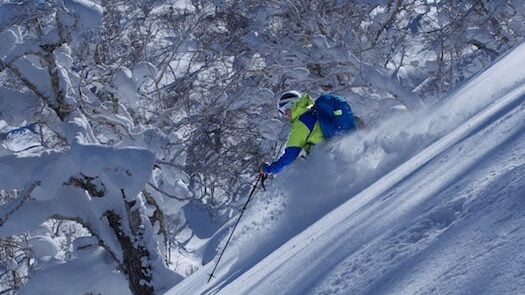

Catastrophic late season avalanches that cut all the way to the ground are among the most powerful and destructive events in the annual snow cycle. Unlike midwinter slab avalanches that fail within a storm layer or on a persistent weak layer, these slides release the entire snowpack. Months of accumulated snow—sometimes measured in tens of feet—detach from the earth and move downhill as a single, cohesive mass.
In spring, increasing solar radiation and warm temperatures drive meltwater deep into the snowpack. That water percolates downward, weakening bonds between grains and pooling at the base. When the ground interface becomes saturated, friction drops dramatically. Add the weight of a fully consolidated seasonal snowpack, and the stage is set for a full-depth wet slab or glide avalanche. Once gravity wins, there is little to slow the release.
These avalanches are typically dense, heavy, and relentless. They may move slower than cold, dry slabs, but they compensate with mass and force. As they descend, they entrain saturated snow, soil, rocks, and timber—scouring slopes to bare ground. Mature trees can be snapped or uprooted. Infrastructure such as roads, bridges, and buildings in runout zones can be buried under debris piles that harden like concrete once temperatures drop.
Late season timing adds another layer of hazard. Blue skies and warm temperatures often create a false sense of stability. Travelers may assume the winter hazard has passed, when in fact the snowpack is undergoing one of its most profound structural failures of the year. These events are difficult to predict precisely and can occur naturally without a human trigger.
When the snowpack is losing strength from the ground up, conservative terrain choices are critical. In spring, stability is earned day by day—and sometimes lost in a single warm afternoon.