









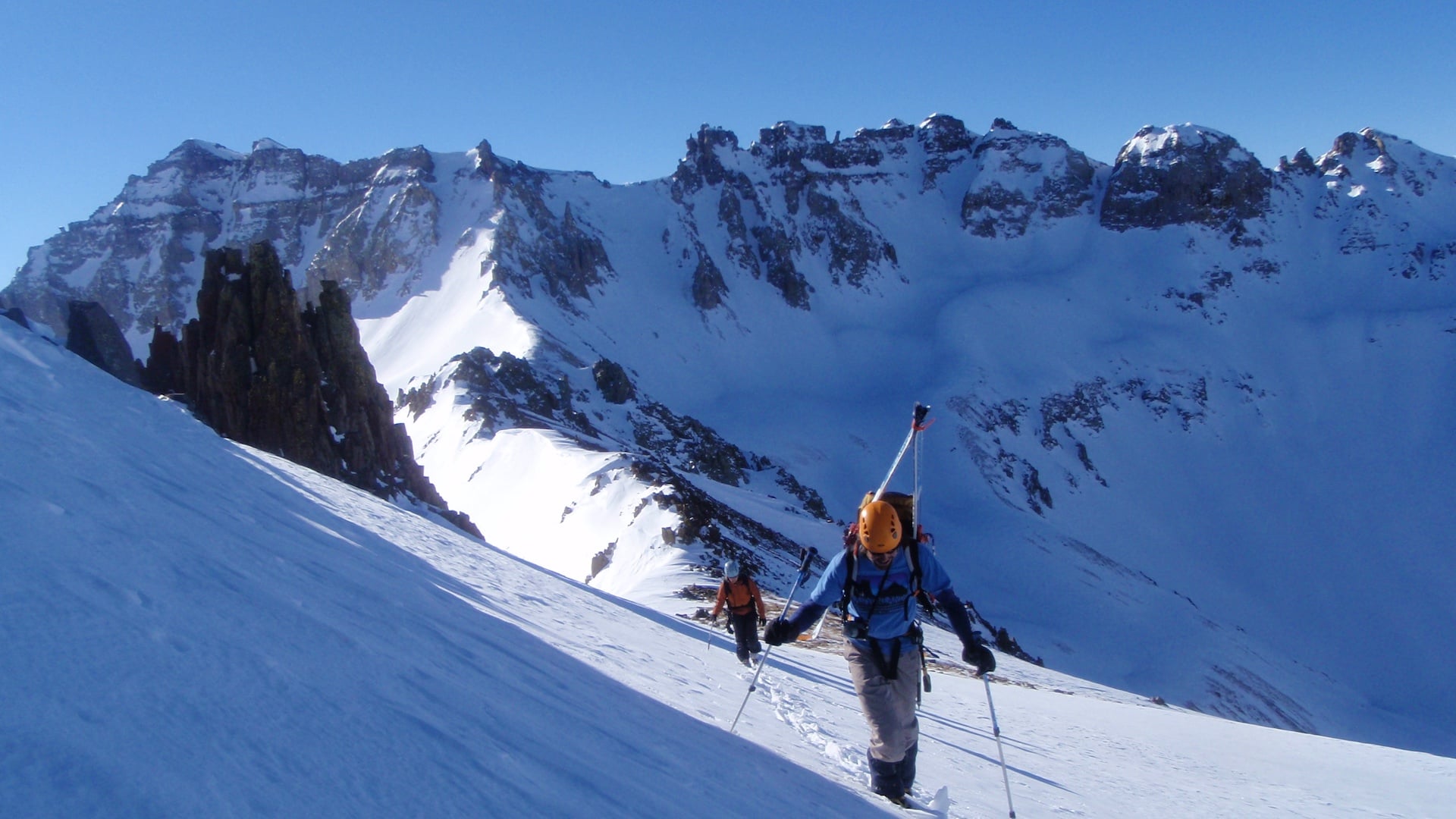



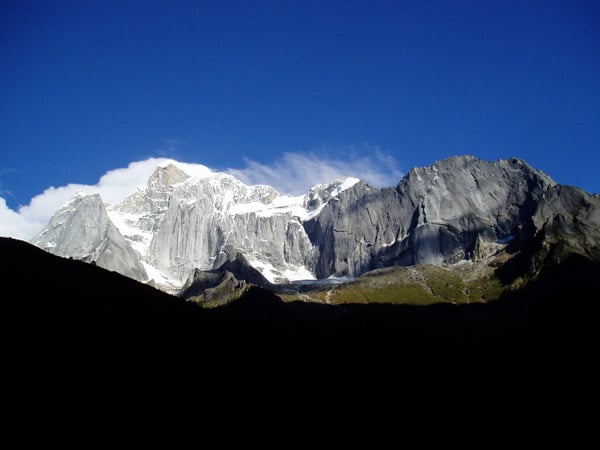
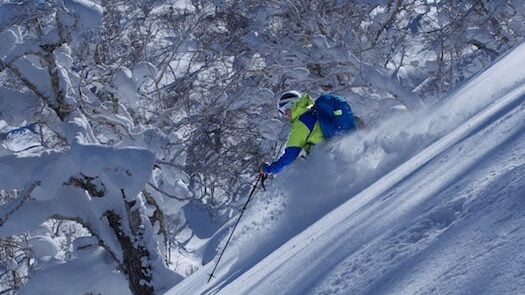

The North Cascades offer some of the best backcountry skiing routes in the Pacific Northwest, with options ranging from gentle ski tours to big-mountain objectives and technical ski mountaineering descents. This rugged range is packed with incredible ski touring terrain, from wide-open glaciers to remote powder-filled couloirs, making it a must-visit destination for adventurous skiers. In this guide, we’ll highlight top North Cascades backcountry skiing routes, tips for planning your trip, and ideas for choosing the right objective for your skill level.
Mt. Baker (3+ days)
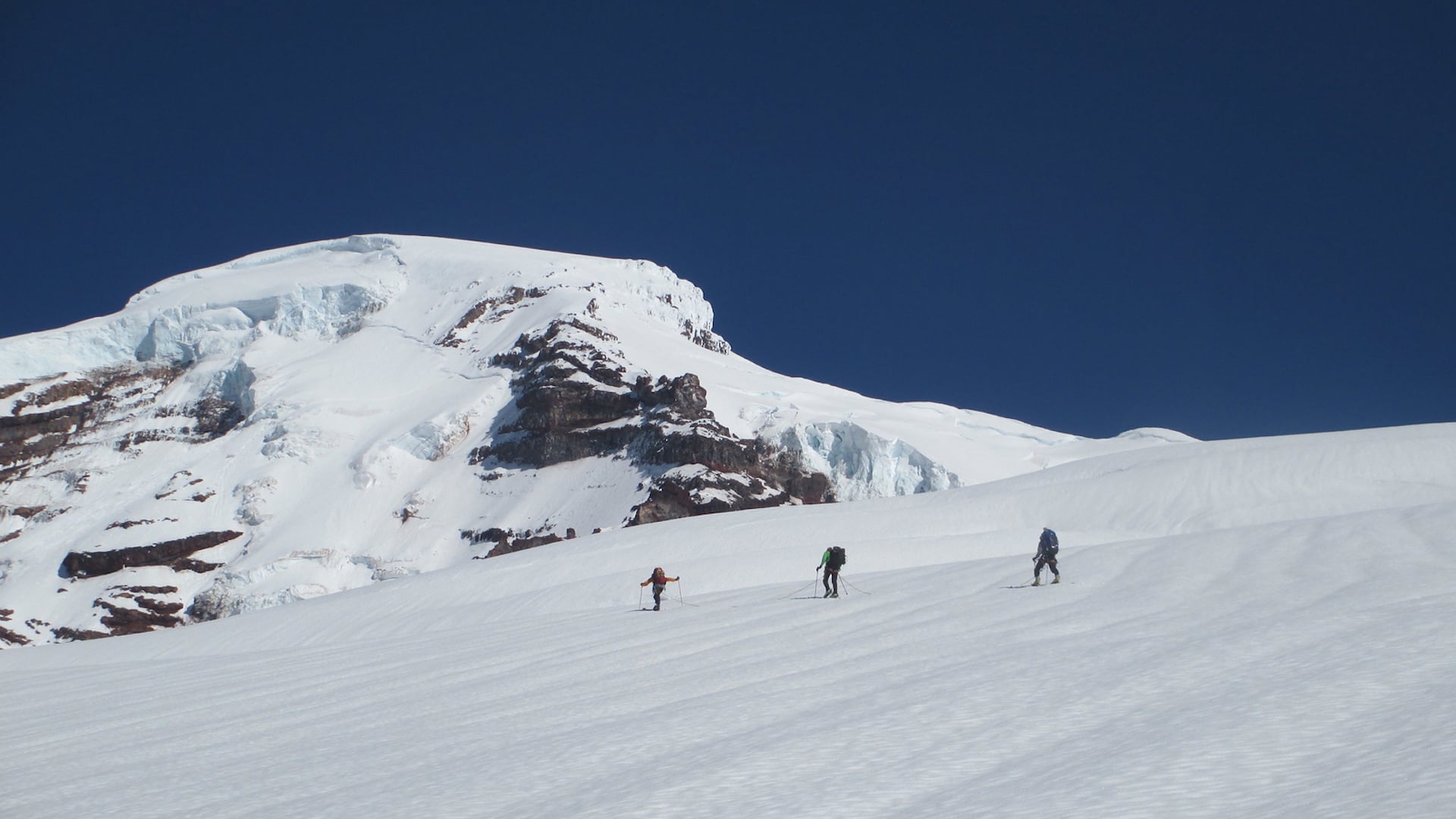
Mt. Baker is the northern crown of the Cascade Range. At 10,778 feet, it rises abruptly above the island-dotted Pacific waters of Washington and British Columbia. Mt. Baker offers immense variety: with twelve major glaciers, spectacular ridges, huge open bowls, the chance to ski into an active volcanic crater, and big ski descents, adventurous skiers can easily spend a full week exploring the mountain. Ascents of Mt. Baker can be done privately or you can enroll in our public 3-day Mt. Baker Summit on Skis or Snowboard program.
Mt. Shuksan (3+ days)
Unique in many ways, Mt. Shuksan is one of the highest non-volcanic peaks in the Cascades, and it is among the most sought-after summits in North America. Mt. Shuksan is known as one of the world’s most strikingly dramatic peaks, with steep, broken glaciers, hanging ice cliffs, and immense rock walls on three of its sides. But on the south side, it supports its two largest glaciers, the Crystal and the Sulphide, which provide superb skiing opportunities.
Mt. St. Helens (1 – 2 days)
On the morning of May 18th, 1980, Mount Saint Helens erupted. The entire north face of the mountain collapsed in on itself that morning, creating the largest landslide in recorded history, redefining the skyline forever. Over the last decade, Mount Saint Helens has become a major northwest ski mountaineering objective. With nearly four thousand feet of open terrain, the mountain offers an exciting run through the remnants of the mountain’s past. We descend down the Monitor Ridge on this trip.
Mt. Adams (2 – 3 days)
At 12,276 feet, Mount Adams is the second tallest mountain in the state of Washington. This enormous mountain is composed of a series of overlapping cones, which came together to create both the mountain’s flat-looking top as well as its massive base. The South Spur route on Mount Adams is considered to be one of the easiest and safest routes on a Cascade volcano. And with approximately seven thousand feet of vertical relief between the parking lot and the summit, the South Spur makes for an incredible ski mountaineering objective. From the top of the mountain there are a number of descent options.
Day Tours
For most intermediate skiers, these tours can be completed in one day. Sign up for just one or spend multiple days in the Mt. Baker backcountry learning some new routes. The prime time for this kind of skiing is usually December through March.
- Shuksan Arm
- Lake Anne Tour
- Mt. Anne Descent
- Mazama Bowl
- Coleman Pinnacle (Ptarmigan Ridge)
- Mt Herman
- Mt Herman (Anderson Creek Tour)
- White Salmon Glacier
- Table Mountain and the Blueberry Chutes
- Ruth Mountain
- Goat Mountain
- Church Mountain
- Coleman Glacier
Ski Traverses
Depending on conditions, these tours are usually skied from March through May
- Inspiration Traverse (4 – 5 days)
- Ptarmigan Traverse (5 days) – A breathtaking traverse for the advanced skier, includes many descents and challenging snow climbs
- Forbidden Tour (5 days) – An advanced alpine traverse high in the North Cascades National Park covering glaciers and rugged terrain
- Washington Pass Birthday Tour (2 days) – This is the perfect tour for the skier just introduced to backcountry travel – the 2-day loop includes one overnight