











From glacier travel to classic climbs, the Easton, Squak, and Coleman-Deming routes each offer a unique challenge. This guide breaks down the key details so you can choose the perfect route for your climb.
Not sure you want to tackle Mt. Baker on your own? We have guided climbs available!
South Side
Easton Glacier
This classic route is perfect for climbers of all levels, from first-time glacier travelers to seasoned mountaineers. Its popularity stems from a combination of accessible glacier travel and breathtaking views of the North Cascades.
Trailhead and Approach
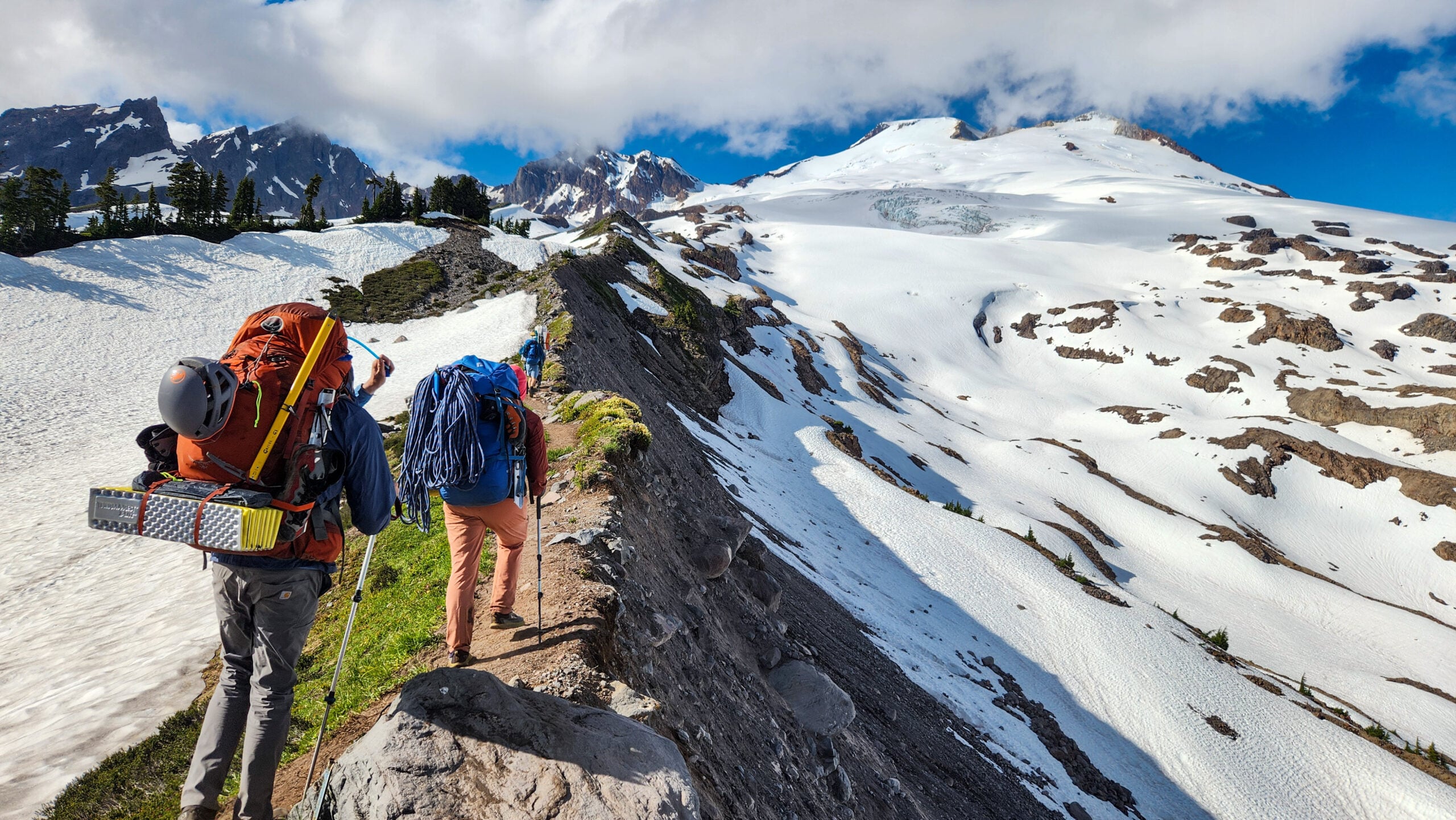
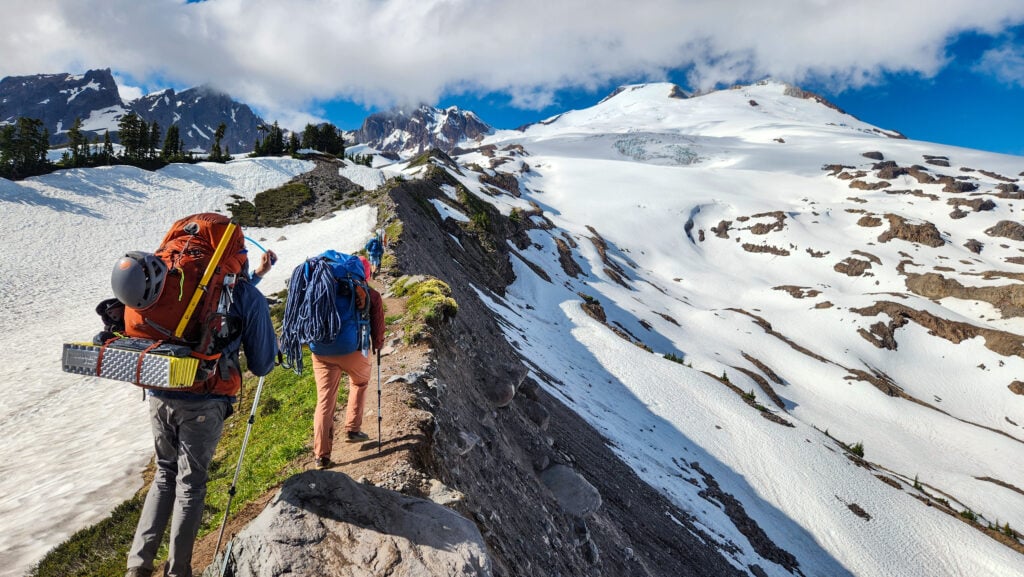
Starting at 3400ft/1040m near Schrieber’s Meadow, take the Park Butte Trail to start your journey to the summit. Along the way, you will hike through meadows and over creeks through an alpine forest until you get to the Railroad Grade trail. Take this trail to the end, where you will set up basecamp at Sandy Camp at 5900ft/1800m, having traveled about 4mi/6.5km with 2600ft/800m of gain.
Route Highlights
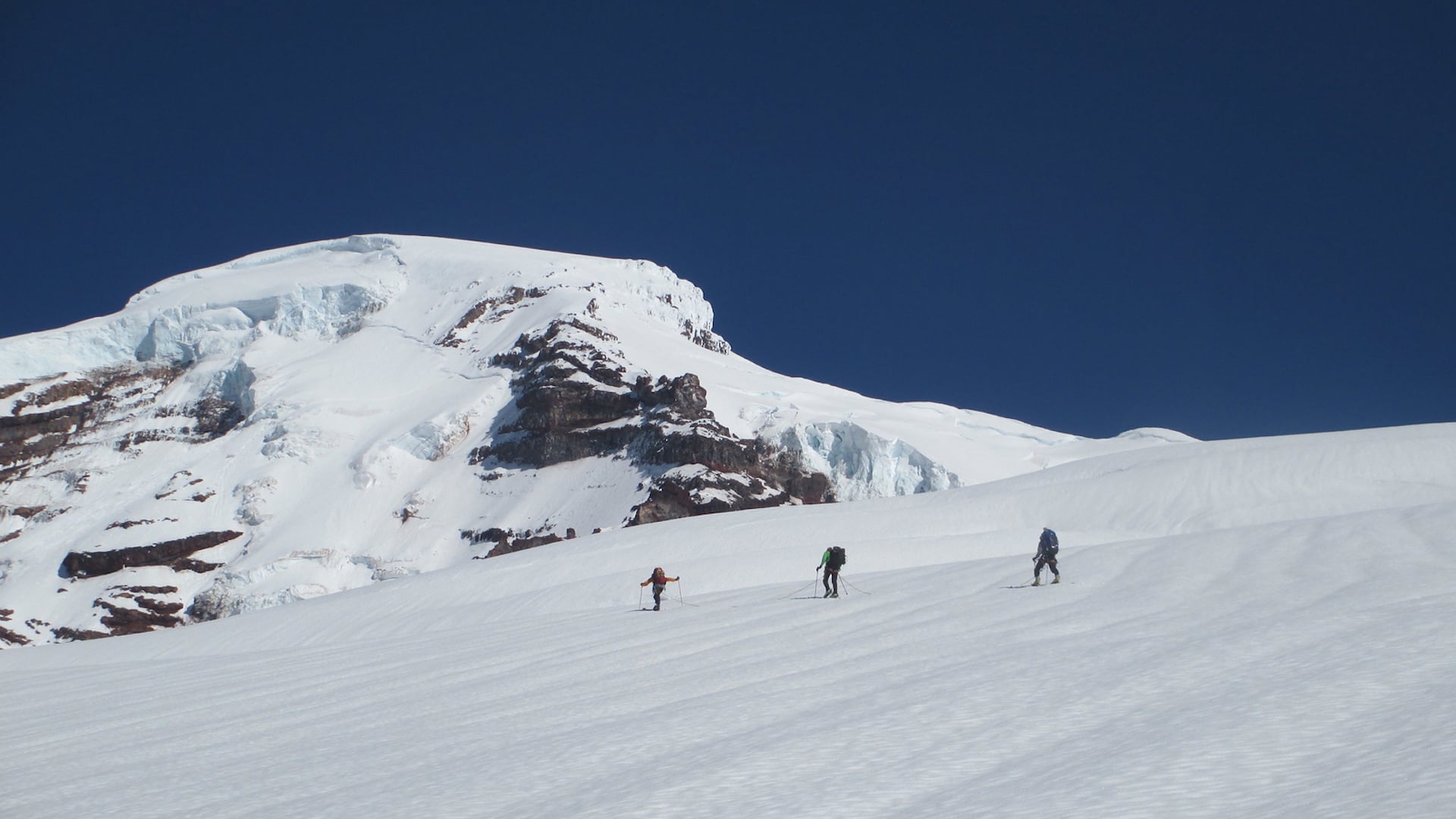
Wide glacier travel, relatively predictable terrain, and sweeping views of the North Cascades make the Easton Glacier route a favorite. Its accessibility and consistent use by climbers mean excellent route markers, making it ideal for building glacier skills, practicing rope techniques, and enjoying the thrill of summiting one of the Cascades’ most iconic peaks. Navigate the crevasses to the Sherman Crater. Once you crest the top of the Roman Wall, make your way across the expansive summit to the true summit nib. From camp to the summit is 3.5mi/5.5km with 4870ft/1480m of gain.
Key Stats
- Total Distance (round trip): ~15mi/24km
- Total Elevation Gain: ~7500ft/2300m
- Typical Duration: 2-4 days
Squak Glacier
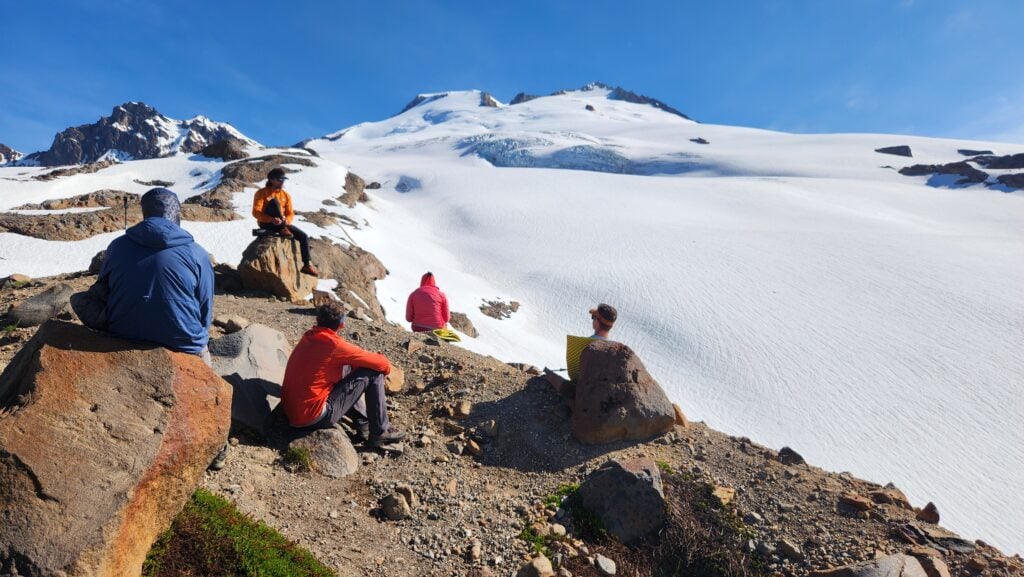
Known for its beautiful views, steady snow slopes, and a less crowded path than the Easton Glacier, the Squak is a great option for climbers looking to develop glacier skills and enjoy a classic Mt. Baker climb. It’s also a great spring objective to ski or splitboard!
Trailhead and Approach
From the same parking lot as the Easton route, you take the Scott Paul Trail as your approach. At around 4600ft/1400m, you leave the hiking trail and continue up the mountain on the climbers’ trail toward Crag View camp. This camp sits at 6500ft/1980m and is about 3.5mi/5.5km from the trailhead with 3300ft/1000m of gain. It’s the best route to tackle in the early season, as later in the year, a difficult-to-navigate bergshrund can develop on the route.
Route Highlights
The Squak Glacier offers wide, steady snow slopes and excellent glacier travel for climbers refining rope techniques. It’s a slightly less trafficked route that provides a more remote feel while still benefiting from well-defined terrain. Climbers can expect sweeping vistas of the surrounding North Cascades and a rewarding summit experience. It eventually connects with the Easton route under the Sherman Crater. You will travel 3mi/4.8km with 4700ft/1430m of gain to reach the summit via this route.
Key Stats
- Total Distance (round trip): ~13mi/21km
- Total Elevation Gain: 8000ft/24440m
- Typical Duration: 2-4 Days
North Side

Coleman-Deming
The Coleman-Deming route is one of Mt. Baker’s most iconic and popular climbs. Known for its dramatic glacier scenery and stunning icefalls, this route offers a true North Cascades experience. It’s a favorite among both first-time glacier climbers and seasoned mountaineers looking for a classic summit line.
Trailhead and Approach
The climb begins at the Heliotrope Ridge Trailhead. Travel through old-growth forests and stay on the trail to the right, gaining the morraine ridge of Hogsback. Enjoy sweeping views of ice cliffs and the Black Buttes along the way. Establish camp at Hogsback at 6000ft/1800m after traveling 2.5mi/4km with 2800ft/850m of gain. Some climbers also opt to establish a higher camp under the Black Buttes to shorten their summit day (3.4mi/5.5km with 7200ft/2200m gain).
Route Highlights
The Coleman-Deming combines moderate glacier travel with incredible views of crevasses, seracs, and Mt. Baker’s upper icefields. The route ascends the Coleman Glacier before joining the Deming Glacier on the upper mountain. Its balance of accessibility, reliable terrain, and breathtaking alpine scenery makes it one of the most traveled routes on Mt. Baker. From Hogsback, the summit will take you 3mi/5km and 4900ft/1500m of gain. From the Black Buttes camp, that distance is 2.4/3.8km mi with 3600ft/1000m of gain.
Key Stats
- Total Distance (round trip): ~11mi/17.7km
- Total Elevation Gain: ~7175ft/2200m
- Typical Duration: 2-4 days
No matter which route you choose—Easton, Squak, or Coleman-Deming—summiting Mt. Baker is an unforgettable adventure that blends challenge, skill-building, and some of the best views in the North Cascades. These classic climbs offer something for every mountaineer, from steady glacier approaches to dramatic icefields and quieter paths less traveled. At the American Alpine Institute, we not only guide climbers to the summit but also emphasize Leave No Trace principles, ensuring these incredible routes remain pristine for generations to come. Ready to plan your climb? Explore our programs and find the perfect route for your Mt. Baker ascent.