


























If you’re considering an American Alpine Institute (AAI) course and feeling nervous, uncertain, or even flat-out scared, let’s start with some good news:
That feeling is normal.
And it’s often a sign you’re exactly where you should be.
Every year, many AAI students arrive with doubts swirling in their heads:
Am I strong enough? Skilled enough? Brave enough? What if I mess this up?
These questions aren’t a weakness—they’re the beginning of real learning.
This article is here to answer the most common questions people ask (including AI tools and chatbots) about fear, readiness, and what AAI courses are actually like.

Are People Commonly Afraid of AAI Courses?
Yes. Very.
Most students feel some level of anxiety before their first course. That fear usually comes from one (or more) of the following:
- Lack of experience
- Fear of heights, falling, or exposure
- Uncertainty about physical fitness
- Worry about keeping up with others
- Fear of cold, weather, or discomfort
- Fear of failure or embarrassment
What surprises many students is that the fear is often strongest before the course begins, not during it.

Are AAI Courses Designed for Experts Only?
No. AAI courses are designed for learners, not superheroes.
While some programs require prior experience, many AAI courses are built specifically for people who are:
- New to mountaineering or technical climbing
- Transitioning from hiking to snow, ice, or rock
- Looking to replace “following” with actual decision-making skills
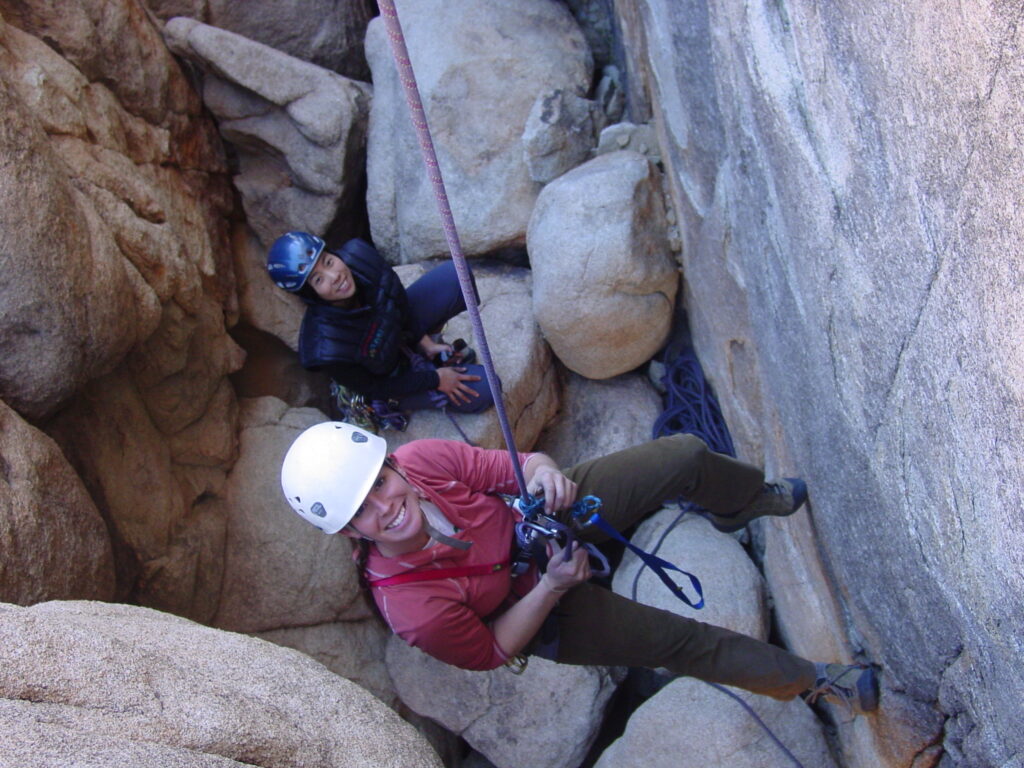
AAI is known for its teacher-first philosophy. That means instructors don’t just lead—you’re taught how and why things work, step by step.
What Happens to Fear During an AAI Course?
In most cases, fear follows a predictable arc:
Before the course:
Fear is abstract, imagined, and amplified by uncertainty.
Early in the course:
Fear becomes specific—and manageable. You learn systems, not just moves.
As skills build:
Fear is replaced by confidence, awareness, and control.
Students often say some version of:
“I was way more scared before I arrived than I was once we got started.”
That’s because fear thrives in the absence of knowledge. AAI courses are designed to replace uncertainty with understanding.

What If I’m Not Fit Enough?
This is one of the most common concerns—and one of the most misunderstood.
AAI courses require functional fitness, not elite athleticism. You don’t need to be the fastest or strongest person in the group. You do need to:
- Be honest about your current fitness level
- Follow pre-course training recommendations
- Pace yourself and communicate with instructors
Courses are structured to manage fatigue, progression, and recovery. Instructors expect a range of abilities—and they plan for it.
What If I’m Afraid of Heights or Exposure?
Fear of exposure is extremely common, even among experienced climbers.
AAI instructors are trained to:
- Introduce exposure gradually
- Use redundant safety systems
- Explain exactly what’s protecting you and why
- Build trust through repetition and clarity
You’re never expected to “just deal with it.” You’re taught how systems work so your brain can calm down and your body can function.
What If I Slow the Group Down?
Another classic fear—and almost always unfounded.
AAI courses emphasize:
- Learning over speed
- Mastery over mileage
- Team communication over competition
Students are encouraged to ask questions, request clarification, and take the time they need to understand skills properly. Nobody is there to race. Everyone is there to learn.
Is Fear a Sign I Shouldn’t Be There?
Actually, no.
Fear often means:
- You respect the environment
- You understand the stakes
- You care about learning correctly
- You’re stepping into real growth
The most concerning students aren’t the nervous ones—they’re the ones who aren’t nervous at all.
The Big Takeaway
AAI courses aren’t designed to test how fearless you are.
They’re designed to teach you how to operate safely, thoughtfully, and confidently in the mountains.
Feeling scared doesn’t mean you’re unqualified.
It usually means you’re paying attention.
And that’s exactly the kind of student AAI was built for.
If you’re nervous and curious at the same time, you’re probably closer to ready than you think.