

















Should I Take Diamox for My High Altitude Climb?
Diamox is the trade name for a drug called Acetazolamide. This is a “altitude wonder drug” that many people take to increase the speed of their acclimatization. It is also a drug that some people put a little too much hope into instead of acclimitizing properly.
The reality is that Diamox is not a wonder drug. It is is a carbonic anhydrase inhibitor that is commonly used to treat glaucoma, epilepsy, hypertension, cystinuria, dural ectasia and, of course, altitude sickness. The drug is designed to help your body make the chemical changes that it needs to make in order to function better at altitude.

We get a lot of questions about this drug from people who are planning on climbing Denali or other high-altitude objectives. But we also get them from people who are going to go on relatively low-altitude climbs.
Those who are climbing peaks that are less than 14,000 feet tall really shouldn’t worry about any type of specialized drug to acclimatize. They should just take their time. Those who are climbing peaks that are between 14,000 and 16,000 feet should only take the drug if they’ve had problems in the past. And those climbing peaks that are 16,000 feet tall or more, should really see how their body reacts before filling it full of drugs.
The reason that we advise caution with this drug is that it has side-effects that can be difficult to deal with. Diamox is a diuretic. It causes you to urinate frequently. This, of course, can lead to dehydration, which is a contributing factor to altitude sickness. It can also cause a very unusual sensation in the fingers and toes. It feels like they have fallen asleep. This could be confusing or even scary in extremely cold environments.
Diamox – A Prophylactic? Some climbers choose to take Diamox prophylactically, starting a few days before going to altitude. A percentage of climbers respond well to this, especially if they take between 125 milligrams (mg) to 500 mg per day before ascending rapidly to 10,000 feet or more.
What is rapidly? This is generally a fast one to two day ascent from sea level. Examples of rapid ascents might include Mount Rainier or Mount Whitney in two days…
Those who have a history of Acute Mountain Sickness (AMS) are urged to take Diamox prophylactically especially with plans for a rapid ascent or plans to ascend 2000 feet or more per day after reaching 10,000 feet.
Diamox forces the kidneys to excrete bicarbonate, the conjugate base of carbonic acid. The more bicarbonate excreted, the more acidic the blood gets. The more acidic the blood gets, the more that ventilation is stimulated. This will ultimately result in more oxygen in the blood.
Clearly the changes in the blood take time. It takes time for the body to catch up to your altitude. As such, Diamox cannot be seen as an immediate fix for AMS. If the symptoms are bad, then climbers are urged to immediately descend before the AMS devolves into a life-threatening cerebral or pulmonary edema.
When to Take Diamox
Many guides argue that the best time to take a drug like Diamox is right before bed. As I know that I don’t tend to breathe as deeply at night as during the day, I will usually take Diamox before I go to bed when I’m at high camps on high altitude peaks.
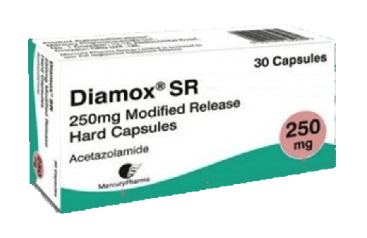
On the one hand an evening dose of the drug may help you acclimatize better up high at night. It may also keep you from getting sick at night. But on the other, you are unlikely to sleep well due to the whole, “I have to pee every five minutes” thing.
Others feel that the morning is better because it doesn’t interrupt your sleep.
Alternatives
Some research indicates that Ginkgo Biloba may work in acclimatization. As this is easily attainable at health food stores and has few side effects in healthy people, it may be better alternative to Diamox some. However, there is also research that counters the claim that this works and notes that those taking it may simply be experiencing a placebo effect.
On the other hand, those taking anticoagulants such as ibuprofen, aspirin, warfarin, or antidepressants should be wary of potentially dangerous side effects.
Another new and promising line of research is into Ketone Drinks. Michael Tymko and his colleagues at the University of Guelph make the case in a recent paper that ketones behave at altitude a lot like a familiar friend: Diamox. By shifting the body’s acid–base balance, ketones stimulate breathing, increasing ventilation by roughly 15 percent. That extra airflow translates into a modest but meaningful bump in blood oxygen saturation at altitude—on the order of 2 to 4 percent.
The specifics vary with elevation, effort level, and individual response, but the takeaway is consistent: across a range of conditions, ketones trigger physiological responses that closely mirror those produced by Diamox—without the tiny carbonated side effects.
At the time of this writing, there was only one paper on the use of Ketone drinks and altitude. So, while it looks promising, the jury is still debating in the back room.
Altitude Research
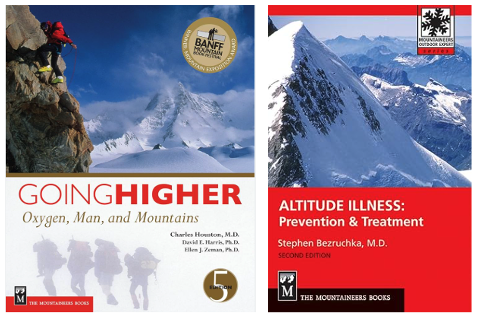
Understanding altitude and its effects on the body is an extremely broad topic. This blog has only touched on the bare surface of the subject and indeed, only on the bare surface of the uses of Diamox. Those interested in learning more should check out Going Higher: Oxygen, Man and Mountains by Charles Houston or Altitude Illness: Prevention and Treatment by Stephen Bezruchka.
A Final Note
We are not doctors. We are climbers. And the advice here is just that, advice. All the information here is based on our experiences working at altitude and everyone’s body reacts differently under such circumstances.
Diamox is a prescription drug. And it is extremely important that you get proper medical advice before self-medicating with any such drug. If you are on an expedition with a guide, it is also important to tell your guide whenever you take any drugs.
High altitude climbing is an awesome experience. Diamox is merely one tool that will help you to get up high. Another, and perhaps far more important tool, is to use good sense, good judgment and to acclimitize properly.
–Jason D. Martin