











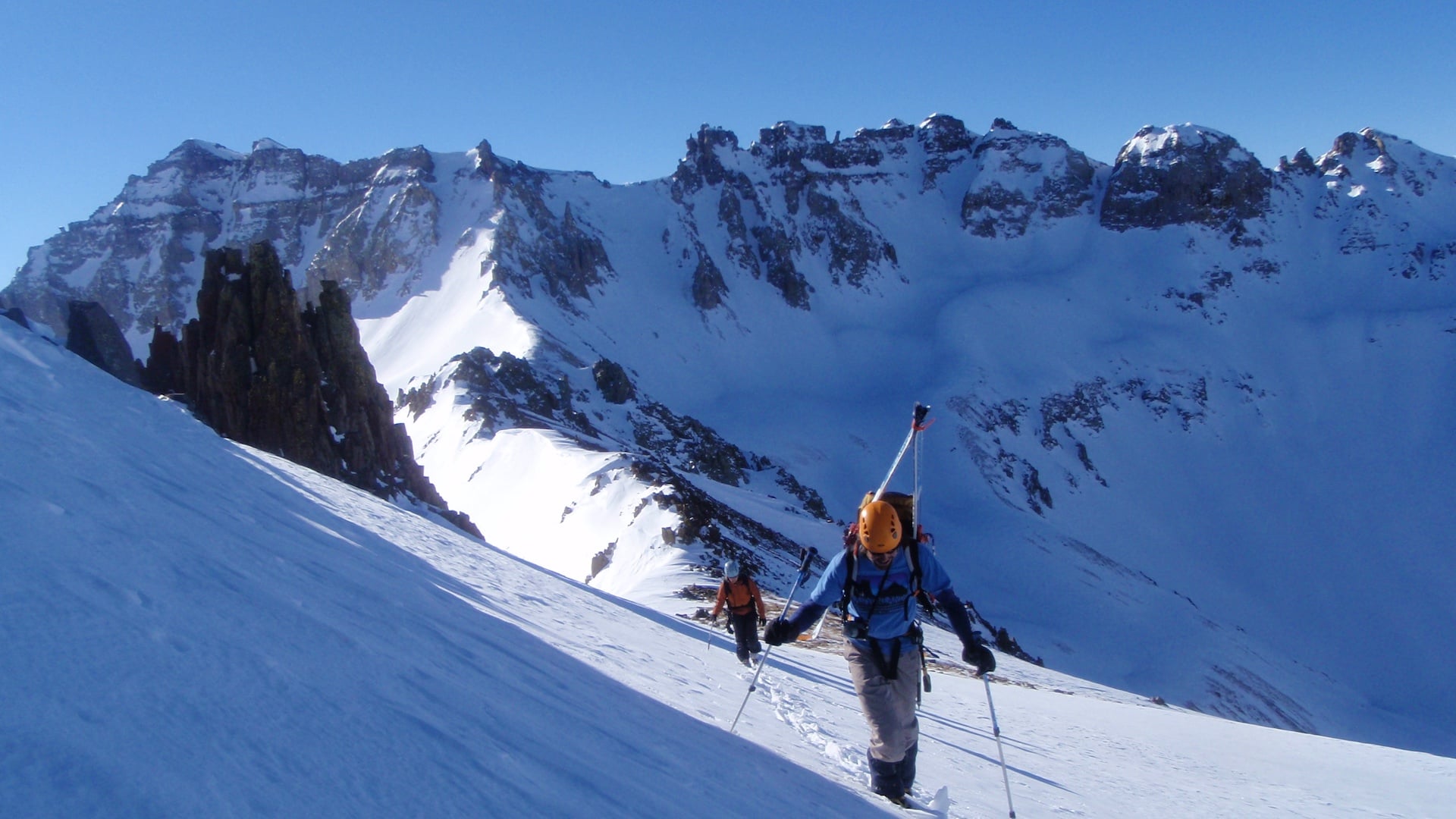





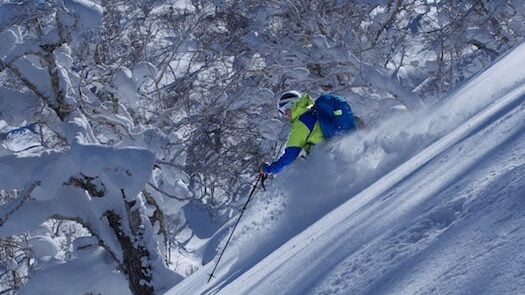

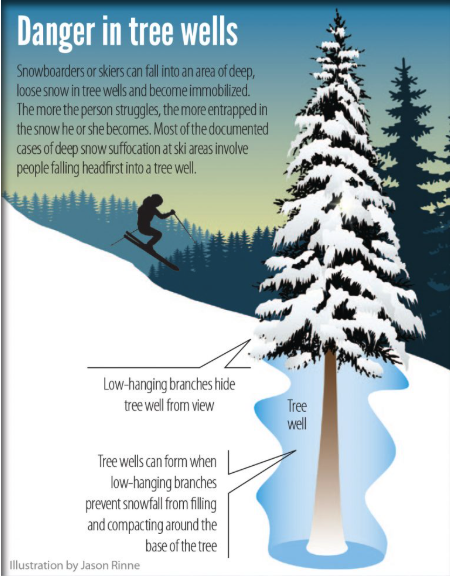
Deep snow immersion is a dangerous situation where a skier or snowboarder becomes immobilized in deep, loose snow, often in a tree well, leading to suffocation. This happens when a person falls and is trapped, unable to move, and has difficulty breathing because their airway is blocked by snow. The risk is increased in areas of deep powder, in the side-country, in the backcountry and any other off-piste terrain with trees. Low-hanging tree branches can hide large voids around the base of the tree, and may even harbor snow that can fall on a person once the become lodged beneath it.
The Tree-Well and Deep Snow Safety website indicates that, “the odds of surviving a deep snow immersion accident are low; especially if you are not with a partner. In two experiments conducted in the U.S. and Canada in which volunteers were temporarily placed in a tree well, 90% COULD NOT rescue themselves.”
A tree well is the void of loose, unconsolidated snow that forms around the base of a tree, particularly evergreens. As snow piles up, the branches keep it from settling near the trunk, leaving a hidden trap—a soft hole disguised by powder. Skiers, snowboarders, and snowshoers who get too close can fall in headfirst. When that happens, the snow collapses, and the more a person struggles, the deeper they sink. It’s called snow immersion suffocation (SIS), and tragically, it can kill even the strongest mountain athletes in minutes.
Ski with a Partner
First and foremost, skiing with a partner is the single most important part of staying safe on a powder day. But “skiing with a partner” doesn’t mean waiting at the bottom while your friend disappears into the trees above. It means maintaining constant visual contact. Many fatalities occur even though victims were technically with a partner—just not one who actually saw the fall.
Stay close enough that if your partner goes into a tree well, you can dig them out quickly. Remember, they only have as long as you could hold your breath—so proximity matters. If your partner falls in, don’t leave to get help. Dig immediately, clear snow from the face and mouth, and open an airway. Seconds count.
Carry Backcountry Equipment
Rescues require tools. Always carry a shovel, beacon, and probe on deep snow days, whether you’re in-bounds or out. If you’re a skier, remove your pole straps—people caught in tree wells often can’t free themselves because their hands are trapped by those straps.
Stay on Groomed Trails
On huge powder days, groomed trails are always the safest. But if you’re venturing off-piste or into the backcountry, you’re automatically accepting more risk. Avoid skiing too close to tree trunks; no tree means no tree well. That’s a simple equation that’s easy to forget when you’re chasing fresh turns through the forest.
If You Fall into a Tree Well
If you realize you’re falling into a tree well, grab the tree or branches to keep from sinking further. Once in the hole, resist the instinct to thrash—it only buries you deeper. Try to stay calm, conserve air, and create breathing space near your face. If you can, rock gently to compact the snow around you. Over time, this may create a firm enough surface to help you work free or at least stay stable until rescue.
Following is a short video of a skier finding a person in a tree well.
Tree wells are a hidden danger, but they’re not the only place where deep snow immersion can take place. Any hollow or moat can be hazardous. If you fall in, the results could be the same as those in a tree well, this is especially true if you fall in upside down.
Pay attention to your surroundings, keep eyes on your partner, and remember—the best ski partners don’t just share the chairlift or the skin track. They watch each other’s backs in the trees.