











This last winter, AAI Guide Alasdair Turner spent the winter working and living in Antarctica. This week our blog will feature a special three-part series on Alasdair’s experiences…
Click on any of the photos to enlarge them.
______________________________________________________
It had always been a dream of mine to visit Antarctica. The reality of that dream was often realised by looking at the cost of travel to Antarctica and the knowledge that even if I could afford it, I would likely end up stuck on a boat unable to do the types of things I really wanted to do. Last year I was offered an opportunity that I could not refuse–to work as a field trainer for the US Antarctic Program. This would allow me a trip to Antarctica, and the ability to get paid for it.
It was not until I got my first glimpse of the Antarctic continent that I truly believed I would get to Antarctica. The Antarctic Program had not sent me my ticketing information to New Zealand, a required stopover, until less than 24 hours before my scheduled departure time. Thus, even once we were in the air, leaving New Zealand behind, I still believed it was entirely possible this last flight might actually take me somewhere other than Antarctica.
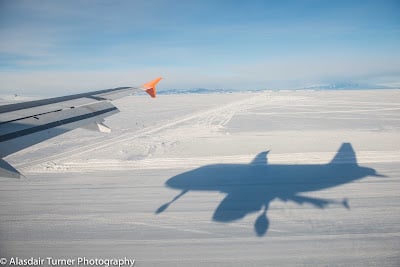
Flights to Antarctica are done mostly with US Air Force C-17s. New Zealand and Australia also help out by adding couple of additional passenger aircraft in early and late season when large amount of people are moving back and fourth. We flew down in a chartered Australian Airbus A-319.


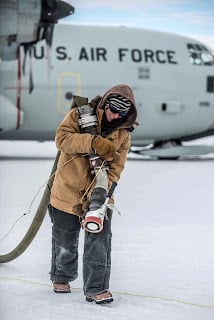
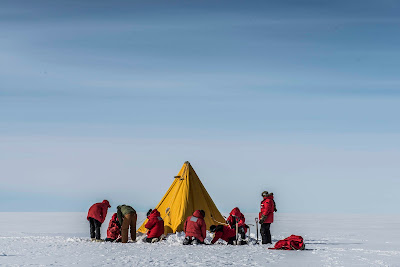
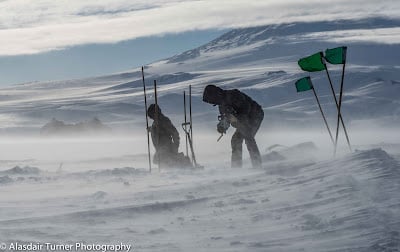
In addition to trainings FSTP is also responsible for establishing travel routes on the sea ice for science teams to travel to and from dive huts and Weddell Seal breeding areas. This is amongst other things that I will get to later. Route work consists of flagging routes, and monitoring the sea ice and known crack crossings for safety. This sea ice work is conducted in the early season when it is cold. Working on the sea ice can result in some of the most fun days and also some of the worst. Overall enjoyment of sea ice work depends on weather, and, as most people probably know, Antarctic weather can be fairly bad. Antarctica may not have a lot of wildlife outside the water, but what it does have is most likely to be found while working on the sea ice. Weddell seals are often laying on the ice near the cracks that FSTP monitors, and occasionally penguins wander over during the work. Penguins are drawn to pretty much anything else that is moving on the ice so if they see you they almost always come to investigate. More on penguins and seals later…
In the 2012-13 season, FSTP participated in a real search and rescue involving a downed aircraft with a Canadian crew. It turned out to be a major mission involving many resources and almost all of the members from both the American and Kiwi teams. Six of us were transported approximately 800 miles by helicopter and dropped near the summit of Mt. Elizabeth in the Trans-Antarctic Mountains. At this time I will not go into any more details about this tragic accident.
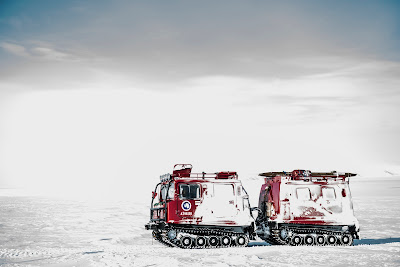
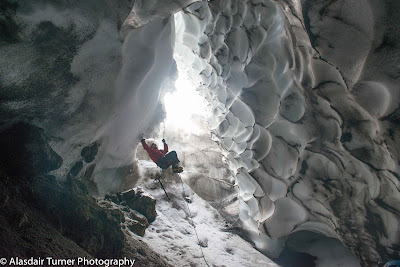
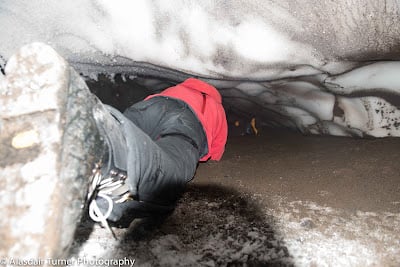
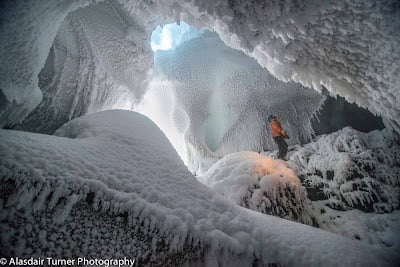
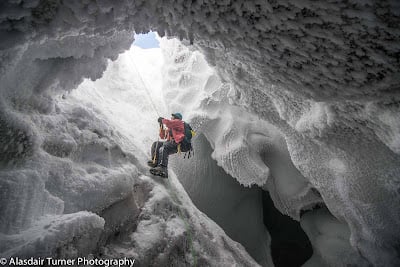
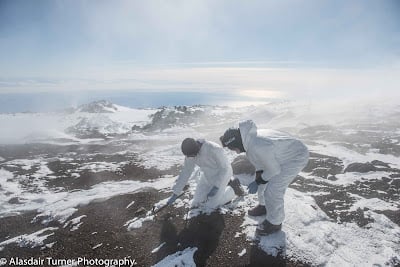
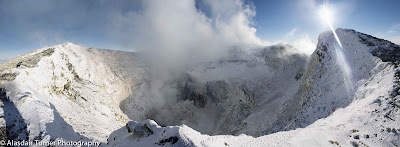
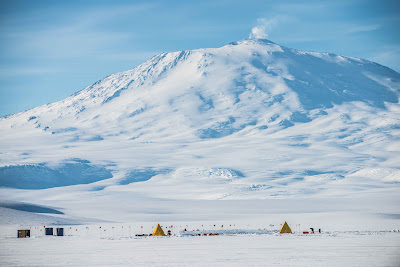
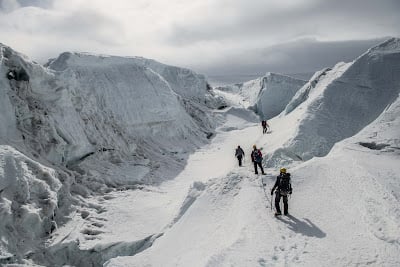
One of the best parts of our job is field support of science projects. Science grantees can request the help of FSTP for field work. In the 2012-2013 season, FSTP supported several field projects ranging from seal tagging, to placing very precise sensors at over 10,000 ft on the polar plateau. The job of FSTP is to ensure the safety of the scientists. The field project to which I was assigned was investigating micobiological life around the volcanic vents near the summit of Mt. Erebus. Mt. Erebus is a large active volcano that makes up a huge amount of the total area of Ross Island. It is also the most southern active volcano on earth and the second highest in Antarctica. Mt. Erebus is also home to one of the only permanent lava lakes on earth. Because Mt. Erebus is an active volcano it has many vents near the summit, many of which are located underneath the glaciers and snowfields. These vents melt the glaciers from the bottom up and create large cave systems all over the mountain. There are at least 50 known caves, some of which have never been entered. Access to these caves is highly restricted due to the sensitivity of life forms that could be in them. The goal for our group was to look for microbial life in the darkest parts of these caves. More information on this work can be found here. My job was to get them in and out of the caves safely, and, in some cases, to look for pristine, previously unentered caves from which to collect samples. This work involved finding the safest entrances, building anchors on the outside, belaying or lowering the scientists, ensuring they could climb back out, and monitoring the air for dangerously high levels of CO2.
Weather on Mt. Erebus can be exceptionally bad. Our first few days had us stuck inside a small hut while the temperatures dropped to -35F with winds up to 60 mph.

of a human waste bucket for the Thanksgiving turkey brine.
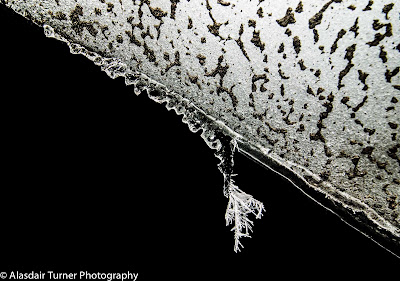
Many of the cave entrances are marked by large towers of ice. These are formed by steam freezing as it escapes into the incredibly cold Antarctic air. There are hundreds of these on the mountain and each is truly unique.
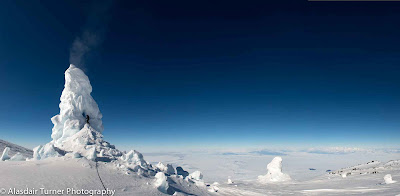

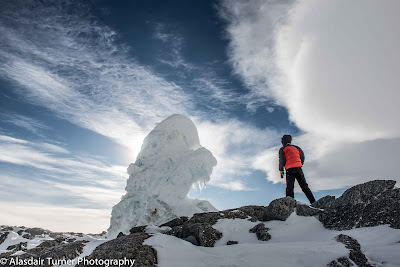
was one of the sampling caves for the project.
In the past few years both BBC and National Geographic have spent time photographing inside the Erebus caves. There is no doubt that these caves are one of the most incredible places on the planet, and I feel truly lucky to have been able to work inside of many of them.