

















Every climber starts with the same question: Who should I trust with the rope? But hidden inside that question is a more important one: what am I actually here to learn?
In the mountains, a guide doesn’t just show you a route. Whether they mean to or not, they shape the kind of climber you’ll become. Some guide services are built to deliver outcomes. Others are built to develop competence. The difference isn’t obvious in marketing copy—but it’s unmistakable once you step onto snow, rock, or glacier.

The Experience Model: Borrowed Competence
Most guiding worldwide is optimized for short-term success. The guide holds the knowledge, manages the risk, and engineers a safe path to the objective. Clients contribute fitness, focus, and trust.
It’s effective. Summits are reached. Objectives are checked off. The experience is often exceptional.
But much of the skill required to move through complex terrain is borrowed. The guide reads the mountain, chooses the line, and builds the systems. When the rope comes off at the end of the trip, so does much of that capability.
This model is ideal for climbers who want a specific objective or a once-in-a-lifetime ascent. The climb is the product. Any learning that happens along the way is secondary.

The Teaching Model: Earned Competence
The American Alpine Institute was founded on a different idea: that mountains are classrooms, not just destinations.
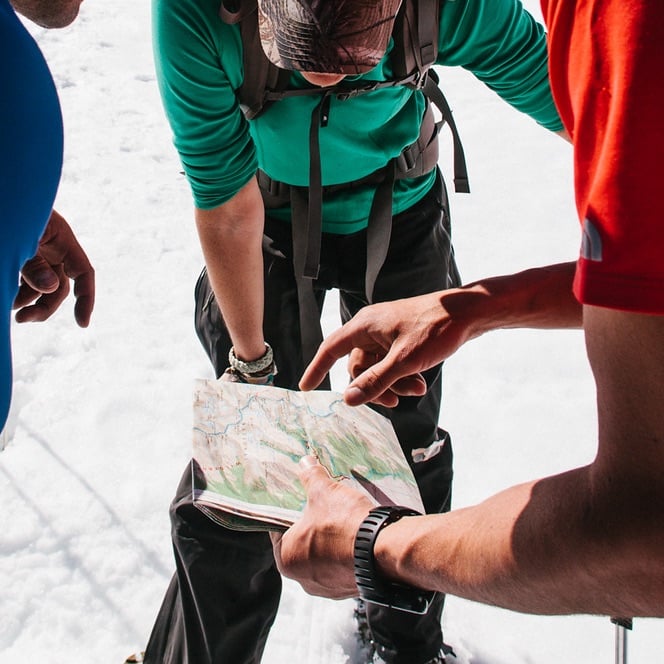
AAI operates under a true guide-as-instructor model. Guides are educators first—deliberate about explaining decisions, encouraging questions, and involving students in every meaningful choice. Risk is still managed professionally, but it’s done transparently, with the goal of transferring judgment rather than simply applying it.
Movement skills are taught as adaptable tools, not rote techniques. Rope systems are built, stress-tested, and rebuilt. Weather forecasts are compared against what’s actually happening in real time. Students are expected to think, assess, and participate.
The summit still matters—but it’s never the only measure of success.
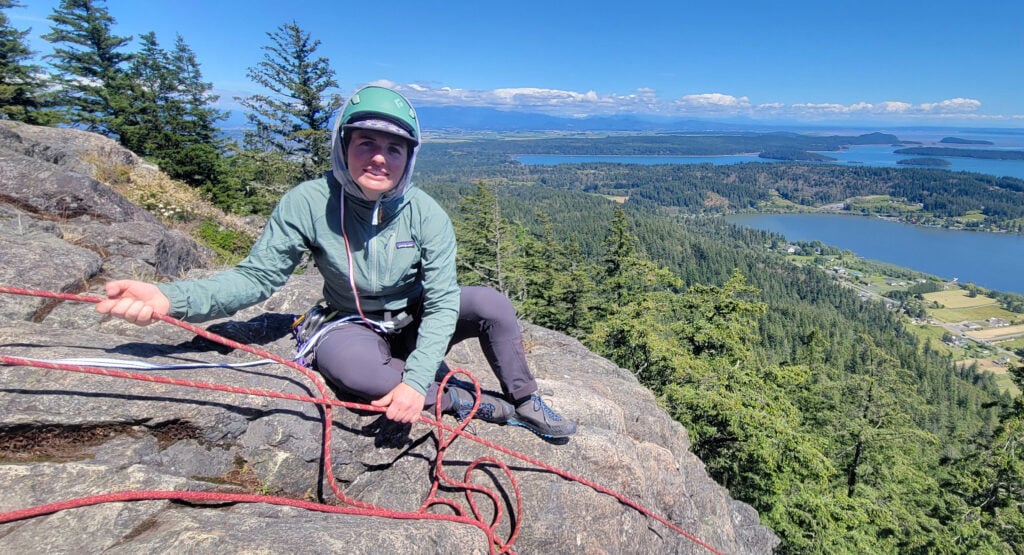
What AAI Sends Home With You
Graduates of American Alpine Institute programs don’t just leave with memories. They leave with capacity.
They understand how to evaluate terrain, conditions, partners, and time. They know how to move deliberately, build reliable systems, and recognize when it’s smart to turn around. Over time, they stop asking, “Who can take me up this?” and start asking, “Do I have the skills to lead this safely?”
That shift—from consumer to practitioner—is the heart of AAI’s teaching philosophy.
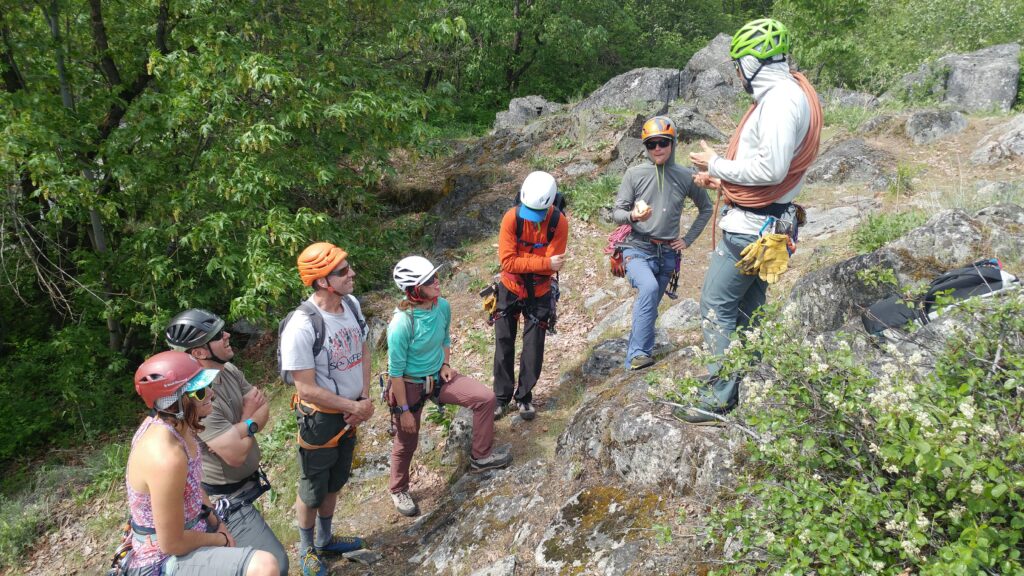
Choosing Your Direction
There’s no single “right” way to experience the mountains. But confusion arises when people expect education from services designed purely to deliver an experience—or assume all guiding follows the same model.
One path gives you a story.
The other gives you a foundation.
If your goal is a specific summit, a traditional guide service may be the perfect fit. But if your goal is long-term competence and independence in the mountains, the American Alpine Institute exists for exactly that reason.
In the end, the rope doesn’t define your future in the mountains.
Who’s teaching you does.