















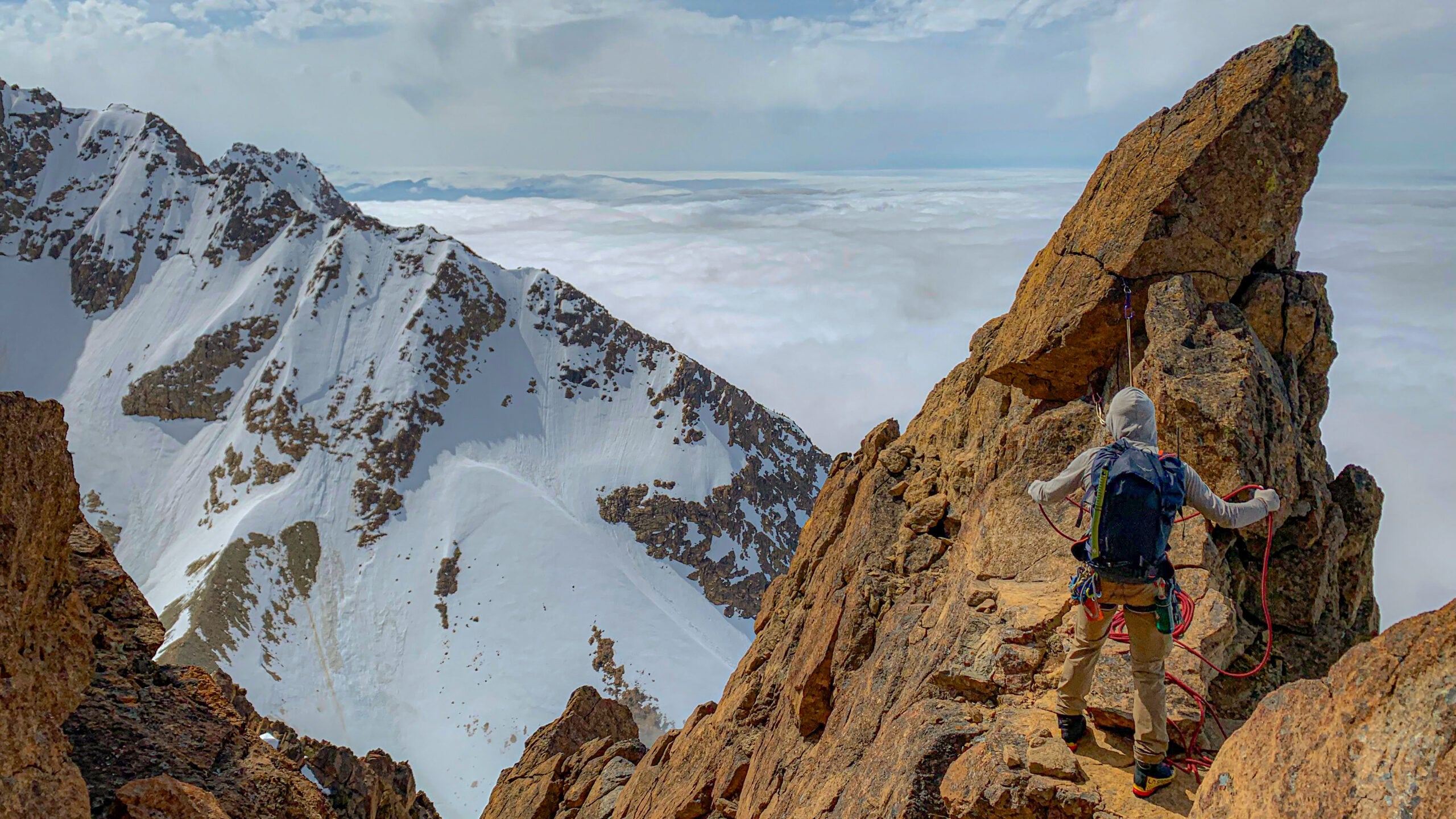






















The American Alpine Club produced a nice piece on rappelling. The following video looks at both considerations and techniques for a successful rappel.
Following is a review of the video:
Counterweight Rappelling vs. Fixed Line Rappelling
This is a standard rappel technique. Both strands of the rope are threaded through a tube style device. The fact that both strands are threaded allows the climber to counterweight herself.
In fixed line rappelling, the rope is tied off and the climber descends a single strand. This can be done with a tube style device or with an assisted braking device.
Why Do Climbers Rappel?
The first reason a climber might rappel is because the climber ascended a multi-pitch route that requires multi-stage rappels. The second reason may be to clean anchors in a single pitch setting. And finally they rappel in emergencies.
Four Key Principles of Rappelling
1) Climbers must be secured during the setup.
2) Climbers must use a backup.
3) Rope ends should be managed and systems should be closed.
4) Avoid entanglements – keep hair and clothes out of devices.
The remainder of the video addresses how these fundamentals are managed by a climber. It also addresses anchor cleaning and fireman’s belays.
Rappelling Accidents Happen Because:
1) A climber didn’t understand how a rappel worked.
2) A climber didn’t double-check everything carefully.
3) A climber didn’t have an adequate backup.
4) A climber didn’t manage the ends of the rope.
Rappelling can be super dangerous. It’s important that you manage your rappels adequately.
–Jason D. Martin