


















Trundling—the intentional dislodging of rocks, boulders, or other debris—is sometimes used to improve the safety of a climbing route or descent. Removing an unstable block from a route may seem like a straightforward way to reduce objective hazards. However, the unintended consequences of trundling can be far more significant than many people realize.
In 2007, a climber was killed in Wyoming’s Wind River Range after people above dislodged a rock without realizing that climbers were directly below. The incident highlights one of the most important considerations in mountain travel: the absence of visible people does not mean an area below is unoccupied.
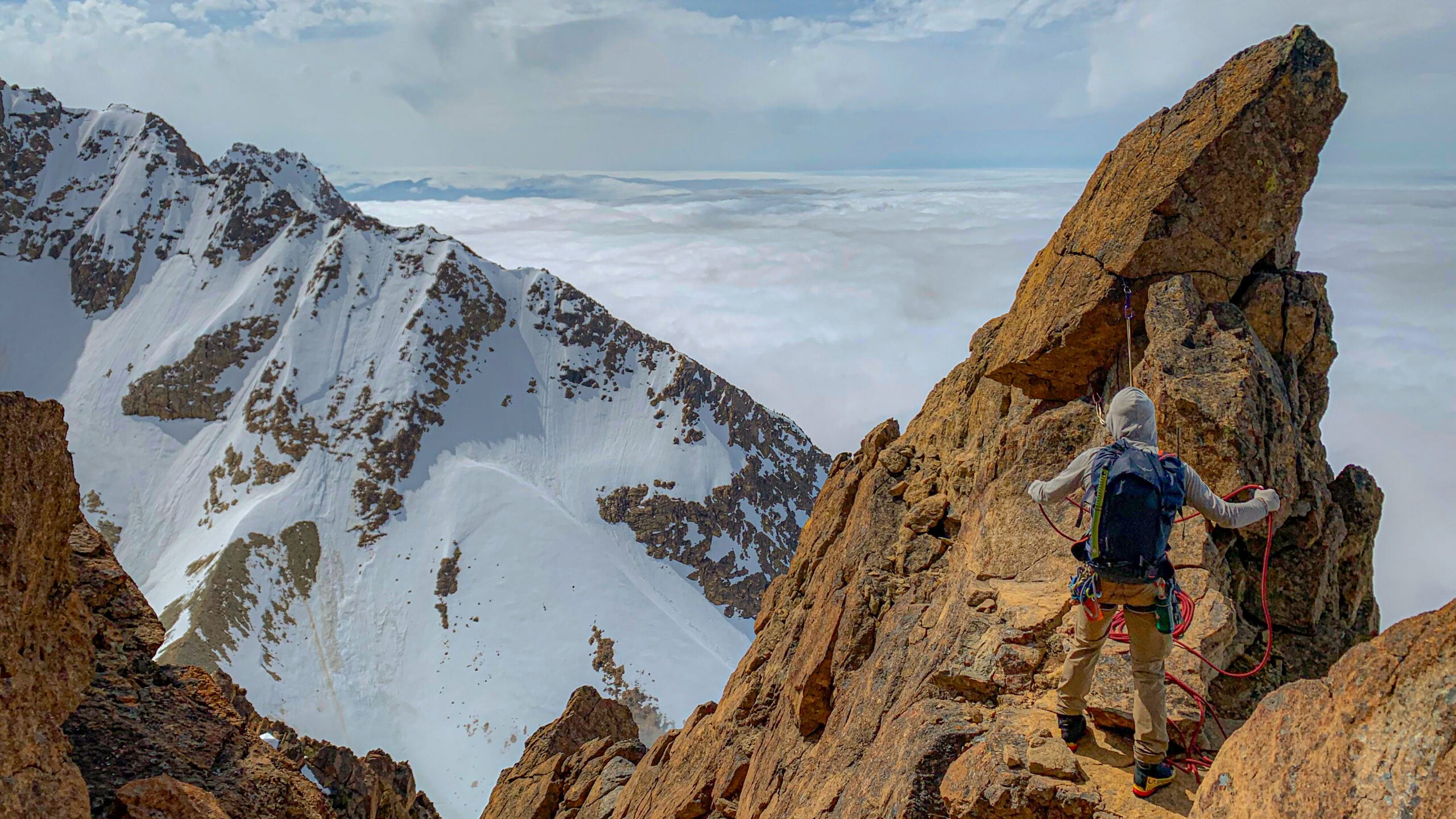
This is particularly relevant in places where hiking trails, summit scrambling routes, and technical climbing routes overlap. Someone standing on a summit may see an apparently empty slope below without realizing that a climbing party is working its way up a face just out of sight. A rock released from above can travel a considerable distance, bouncing, breaking apart, and changing direction as it descends.
Trundling can also create hazards for the people doing the work. Large rocks, dead trees, and seemingly unstable debris rarely behave exactly as expected. Smaller pieces can break free, branches can whip back, and material can become lodged before suddenly releasing. Even when the primary object moves away from the person initiating the trundle, secondary debris may travel in unexpected directions.
Considerations Before Trundling
There are situations where intentionally removing loose rock or other material is appropriate. However, the decision requires careful consideration.
1. Check the entire fall zone.
Before moving anything, thoroughly inspect the terrain below. Look for climbers, hikers, trail users, campsites, and other potential exposure areas. Remember that people may be completely out of sight around corners or behind terrain features.
2. Consider how far material might travel.
Rocks rarely follow a predictable path. They can bounce, ricochet, break apart, and travel much farther than anticipated. A small block can create a surprisingly large hazard when it gains momentum.
3. Look for secondary hazards.
Removing one object can destabilize other material. Dead trees, interconnected blocks, and loose debris may behave unpredictably when disturbed. Consider what else might move when the primary object is released.
4. Evaluate whether trundling is necessary.
Not every loose rock needs to be removed. Sometimes the safest option is to leave an object in place, identify it as a hazard, and adjust the route or descent accordingly.
5. Communicate with others.
If trundling is necessary, coordinate with everyone in the area. Make sure people understand what is happening, where the material may travel, and when it is safe to proceed.
Think Beyond the Immediate Problem
Mountain safety requires us to think beyond the immediate problem in front of us. Removing a dangerous block from a climbing route may reduce one hazard while creating another for someone below.
Trundling has a legitimate place in climbing and mountaineering, but it should never be treated casually. Before intentionally dislodging anything, consider the entire environment, the people who may be exposed, and the unpredictable behavior of falling material.
At the American Alpine Institute, we emphasize that good mountain judgment involves understanding not only the hazards we can see, but also the unintended consequences of our decisions. Sometimes the best safety decision is knowing when not to move something.