


















Edge Transitions: Making the Rappel Safer and More Manageable
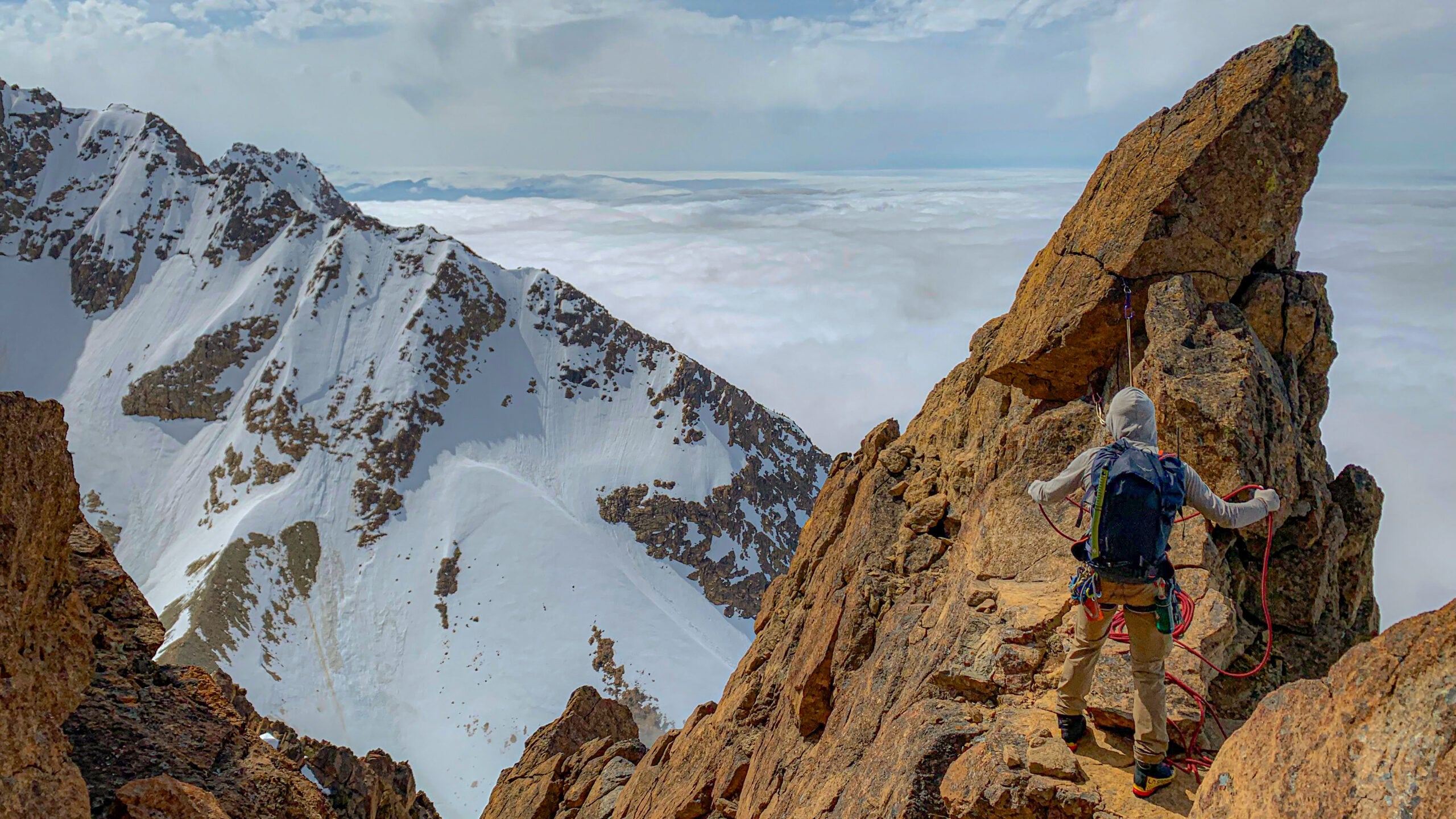
The transition from standing at the edge of a cliff to hanging on rappel is one of the most intimidating moments for a new climber. Even when the rappel system is properly constructed and backed up, moving over a steep edge can feel unnatural. The instinct is often to lean back, but for a novice rappeller, committing their weight to the rope while moving backward over empty space can be genuinely scary.
This is one reason climbing instructors and guides often use a high redirect, commonly called an elevator, to improve the edge transition.
Why the Edge Transition Is Difficult
When a rappel system has a low central point, the rope may run close to the ground as the student approaches the edge. Once the student weights the system and moves over the edge, the central point can potentially become pinned against the ground.
A low central point creates two problems. First, it can make the system considerably more difficult for the instructor to manage. Second, it makes the physical transition over the edge more demanding for the novice rappeller.
The student may have to lean farther backward and make a larger movement to get their center of gravity over the edge. On a steep or exposed cliff, that movement can feel quite dramatic.
The Elevator Solution
The search-and-rescue community commonly addresses this problem with a high redirect, or elevator. By raising the central point, the rope is lifted off the ground and the geometry of the system is improved.
An elevator can be constructed in several ways. A pack can sometimes be used to raise the central point, while a tree or suitable natural feature such as a large boulder may provide a more effective solution. The exact setup depends on the terrain, the anchor configuration, and the system being used.
The goal is simple: get the rope and central point up off the ground so the instructor can manage the system more easily and the student can make a smoother transition.
This technique isn’t limited to climbing instruction. At charity rappelling events where participants descend the sides of buildings, organizers commonly use a tripod such as an Arizona Vortex to create a high point that makes the transition over the edge easier for participants.
The same principle can be applied in an outdoor climbing environment. A suitable tree near the edge, for example, may provide an opportunity to redirect the rappel rope upward and create a more comfortable transition…