

















On May 18, 1980, Mount St. Helens unleashed the most destructive volcanic eruption in U.S. history. After weeks of earthquakes and steam blasts, a magnitude-5.1 quake at 8:32 a.m. triggered the largest landslide ever recorded. The mountain’s bulging north flank collapsed, suddenly releasing immense pressure inside the volcano. What followed was a devastating lateral blast that raced outward at hundreds of miles per hour, flattening old-growth forests across more than 200 square miles in a matter of seconds.
An ash column roared skyward to over 80,000 feet, turning morning to twilight across the Pacific Northwest. Fine gray ash drifted east for days, coating towns, highways, farms, and rivers in abrasive dust. In places, daylight disappeared entirely. Aircraft were grounded, machinery failed, and communities shoveled ash like snow. Pyroclastic flows and mudflows surged down river valleys, choking channels with debris and reshaping entire watersheds.
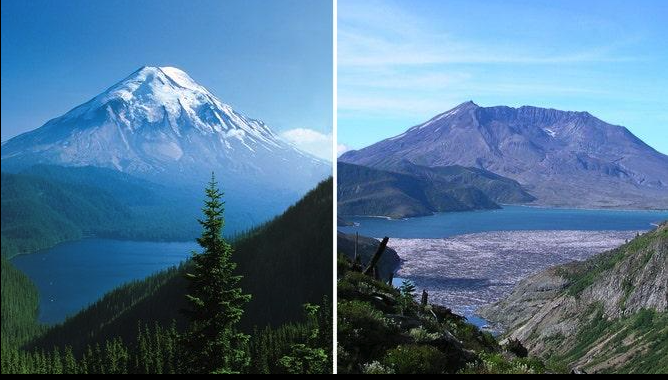
Fifty-seven people lost their lives, including scientists, photographers, and residents who had remained within the blast zone. Thousands of animals perished. Homes, bridges, logging roads, and recreation sites were erased. The summit of the mountain collapsed into a mile-wide, horseshoe-shaped crater, lowering the peak by more than 1,300 feet and permanently altering the skyline.
In the decades since, the landscape around Mount St. Helens has become a living laboratory. Scientists have watched plants, insects, fish, and mammals slowly return to terrain once scoured to a gray moonscape. The eruption reshaped modern volcanology, improving monitoring, hazard mapping, and emergency response worldwide. Today, the recovering forests and stark crater stand as a reminder of both nature’s violence and its remarkable capacity for renewal.