







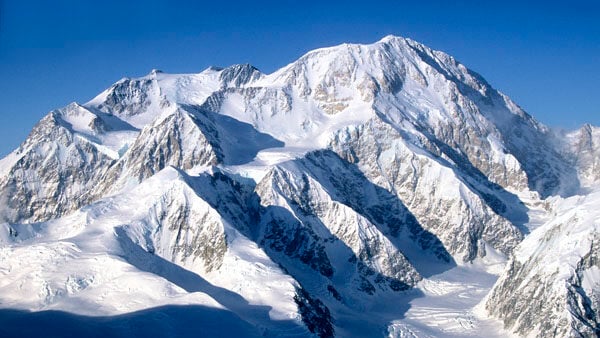

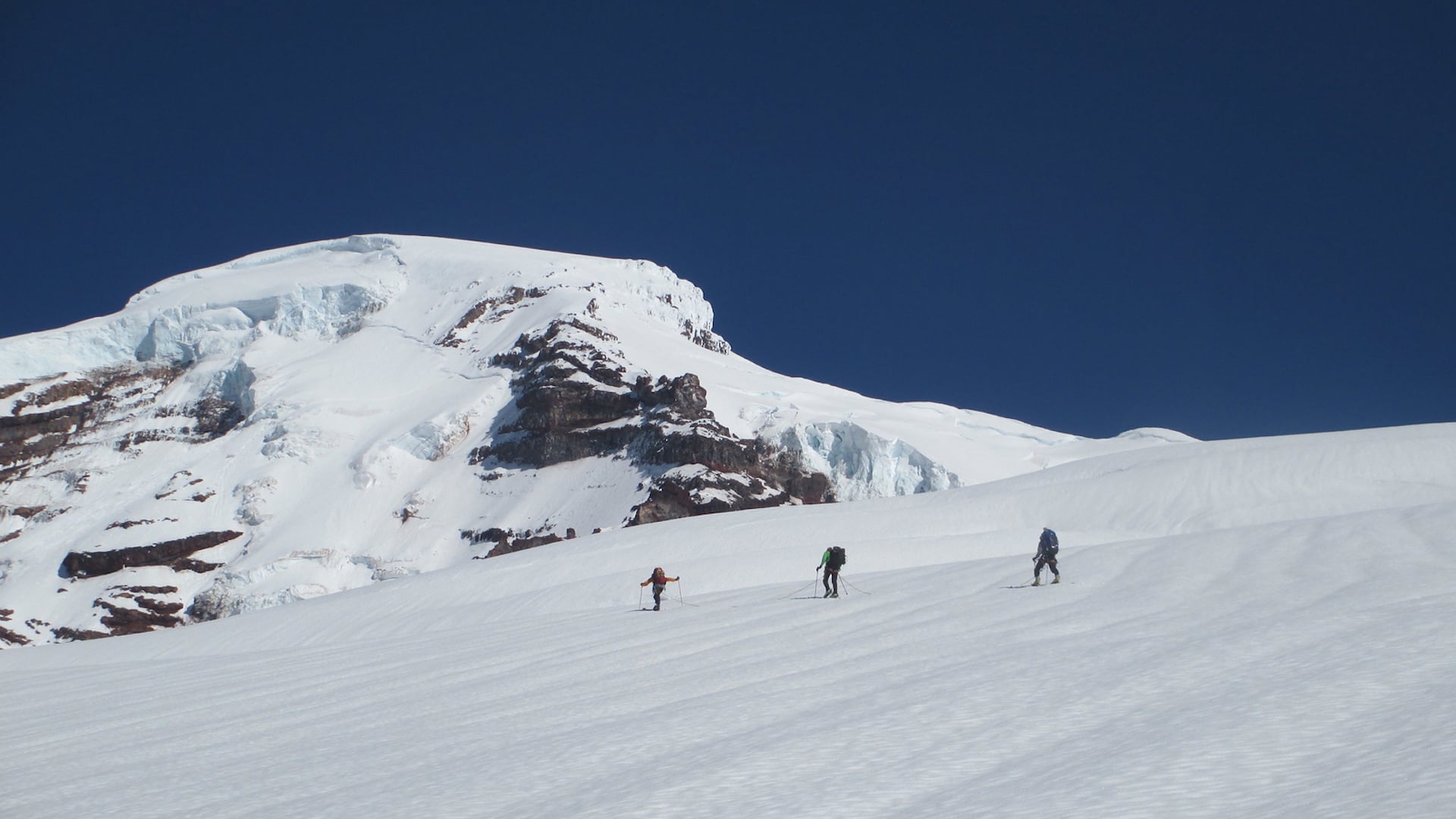








Glacier recession on Mount Baker is among the most visible and measurable signs of climate change in the North Cascades. The mountain holds one of the greatest concentrations of glacier ice in the lower 48 states, with well-known bodies like the Coleman, Easton, Deming, Boulder, and Squak glaciers spilling from its high flanks. For decades, these glaciers were considered relatively resilient because of the region’s famously deep winter snowpack. That buffer is now thinning.
Long-term monitoring shows that nearly all of Baker’s glaciers have been retreating since the late 20th century, with accelerated loss over the past two decades. Warmer summer temperatures, earlier spring melt, and more winter precipitation falling as rain instead of snow reduce annual accumulation and increase melt rates. Even in high-snow years, hotter summers erase gains quickly.
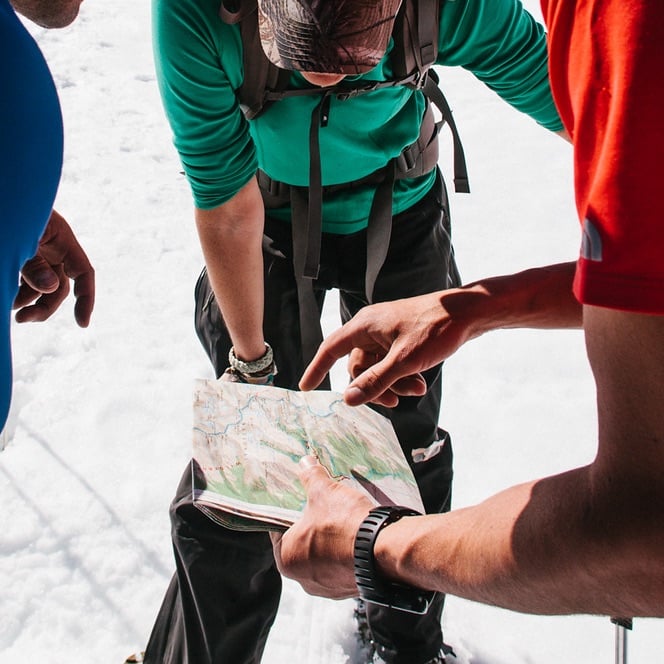
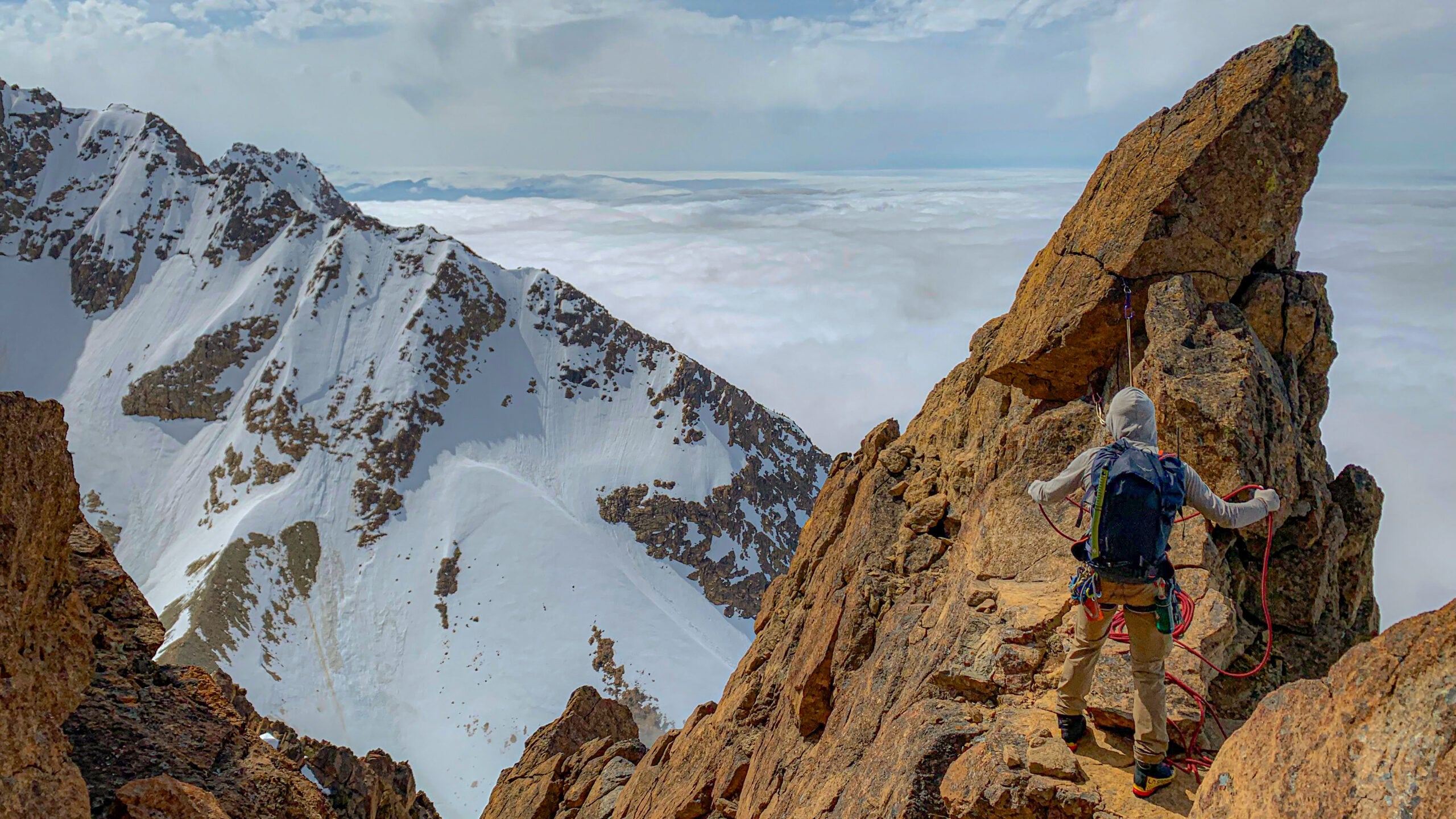
The physical changes are obvious to anyone who returns season after season. Moraines stand high and dry where ice once flowed. Serac bands shrink. Crevasse patterns change as ice thins and slows. Established climbing and skiing routes lengthen as approaches become rockier and more complex. Late-season bergschrunds widen. What was once firm snow becomes loose volcanic rubble by August.
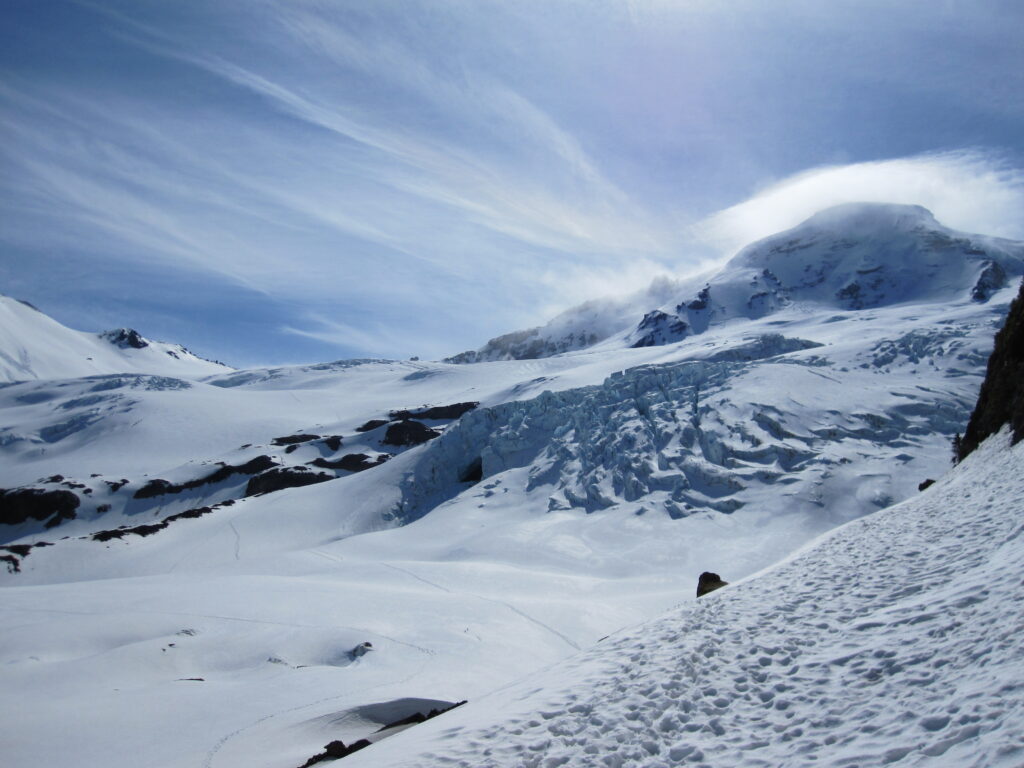
Hydrologically, the impacts extend beyond aesthetics and recreation. Glaciers act as natural reservoirs, releasing meltwater steadily through late summer. As they shrink, stream flows become flashier in spring and diminished in late season, affecting downstream ecosystems and water users.
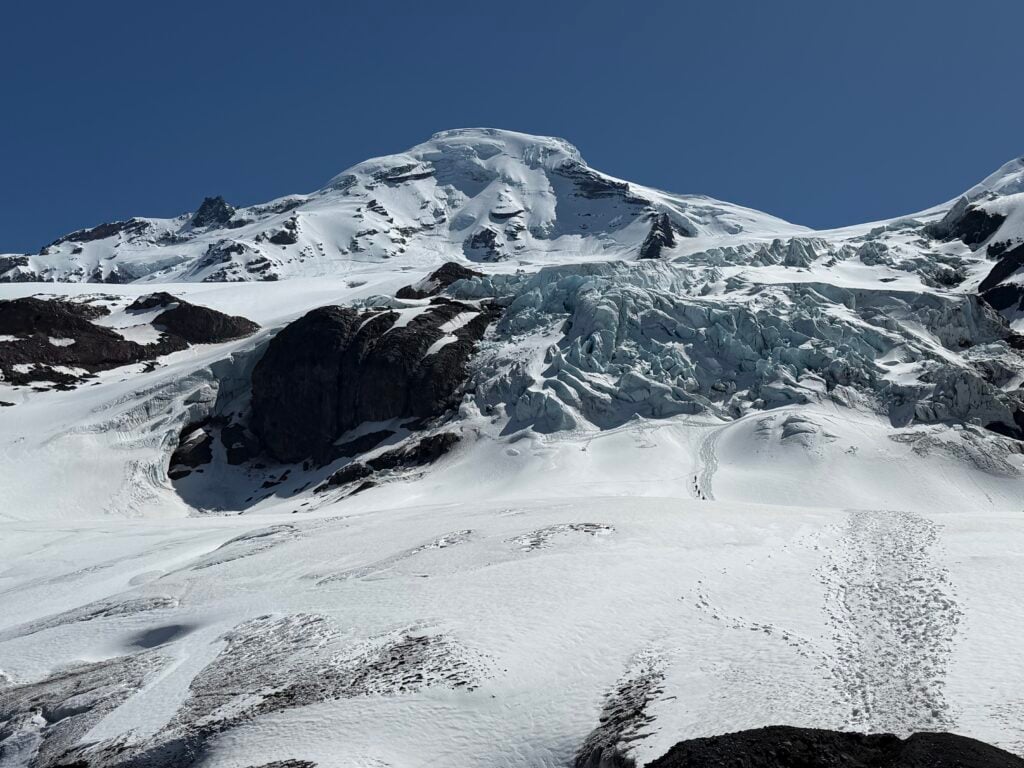
Baker’s glaciers are not disappearing overnight, but their trajectory is clear. The mountain still looks glaciated and wild, yet the ice is thinner, smaller, and less stable than it was a generation ago. For climbers, guides, scientists, and locals alike, the change is not abstract—it is mapped in altered routes, shifting hazards, and the slow, unmistakable retreat of ice from the slopes.