



























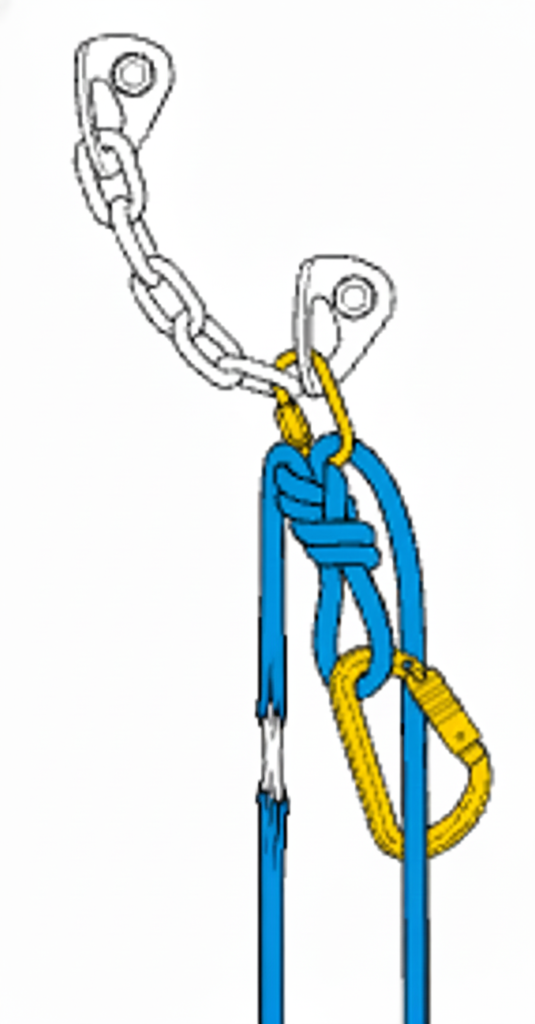
A core shot in a climbing rope is exactly what it sounds like—and exactly what you don’t want to see when you’re racking up. Modern dynamic ropes are built with two parts: a load-bearing core and a protective sheath. The sheath handles abrasion and everyday wear; the core is what actually catches falls. A core shot happens when that sheath is damaged enough that the core fibers are visible, poking out like the rope is waving a tiny white flag.
Core shots usually come from abrasion rather than a single dramatic event. Running a rope repeatedly over sharp edges, lowering or rappelling over rough rock, or letting it grind through gritty anchors can all slowly saw through the sheath. Factor in dirt, sand, and time, and even a well-loved rope can start to look less “trusty lifeline” and more “questionable spaghetti.”
Once the core is exposed, the rope’s integrity is compromised. While the core may still be intact, it’s no longer adequately protected. Exposed core fibers can absorb moisture, suffer UV damage, and abrade rapidly. More importantly, the rope’s behavior becomes unpredictable. It may not handle dynamic loads the way it was designed to, and that’s a bad time to discover new physics.
So what should you do if you find a core shot? In most cases, the answer is simple: retire the rope from lead climbing immediately. If the damage is near one end, you may be able to cut the rope shorter and re-purpose it for top-roping, hauling, or rescue practice—clearly re-labeled, of course. If the core shot is mid-rope or extensive, it’s done. No amount of optimism, duct tape, or “it’ll probably be fine” changes that.
Climbing ropes are consumables, not heirlooms. Regular inspection, smart rope management, and knowing when to say goodbye keep the rope doing its job—so it never has to scream for help in the middle of a fall.