


































Nylon ropes don’t appear to be much of a threat to metal climbing anchors, but once they pick up debris from the ground, they become surprisingly destructive. The grit and sand that work their way into a rope’s sheath act like abrasive particles. Every time that rope moves across a bolt hanger, quick-link, ring, or other fixed hardware, those particles scrape the surface. The friction can slowly carve grooves into the metal, thinning it and creating sharp edges that can damage future ropes. In high-traffic areas, this wear happens faster than most climbers expect—anchors can end up looking like they’ve been attacked with a file.
The real culprit isn’t the nylon itself, but the grinding action created when a dirty rope is repeatedly weighted, lowered, or top-roped through the same point. This repetitive abrasion can compromise the anchor’s integrity and shorten its lifespan. In extreme cases, the groove gets deep enough to create a genuine hazard.

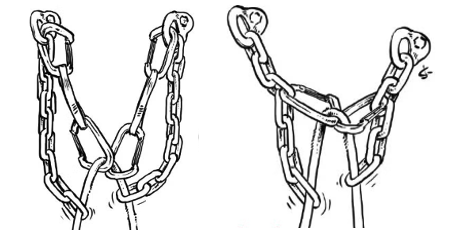
Many of the older chain anchors are the most susceptible to damage from ropes. Be especially wary of these kinds of anchors.

Preventing this kind of wear is straightforward: keep ropes clean, use a tarp, avoid running toprope sessions directly through fixed gear, and use your own draws or carabiners when possible.
–Jason D. Martin