Illiniza Sur and Antisana are elegant mountains that offer some of the very best glacier climbing in the Northern Andes. Illiniza Sur provides Ecuador’s steepest regularly guided route, with its upper pitches in the 35-40 degree range on a mixture of hard snow and ice.
This high altitude mountaineering program is designed for climbers with glacier travel experience. If you are not sure about your past experience qualifying you for the climb, just give us a call and we will be happy to review your skills and experience and anything you might need to do to prepare for the climbs before heading to Ecuador.
The Alpine Institute has been guiding our Illiniza climbs in the November-February and May-July time periods since 1980, but we are now moving the ascents to September and October because of the effects of climate change.
Rising to 17,218 feet (5248 meters) in Ecuador’s mild climate, Illiniza Sur is high enough to support year-round ice and very attractive climbing routes, but with global climate change, those routes now tend to go out of shape during the region’s prolonged dry seasons. We have, therefore, moved our expeditions to the September and October time frame when the routes most benefit from recent snowfall and are likely to be in their best condition. If you would like to climb in the November to July period, please consider our other Ecuador program, the Cayambe-Antisana (Cotopaxi) Skills Expedition.
With the growing effects of global climate change on all the world’s mountain ranges, the American Alpine Institute continues to modify its programs, as needed, to work well in the evolving dynamics of the mountain environments where we teach and guide.
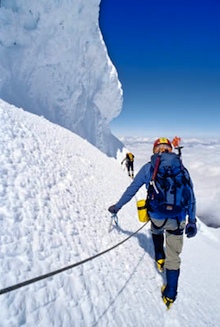
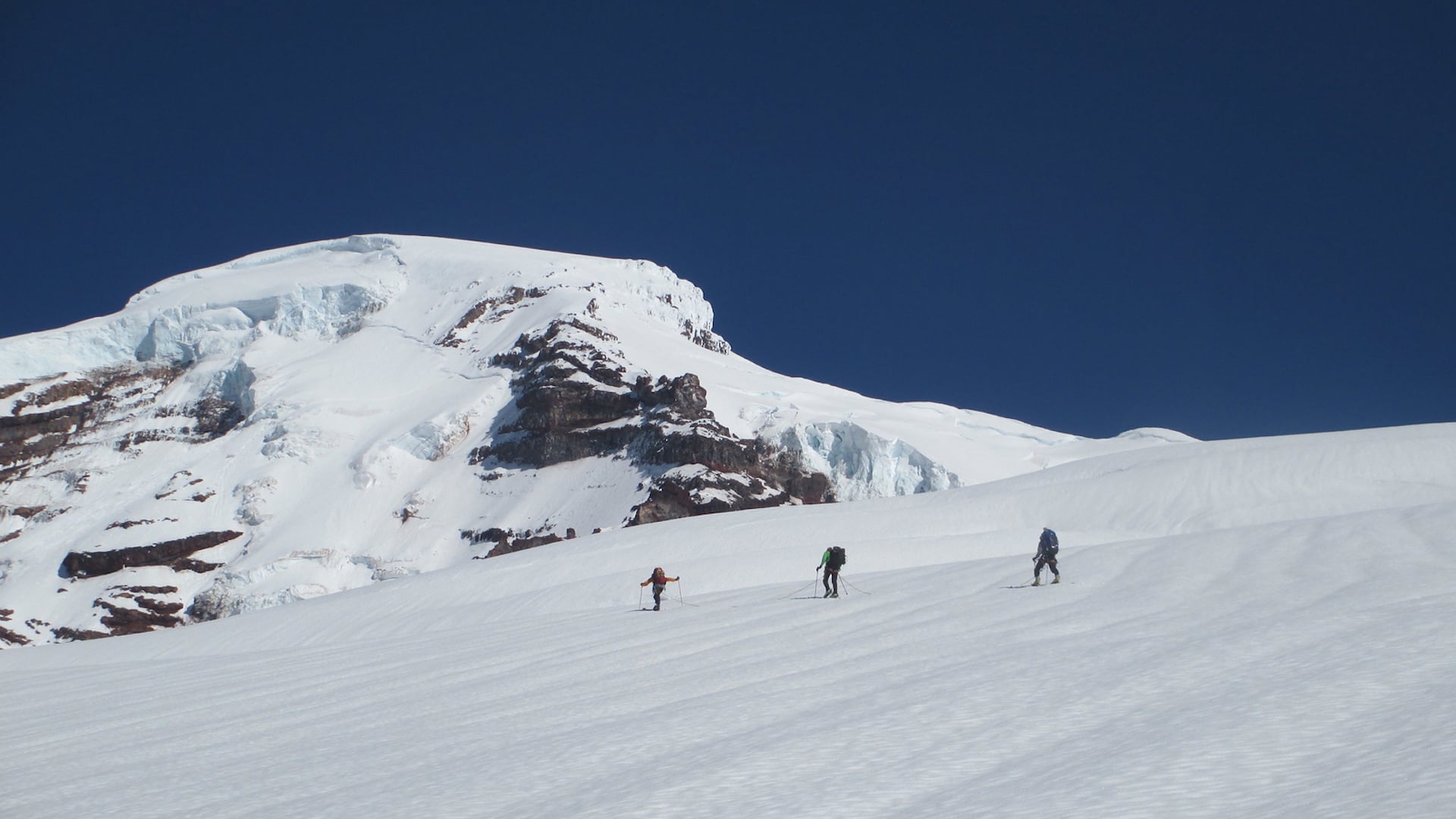
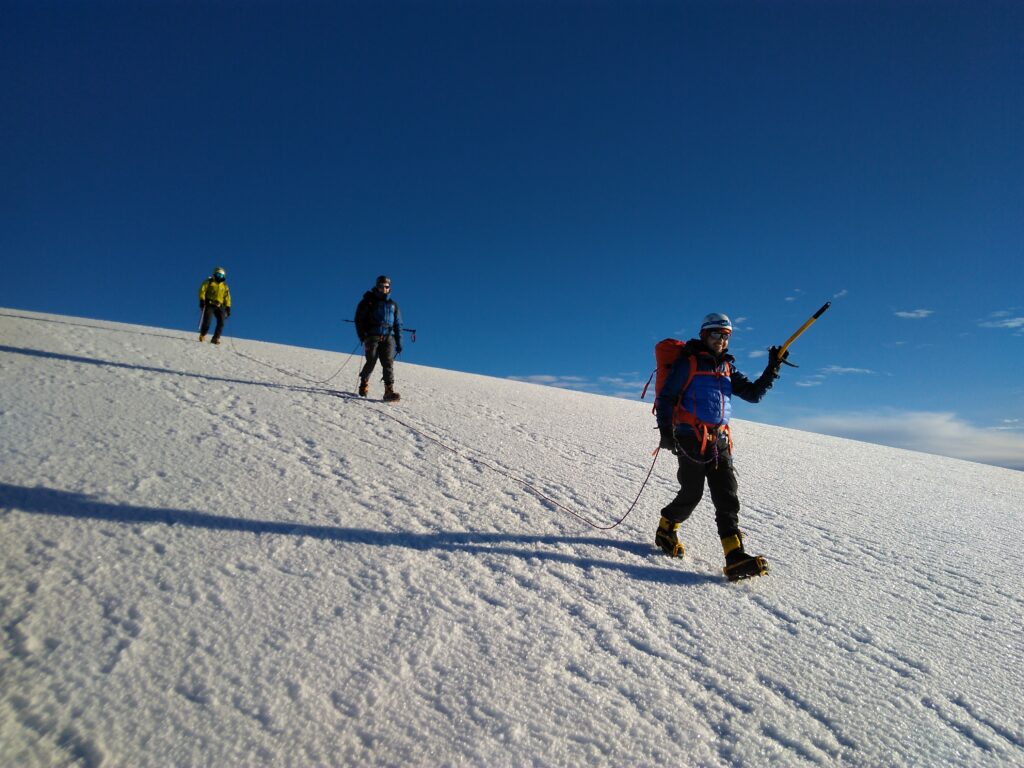
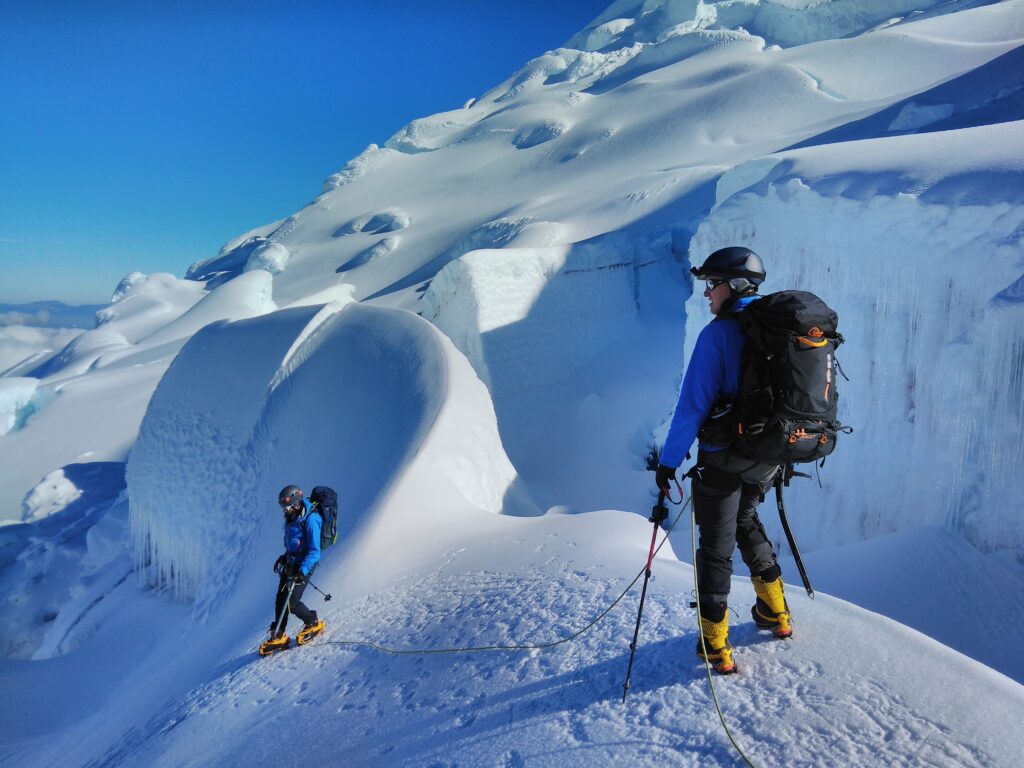
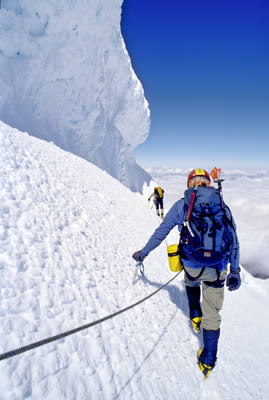
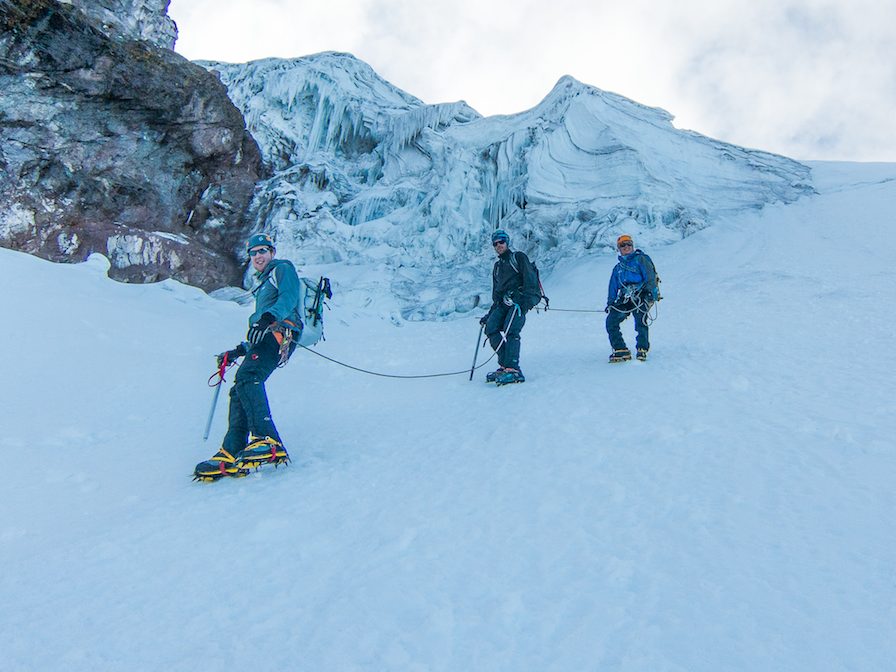
Climbers on Antisana. Dylan Taylor.
Like AAI’s Cayambe-Cotopaxi Skills Expedition, this program has an ideal acclimatization schedule. It begins with arrival and rest at 9350 feet (2850m) followed by day-hiking between 9,000 and 10,000 feet (2740 and 3050m) and continues on to ascents of 13, 15, 16, 17, and 18-thousand-foot peaks (4198, 4784, 5126, 5248, and 5752m).
Largely because of this carefully structured acclimatization, we have enjoyed a remarkable success rate of 93% (excluding summits that were missed because of bad weather). In the Institute’s many years of guiding the high peaks of Ecuador since its first trip in 1980, we have not had a single incident of serious high altitude illness. Like our success rate, we believe that this safety record similarly results from our carefully structured acclimatization program.
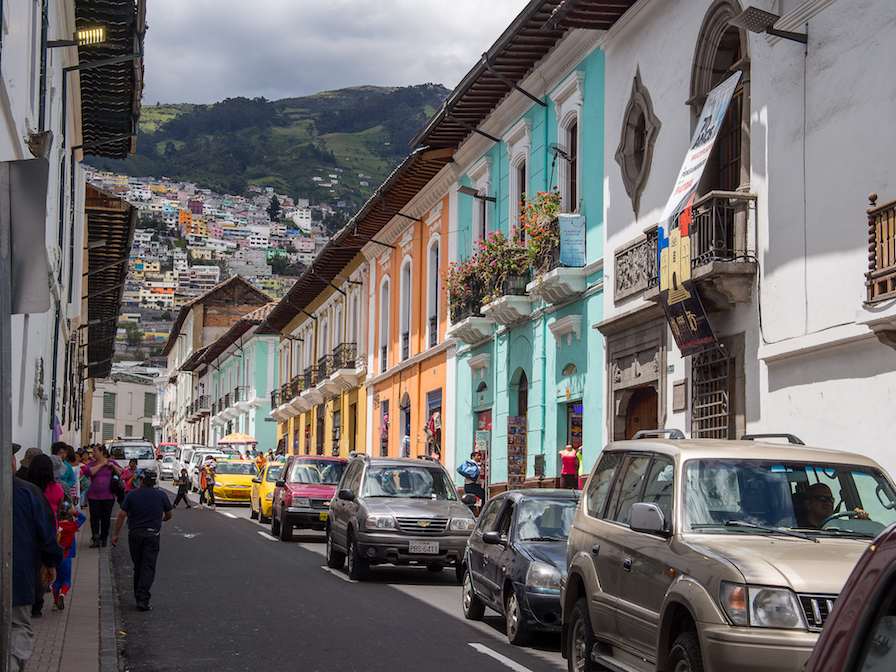
Our official arrival day is Friday in Quito, though some people choose to fly in one day early to have extra time to adjust to Quito’s 9350-foot (2850m) elevation. Early arrival is not necessary, but some climbers prefer it, and we are happy to assist you with hotel arrangements if you want the extra time to rest from travel and acclimatize.
After beginning our acclimatization in Quito, on our first full day of activity we travel north to the Equatorial monument for some obligatory photos straddling the line, and then continue on to the large regional market of Otavalo. We enjoy the colorful market and after lunch, do some hiking in the countryside. Having spent a night or two in Quito, and by moving at an easy pace, most people arriving from sea level adjust to the altitude without discomfort.
On the third and fourth days we are ready for more vigorous activity, so we make scenic hiking ascents of beautiful Pasochoa (13,776 feet / 4198 meters), and of the rugged Guagua Pichincha (15,695 feet / 4784 meters). Pasachoa is a 5-mile / 4.5-hour hike with a 2296-foot (700-meter) elevation gain. GuaGua Pichincha is a 6-mile / 5-hour hike with a 2673-foot (815-meter) elevation gain. These ascents provide team members with a solid foundation of acclimatization which serves them well on the high peaks that come next. They are also beautiful hikes above tree-line with great views of the “Avenue of the Volcanoes” and of Ecuador’s beautiful central valley.
We travel south from Quito on the Pan American Highway and then move west into the countryside on a dirt road towards the Illinizas, finally driving as high as we can via a rough track to a point where we meet our arrieros and pack animals. With our gear on horseback, we move to our high camp at a simple hut at approximately 15,000 feet. After getting our gear stowed and having lunch, we make an afternoon ascent of the south face of Illiniza Norte. This is an easy scrambling ascent on rock that adds to our acclimatization and provides excellent views of our route on Illiniza Sur.
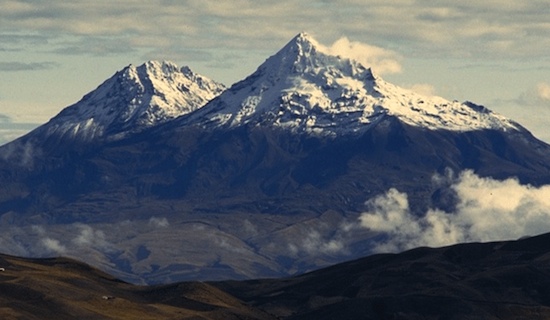
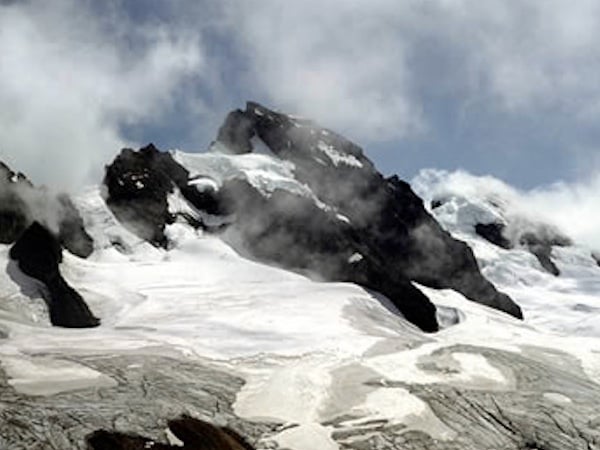
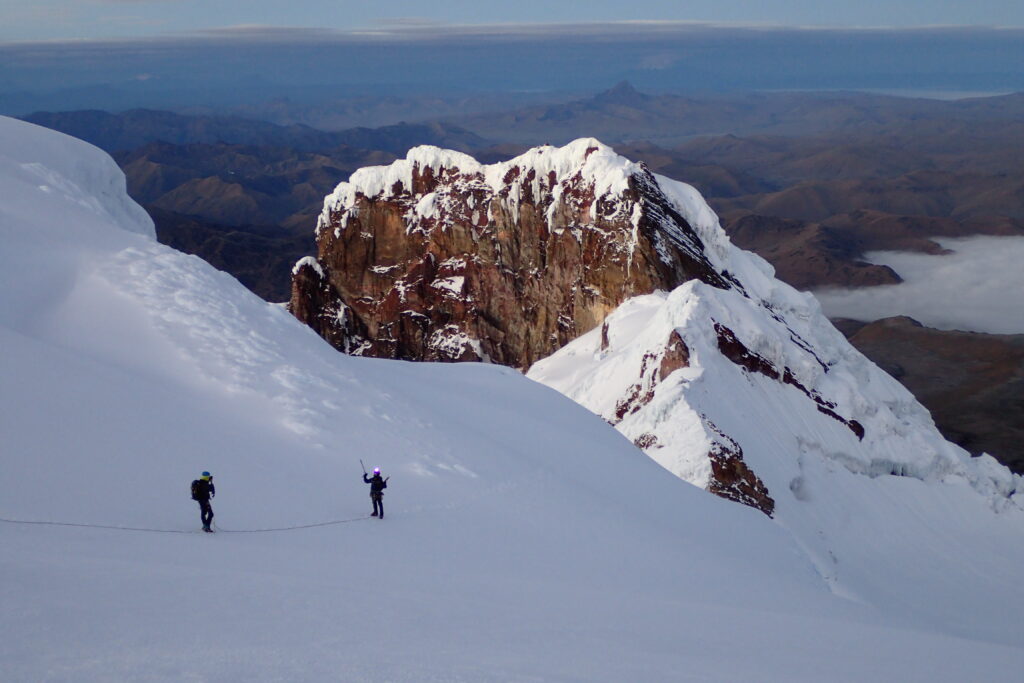
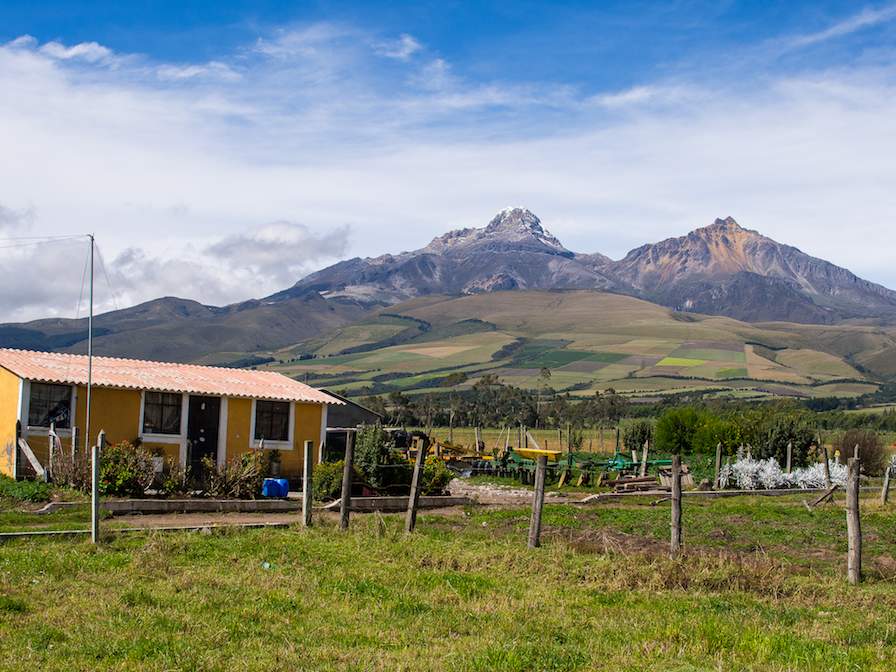
Illiniza Norte and Illinisa Sur. Kristen Risnes.
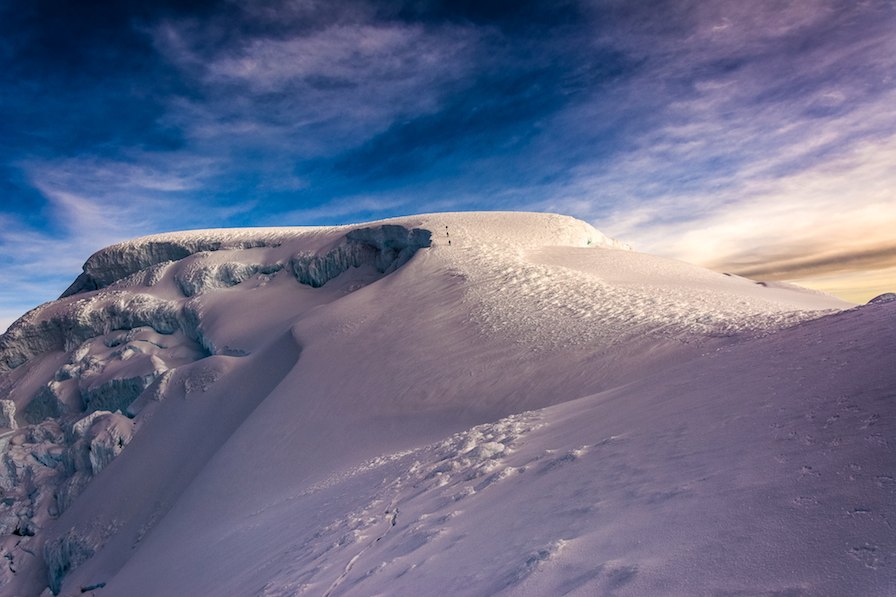
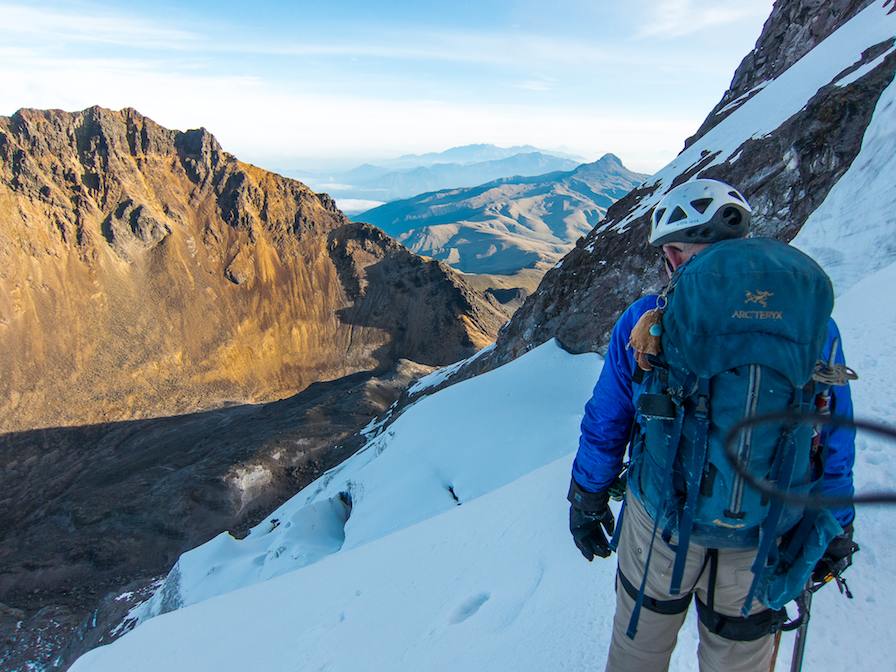
Moving on to Illiniza Sur the next day, we climb the mountain’s Northwest Face, a beautiful and interesting route that includes short sections of steep snow and ice on complex glacial terrain, a traverse of a moderate face, an ascent of a couloir, and a climb of an aesthetic ridge line that leads us to the summit. From beginning to end this is a rewarding and photogenic climb, and after our steady exercise activity at gradually higher altitudes, our climbing team members should be able to deal very well with the terrain and the 17,000-foot altitude of this peak. Views from this very aesthetic summit encompass all the major peaks of the eastern and western cordillera.
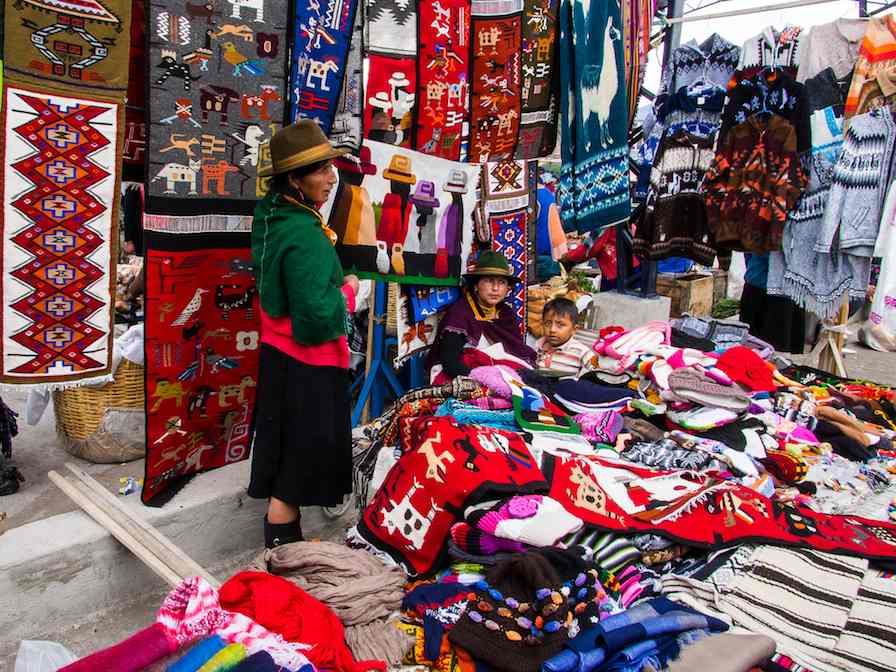
Following these two climbs we descend to Ecuador’s central valley for two nights and a full day of rest at a hacienda. During our time off, we will make the short trip to the Saquisili to explore one of Ecuador’s most traditional markets. It functions every day, but on Thursday when we will visit, it’s at the peak of activity, with native people coming from miles around to sell food stuffs or items they have made, or to buy products for themselves. Though tourists visit Saquisili, it is very much an indigenous affair. Anything needed for the kitchen or broader home and household can be found here, and because of its weekly significance to the communities in the region, the people in the market dress well in their traditional clothing and place high value on the social aspects of the marketplace experience. It is a great market to experience on several levels.
Despite its spectacular appearance and the quality of its climbing, Antisana does not see nearly the traffic that its neighbors receive because of a combination of two factors. First, it has a moderately technical nature – there are no “walk-up” routes on the mountain – which means that though this is not a technical climb, those who attempt it must have intermediate glacier climbing skills. Second, access to the peak has been severely limited by surrounding haciendas in order to protect the wildlife found there as well as their own small herds of livestock.
Leaving our hacienda below the Illinizas, we cross the central valley, then drive up through some of Ecuador’s most beautiful Andean foothills. We pass through several traditional, small villages before crossing rolling paramo and then steadily gaining altitude as we travel from roughly 9500 feet (2900m) to well over 14,000 feet (4300m). Here we have excellent opportunities for viewing wildlife, including deer, boar, wild horses, fox, and bird life ranging from hummingbirds to condors.
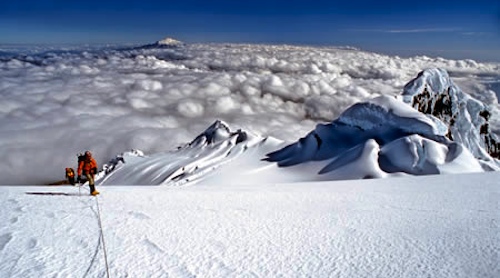
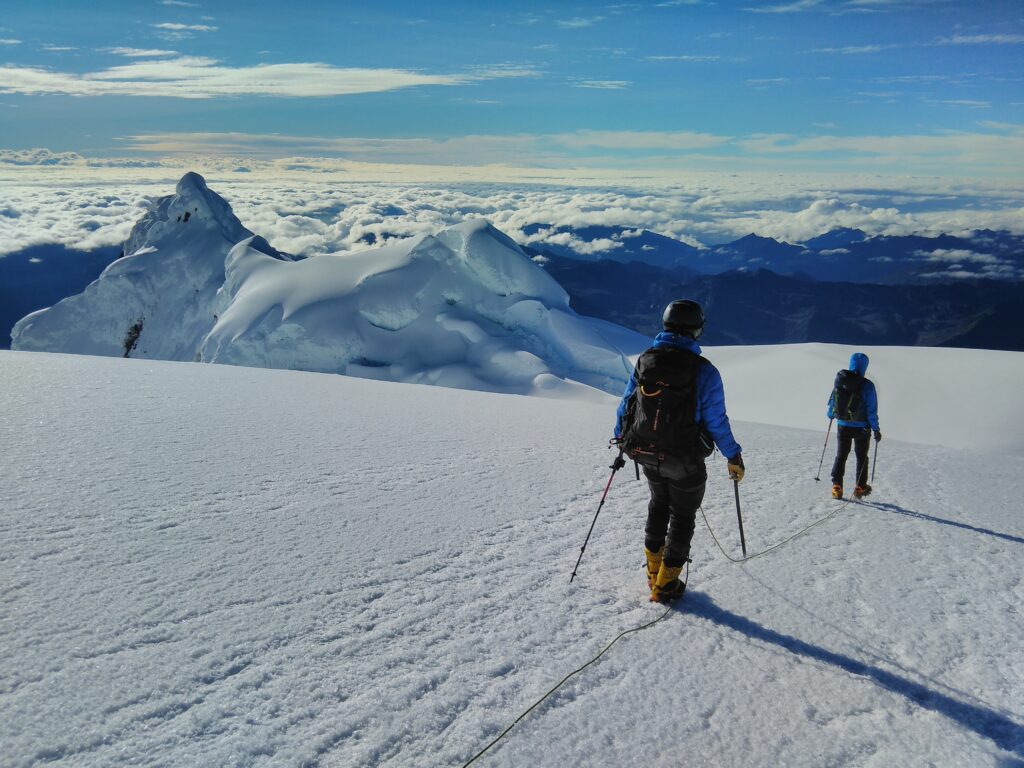
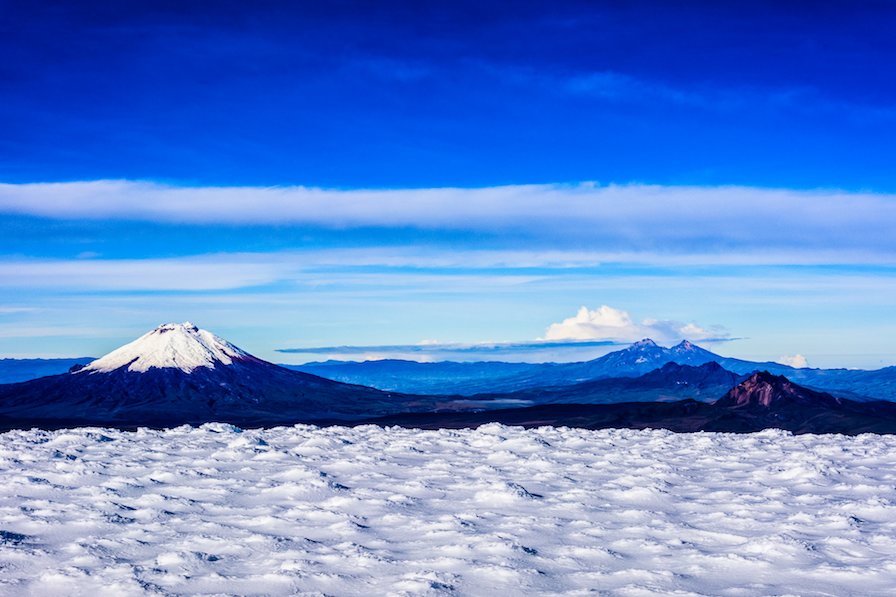
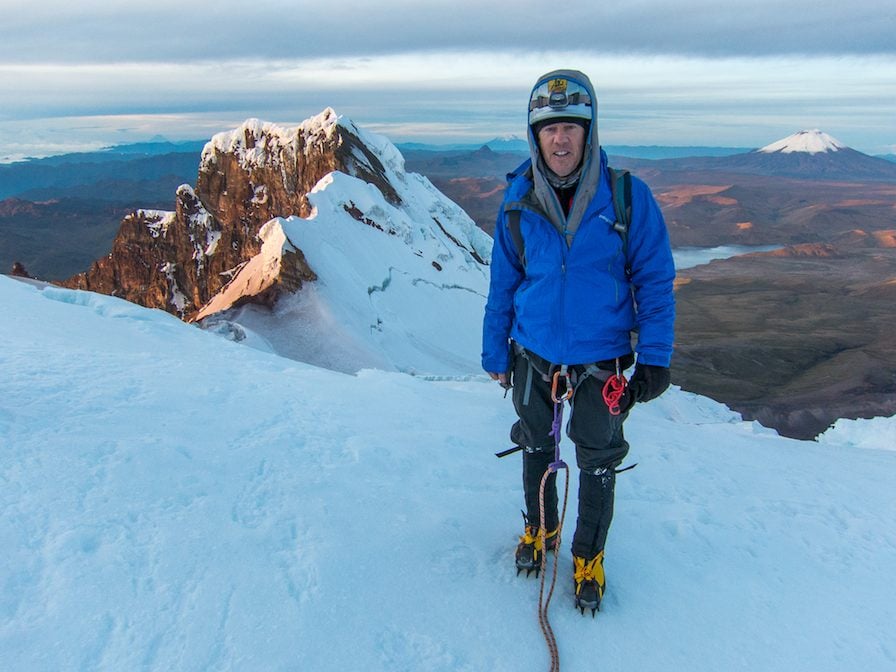
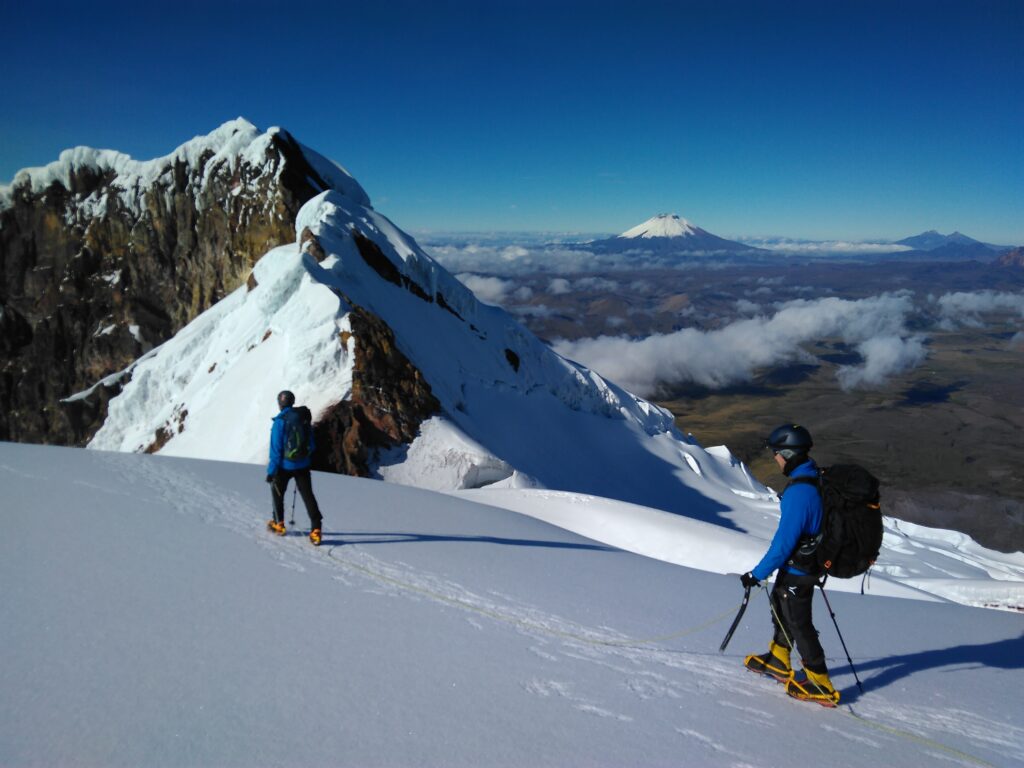
Nearing the summit on Antisana with Cayambe in the distance. Dylan Taylor.
The glaciers on Antisana are very active, and their configuration is complex and always in the process of evolution. Our choice of route will depend on conditions at the time of our climb, but it will most likely include a combination of moderately angled glacier travel and short, steep sections that require the use of a full range of snow and ice techniques for intermediate terrain. The entire climb is interesting, and we are rewarded with views from the summit that include a rare look at the north face of Cotopaxi and an excellent view across a portion of the Amazon Basin.
This journey to Antisana is a great adventure. It includes high quality alpine climbing on the world’s largest low latitude glaciers in an area that feels very remote and untouched. A person might easily decide to come here for the wildlife and the beauty of the landscape, but add superb climbing to the experience of those other qualities — and you have a remarkable climbing expedition that will provide memories to last a lifetime.
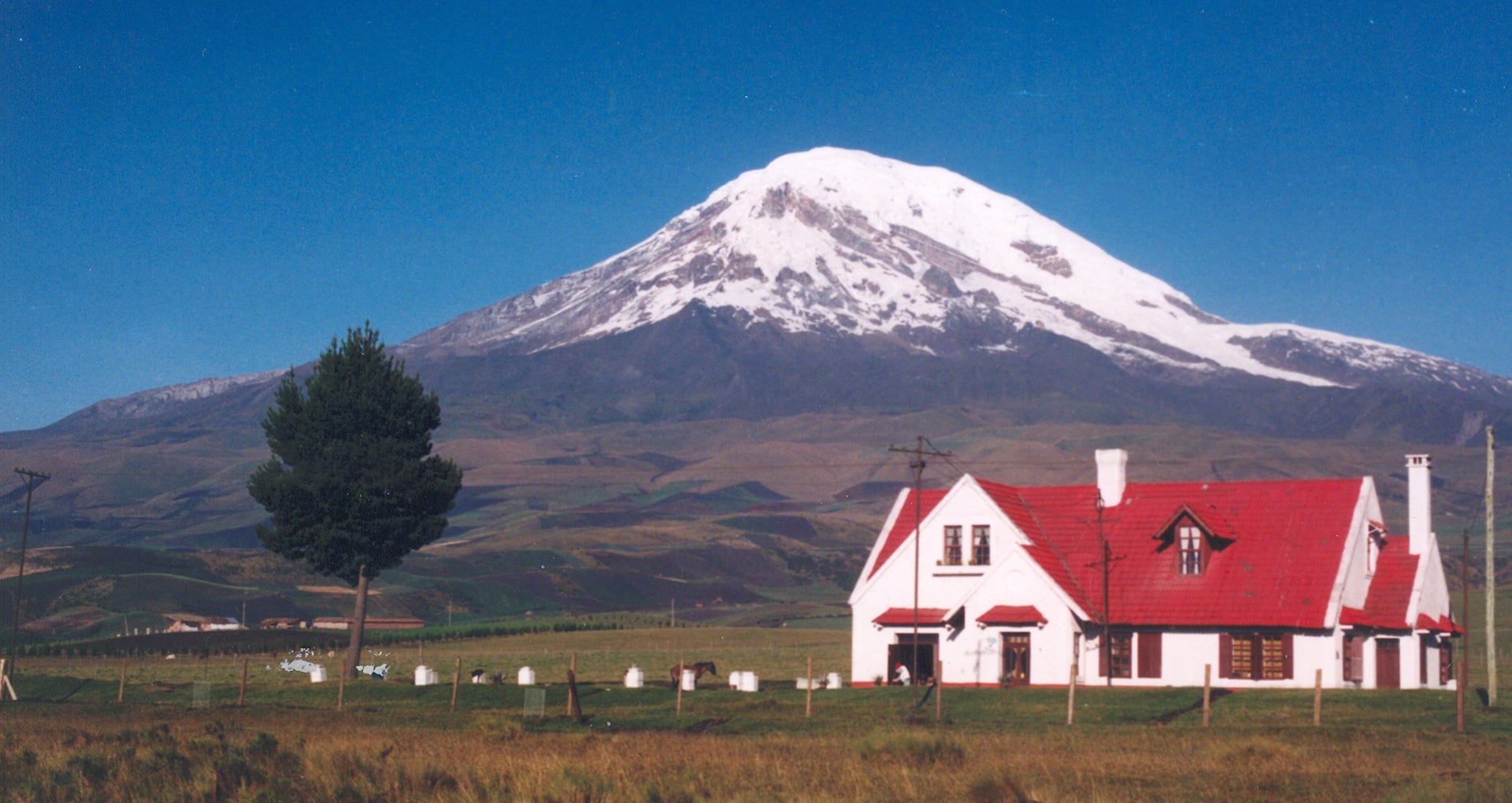
Following the Antisana-Illiniza Expedition many people choose to climb Chimborazo, the highest peak in Ecuador at 20,703 feet, and a summit with the further distinction of being farthest from the center of the earth. (Because of the ellipsoid shape of the planet, Chimborazo’s location close to the equator makes it “higher” by this measurement than Mt. Everest.)














 Details