



















Footwear is one one of the most important gear selections we make for a trip to the mountains. Not unlike tires on your car which are the “only part that’s in contact with the road ” as the saying goes, boots can make or break a trip. Everyone who has spent any amount of time in the mountains has heard a tale or two about footwear gone wrong.
Recently, I was having an email conversation with a participant about what boots he should get for his trip. By the time the conversation was over I realized I had written some fairly useful information about mountain boots, that could be useful for anyone planning a trip. This blog post grew from that seed.
I
use Scarpa and La Sportiva as examples here because I’m most familiar
with their products. This is because they are usually the most widely
available and they also fit my feet well. There are a lot of other good
boot
companies out there, including Kayland, Zamberlan, Asolo, Lowa, and
Salewa. It’s all about what fits.
“Shank” is a term that
historically has referred to a metal bar running the length of the boot
sole to add stiffness. “Full shank” boots are very stiff longitudinally
and are appropriate for water ice and steep alpine ice climbing. “3/4
shank” boots are softer fore-to-aft and hike and climb rock better than boots with a
full shank but do not climb water ice or steep alpine ice very well. These days manufacturers create that stiffness with
different methods and materials, but we still use the terms to refer to
the
performance characteristics of the boots.
What follows is a list of the
basic types of mountain boots, with pros and cons, and examples of
models in italics.
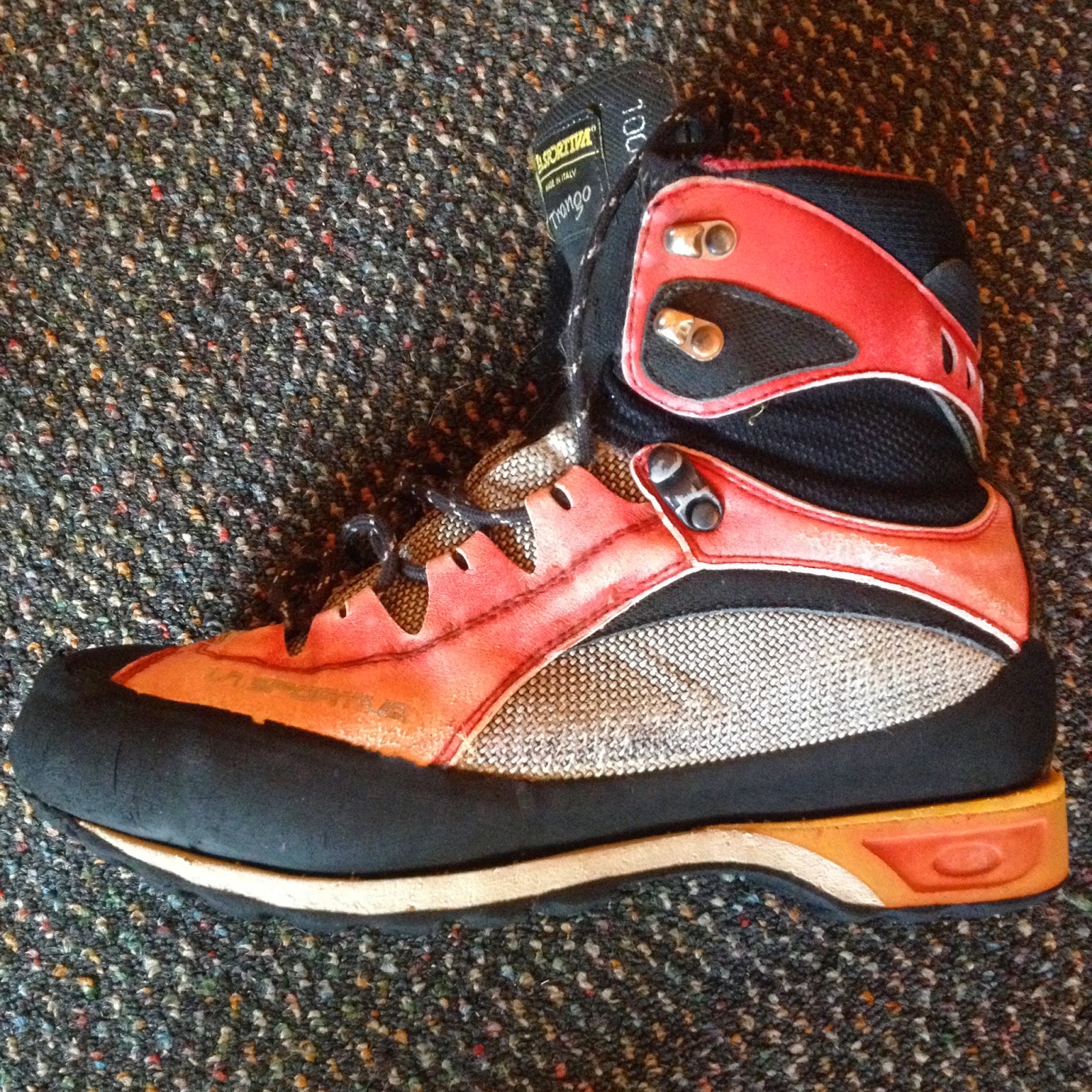
Three Season: Uninsulated, 3/4 shank. Appropriate for use in the summer, on warmer
spring and fall trips depending on conditions, and on shorter/less steep
alpine ice. Very light. Climbs rock relatively well. Not very good for water ice or steep, sustained alpine ice. Compatible with strap-on and “semi-auto”
crampon bindings. The red boots changed the paradigm for this category
and led the way in current lightweight developments. La Sportiva Trango Cube, Trango S Evo (the red boots); Scarpa Charmoz Pro.
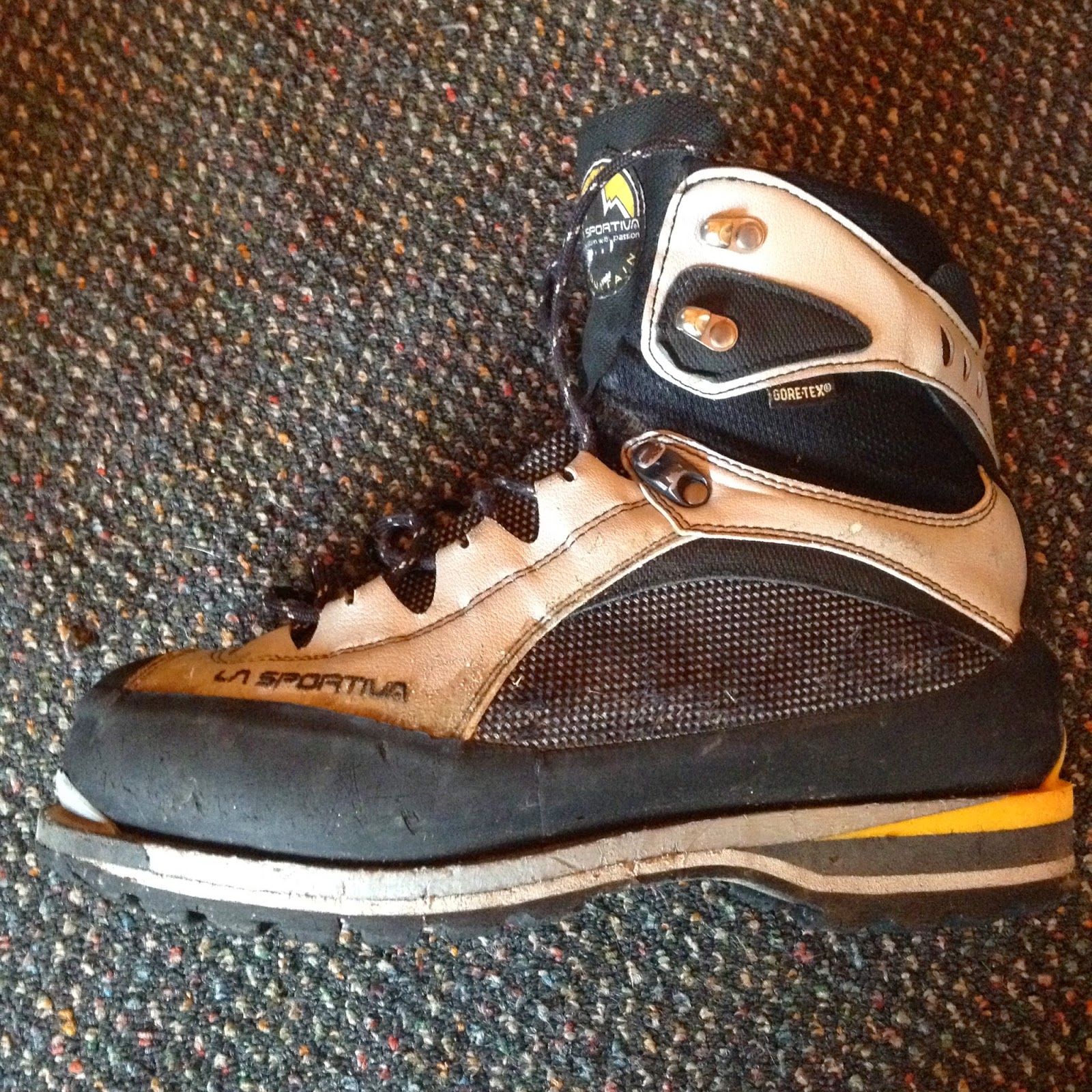
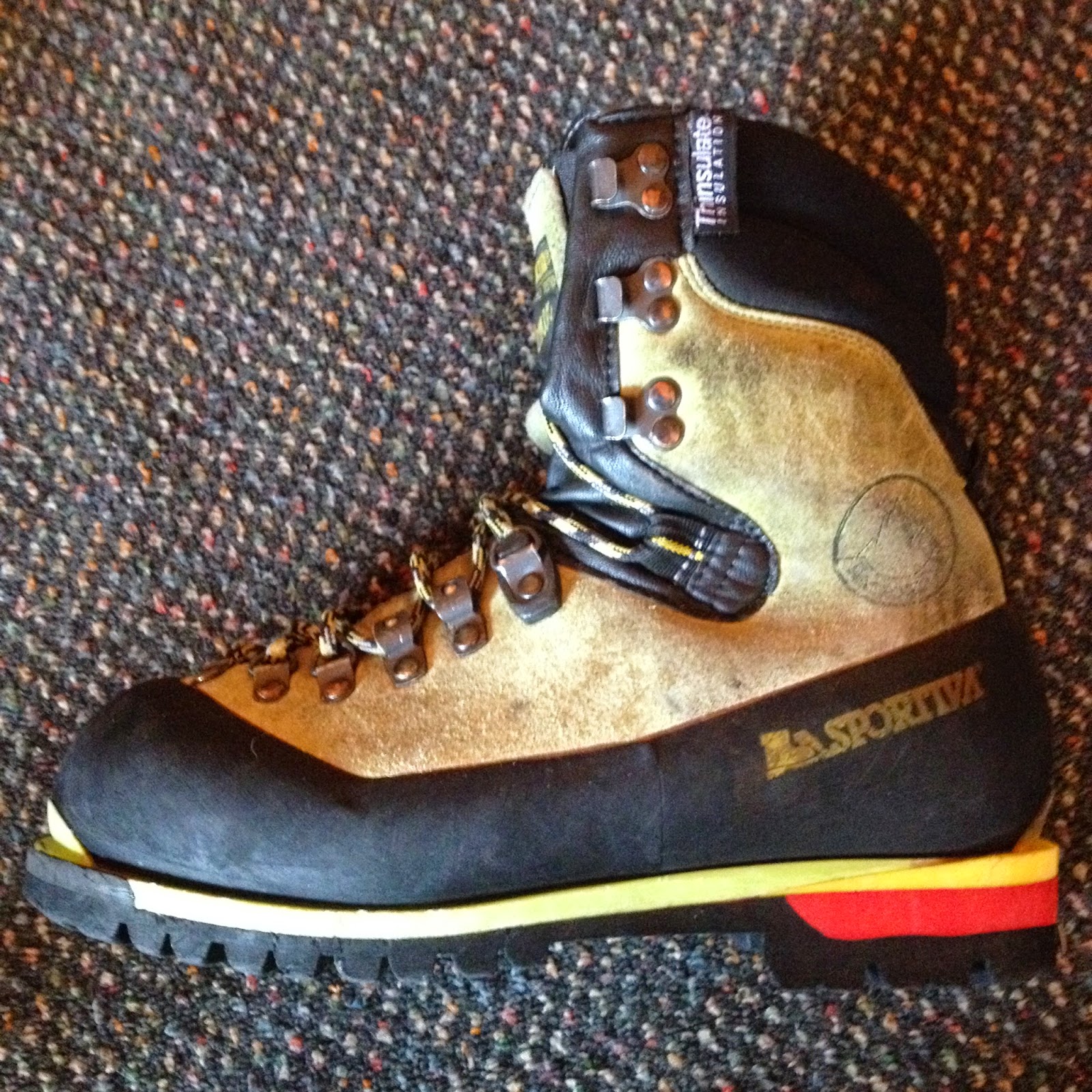
Singles:
Insulated, full shank. Appropriate for use on winter day trips and
sustained steep alpine or water ice. Can be used for winter overnights but keeping your feet dry becomes big challenge
as the trip goes on. Wet feet are cold feet. The silver boots and Rebel Pro are bending this category a bit. Both are
lighter but have a less insulation (particularly the Rebels) than other single boots. This is the sort of boot
folks are using for most winter climbing in the lower 48 and lower
altitude Canada, and for sustained summer ice in The Sierra and
Cascades. Compatible with all crampon bindings. La Sportiva Nepal Cube, Nepal Evo, Trango Extreme Evo Lt (the silver boots); Scarpa Mont Blanc, Mont Blanc Pro and Rebel Pro.

1.5 Boots:
This is a new category in the last 5 years or so. Insulated, full
shank. It’s a single boot with an integrated gaiter that covers the
whole thing. Performs like a single boot, but warmer. Kind of a niche boot. Might be a bit easier to dry out on overnights.
Will keep your feet warm year-round in the lower 48 and lower altitude
Canada; and lower altitude Alaska after mid-May if you’re careful. A bit
warm for lower 48 in the summer. Compatible with all crampon bindings. La Sportiva Batura; Scarpa Phantom Guide.

Doubles: Insulated, full shank, with a removable liner. You can take the liner
into your sleeping bag at night and dry it out. This lets you have dry
(and therefore warm) feet day after day. Sometimes called “6000 meter
boots”, which refers to the sort of altitudes they’re used at. Heavy.
Stiff uppers don’t handle rock or mixed climbing as well, though the Phantom 6000’s are alright. Appropriate for really cold conditions and
long trips, Alaska and higher altitude Canada. Compatible with all
crampon bindings. La Sportiva Baruntse and Spantik; Scarpa Phantom 6000.
So what to get? For folks who are involved in an outdoor
pursuit (climbing, backpacking, mountain and road biking, skiing and
snowboarding, paddling) at any even remotely serious level the idea of a
“quiver of one” for gear doesn’t work. There’s no perfect boot for
everything, and the more things you do the more true that becomes. A
pair of double boots will keep your feet warm and dry in the gnarliest
conditions this continent has to offer, but wearing them on a summer
ascent of Mount Rainer’s Disappointment Cleaver or Forbidden Peak’s West
Ridge will have you hating life. On the other hand, spend a few days at
a water ice crag in the lower 48 and you’re bound to see some poor soul
trying to climb steep ice in three season boots.
The only mountaineers who own
one pair of boots are those who haven’t bought their second pair yet. Climbers who own two pairs usually either own a pair of three season boots and a pair of singles, or a pair of single boots and a pair of doubles.
Fit is the most important selection criteria. Weight is
criteria number 2. If gear shops near you carry several different models, rejoice. If not, several online retailers offer free return
shipping. Order a few different models, wear them around the house for a
week, and then decide. You can’t try on too many different pairs. Aftermarket insoles
(like Superfeet) can do wonders for improving fit. The liners of double boots can be thermo-formed (or “cooked”) to your feet at a good ski shop, look for the most grizzled boot-fitter on staff. Some climbing shops also offer this service.
Mountaineering is a gear intensive sport. All that gear costs money. If you don’t want to buy a lot of gear, you have other choices from the climbing buffet. Bouldering and sport climbing are both great ways to enjoy the vertical realm with a lot less equipment. If you still want to go mountaineering, get the right boots for your trip.
–Ian McEeleny, AAI Instructor and Guide