















[Editor’s note: The American Alpine Institute has teamed up with the American Climber Science Program to support a variety of important research projects in mountain environments. High mountain regions – especially those with glaciers – are a treasure trove of important data that can reveal a lot about the functioning and health of alpine ecosystems and their individual components as well as inform upon large-scale phenomena like climate change. Click on the link to read about the Institute’s commitment to alpine research and that research’s potential for helpful impact on social policy (e.g., land management) as well as more on the research to be done by the author.
Elsa Balton is a participant in the current research expedition in Peru’s Cordillera Blanca. At the American Alpine Institute she has worked as executive assistant to the Institute’s president and as research assistant on green energy and carbon consumption offsets. She is a senior molecular biology and Spanish major at Western Washington University. During this, her first trip about 14,000 feet, she is posting narratives that describe some of the challenges and rewards she experiences while conducting research on microbes in a rugged environment at high altitude. This is her fourth posting, and it describes her second week in the mountains.]
Quilcayhuanca Valley
After a few short rest days in Huaraz, we headed to the Quilcayhuanca
Valley, where our second set of sampling points was located. We spent
seven days sampling and hiking. Also, some of the climbers with the
American Climber Science Program summited 17,475-foot Maparaju.

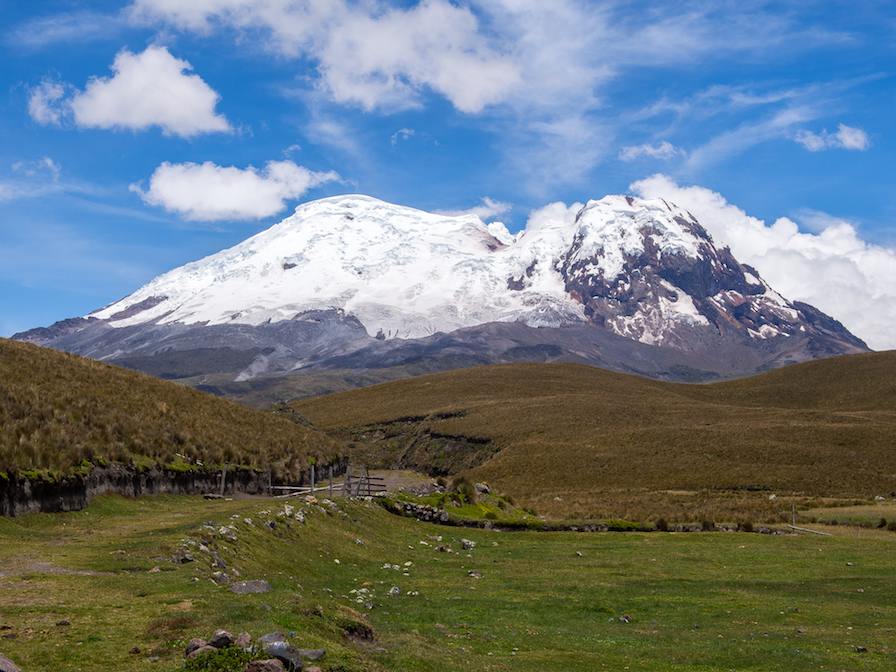
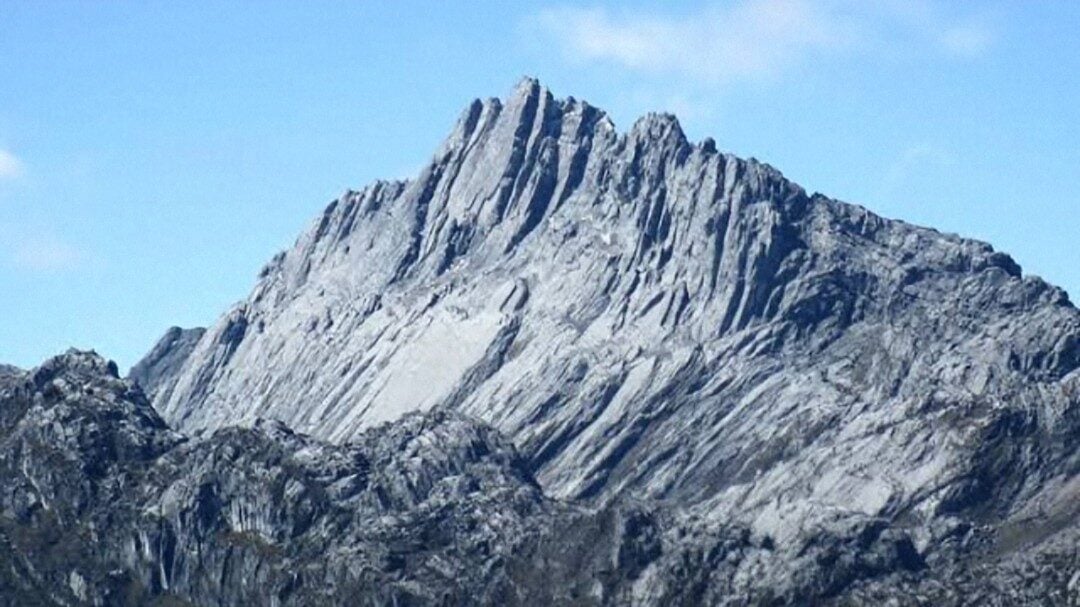
We hiked six miles into Quilcayhuanca Valley, through stunning
views of mountains and along braided rivers. John All photo.
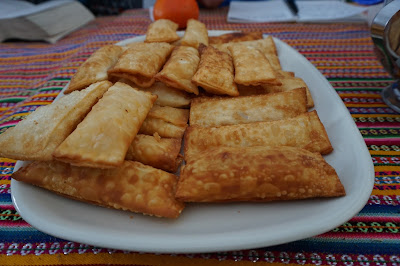
Our favorite snack is tequenos made by our chefs in the valley.
They are essentially deep-fried pastry with cheese inside, served with fresh homemade guacamole.
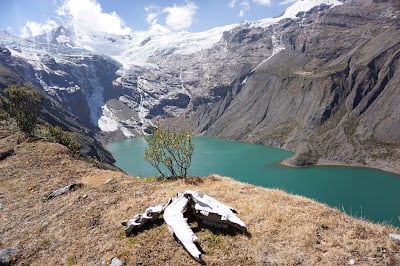
Our view on the way to one of our sampling sites. There were a lot of
horses in the valley, and we think the skull is from a horse.
A Close-up View of Climate Change
Something that really struck me in this valley was the very tangible effect of climate change. When we took our first water samples in the valley, we were shocked to find that the pH was approximately 3 (a pH of 3 indicates relative acidity). The low pH is caused by deposition of heavy metals into the streams. As glaciers melt and recede, they expose previously uncovered rock which is easily eroded and releases heavy metals such as iron.

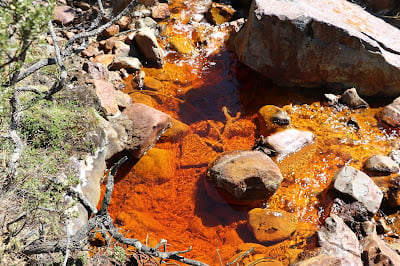
Many of the streams in the valley had areas with this red coloring
due to large amounts of iron deposits. Penelope Kipps photo.
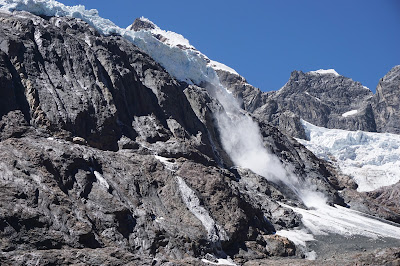
Besides the low pH water,
we were also stunned to see the modest amount of snow left on the peaks above the
valley. All the spring season snowfall
is gone from lower and mid elevations, and as a result, the permanent glacier
ice is melting at higher elevations than in the past.
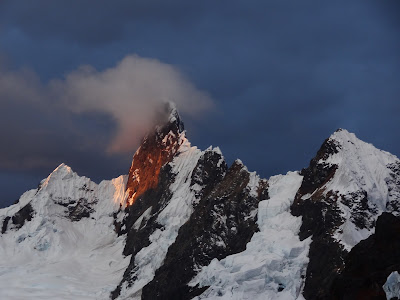
Our view of Cayesh in the evening Alpenglow from high camp. John All photo.
Maparaju High Camp and Summit
There is a group of climbers with the American Climber Science Program traveling with our group. They summited Maparaju this past week and plan on also climbing Pisco and Llanapacha next. During their climbs they are collect snow samples at several elevations for us to take back to Western Washington University for analysis.
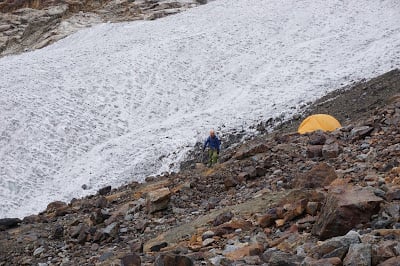
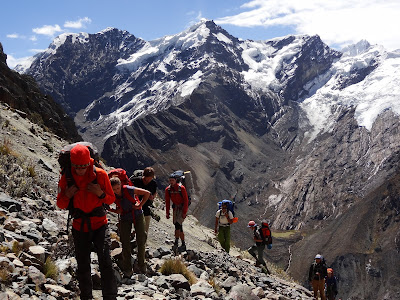
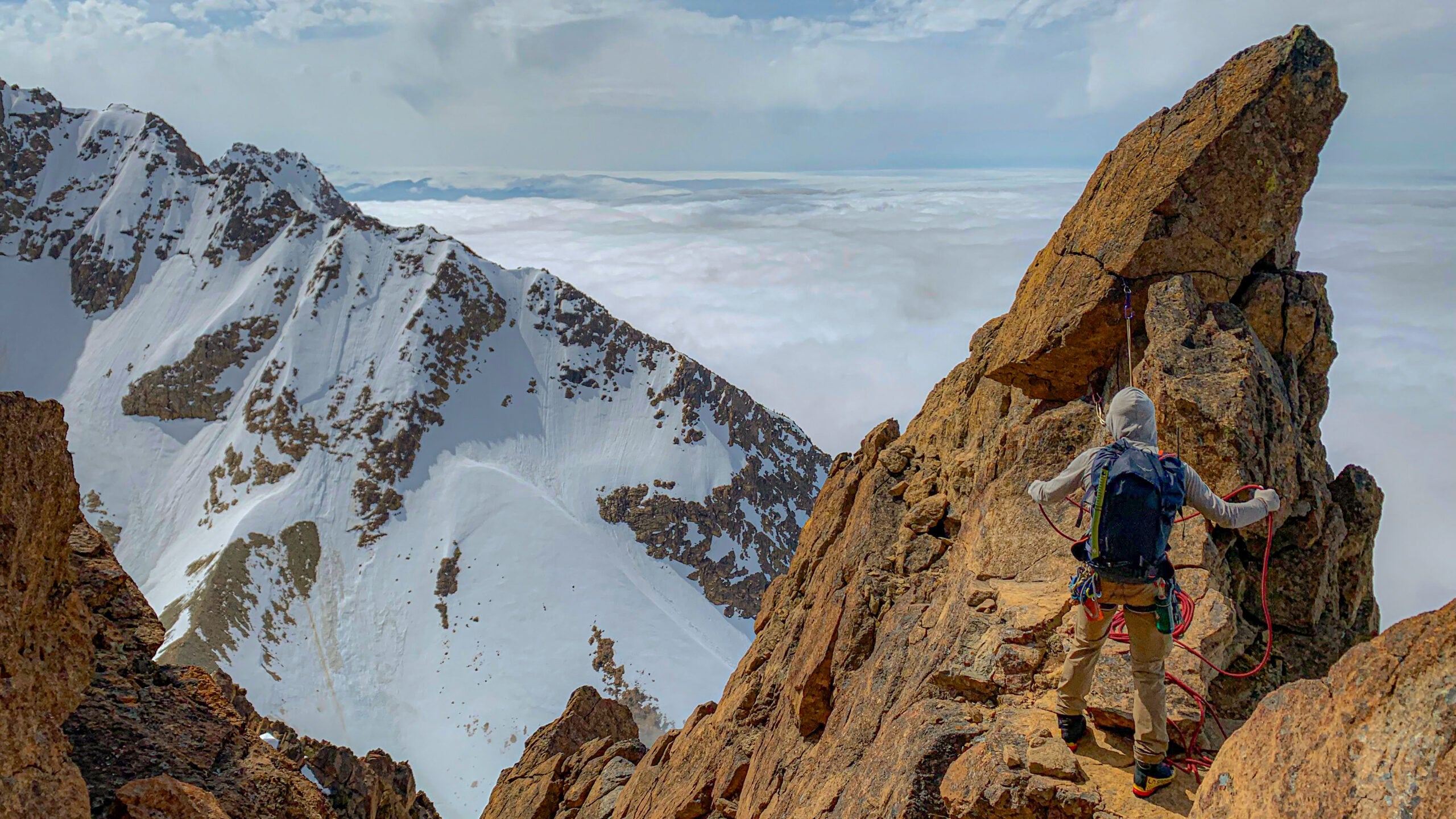
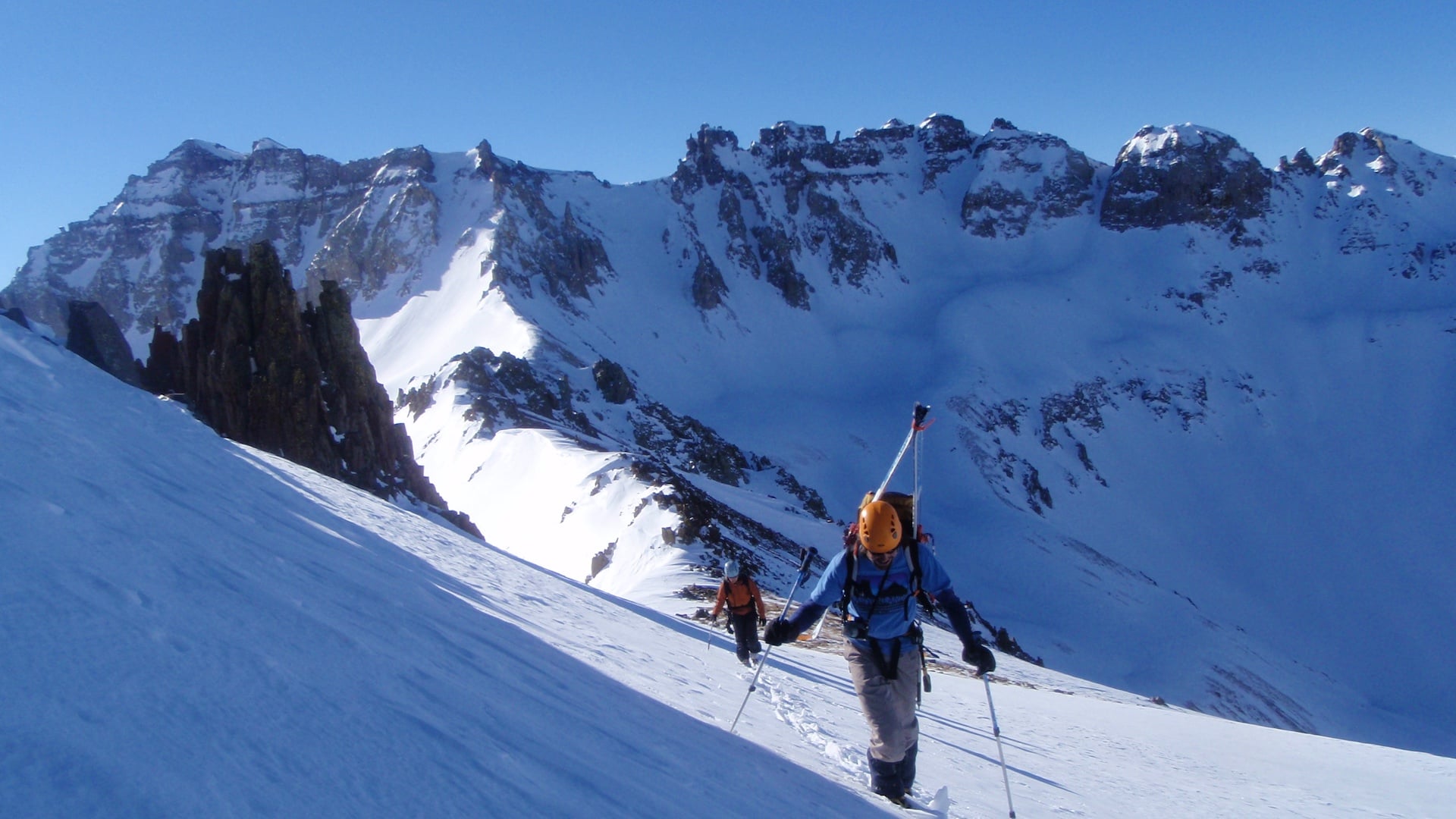
The steep hike up to high camp was tough with packs, but we
were rewarded by gorgeous views of glaciers all around.
I talked to Kathryn, a senior from Carleton College, and Jonah, a freshman from University of British Columbia about their climb on Maparaju, which was the first technical mountaineering that either of them had done. Kathryn was surprised by how hard it was just to walk on the snow, especially among the nieves penitentes (Spanish for “penitent-shaped snows”) which are like blades of hard snow or ice (they form in patterns when the dew point always stays below freezing and the snow or ice sublimates – turning from solid to gas – unevenly).

Nieves penitentes do not provide comfortable footing while climbing! Mark Sanderson photo.
Jonah said that although it was nearly impossible to see anything at the summit due to fog, it was still one of the most beautiful experiences that he has had. They are both excited for the next climb (Pisco) and plan on doing more mountaineering in the future.

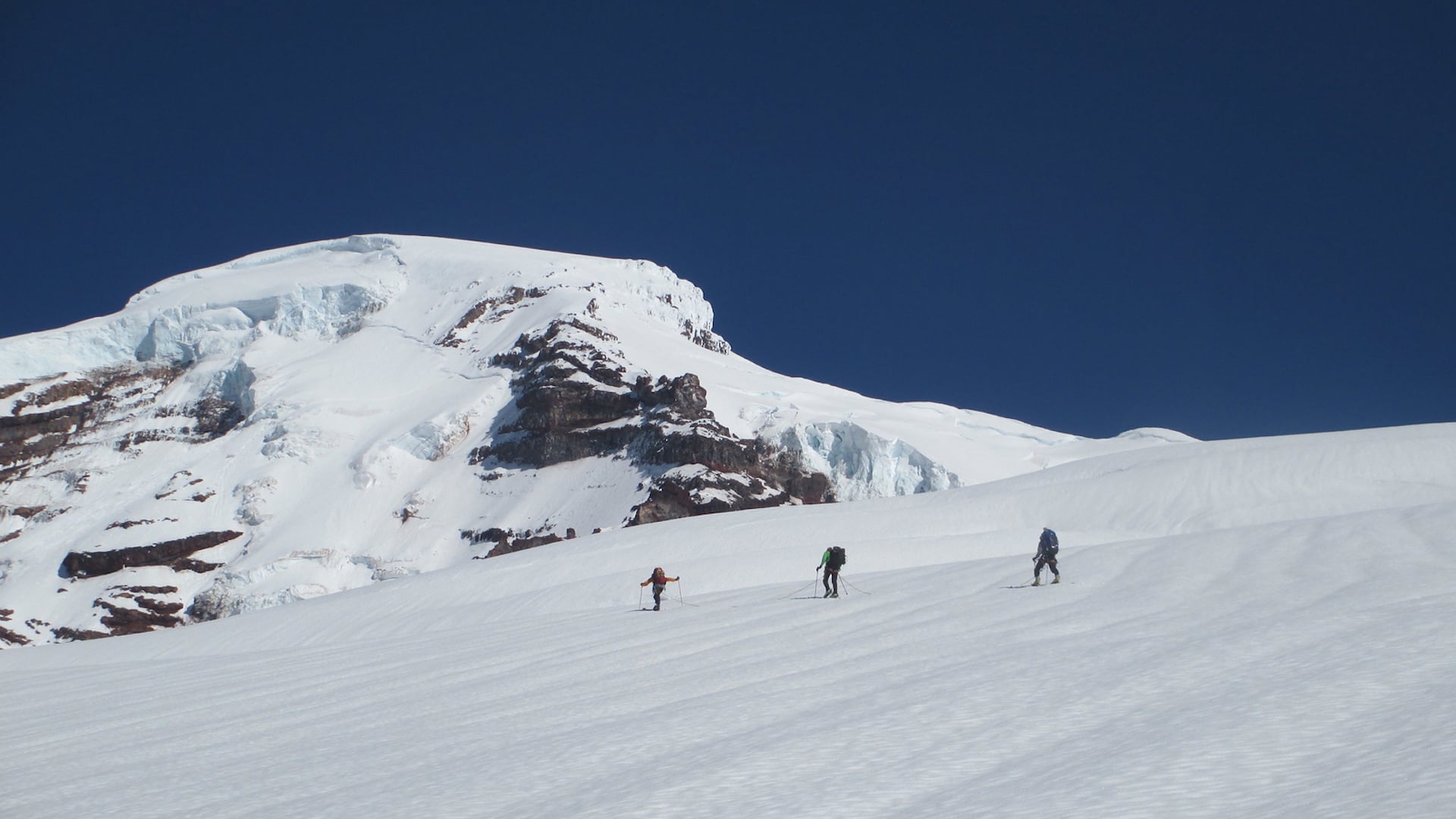
Heading to the summit of Maparaju. John All photo.
The group is enjoying our two days of rest in Huaraz before we head to the Llanganuco Valley where we’ll stay for a week. It is a bigger scale valley than we have been in before; we know the terrain will be distinct, and it will be very interesting to see how different the results of our sampling are from the two other valleys we have been working in.

Here I am taking a break amidst the great scenery of Maparaju.
We’re also looking forward to the Llanganuco Valley because of the beautiful peaks there. To our south will be Nevado Huascaran, Peru’s highest mountain at 22,206 feet, and to our north we’ll have views of groups of very steep walled and glacier-covered peaks including the Huandoy massif and Chakraraju. It’s one of the areas that has helped make the Cordillera Blanca a magnet for climbers and photographers.
Time seems to be flying by, and we are all a little surprised that we only have one more valley to go. After sampling in Llanganuco, we will attend a climate conference near Huaraz called the International Glacier and Mountain Ecosystems Forum. The topics covered will include the fragileness of glaciers and mountain ecosystems; changing water resources; climate change and human impact on biodiversity; and management options for mountain ecosystems. The members of our expedition have diverse interests, and there should be something for everyone at this conference.
After that three of my fellow researchers and I will head to Cuzco on a three-day American Alpine Institute trip. We’ll explore Cuzco and its Inca heritage, many of the remains of Inca settlements in the Sacred Valley of the Urubamba, and then visit Machu Picchu. That will be a great finale to this expedition.
That’s the news for now. Back to you with an update in about a week.
Ciao!
– Elsa Balton, Kodner Laboratory and American Alpine Institute Research Assistant